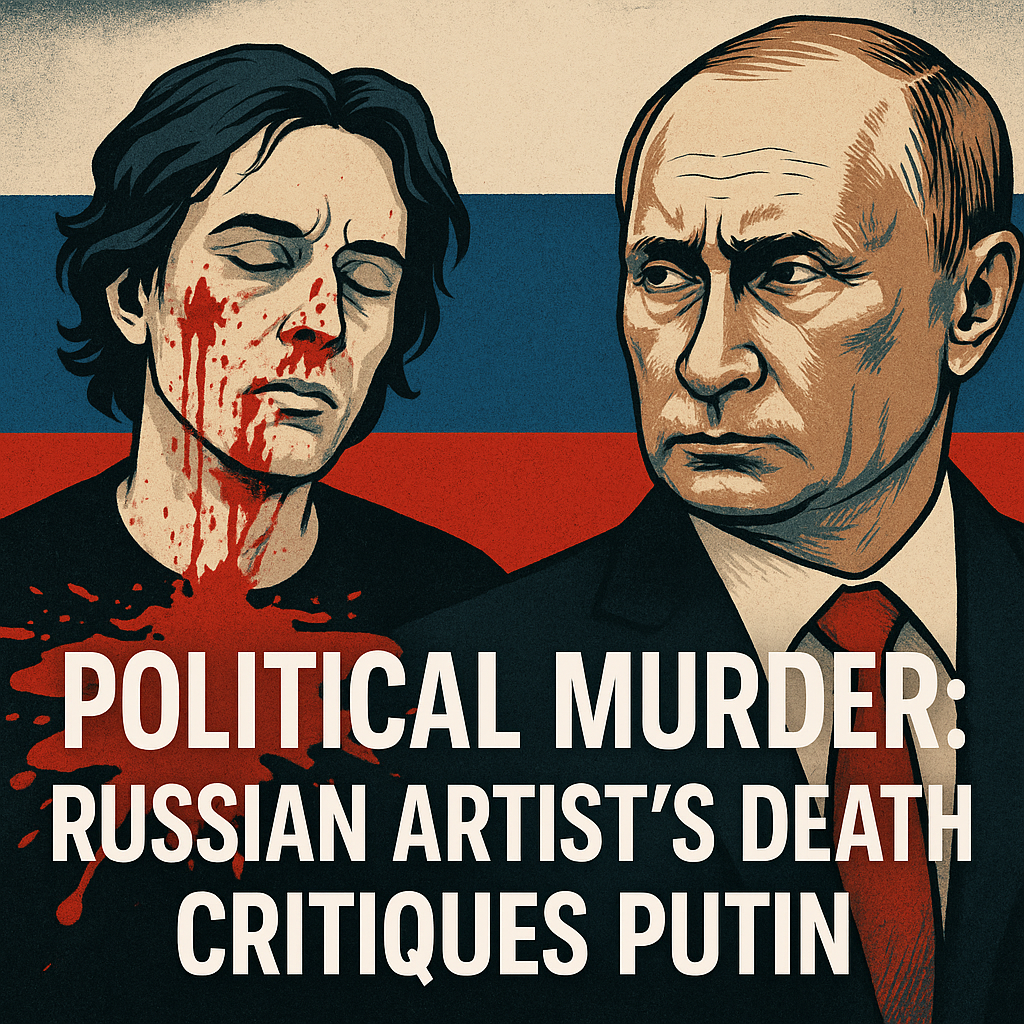
Political Murder: Russian Artist’s Death Critiques Putin
Political Murder: Russian Artist’s Death Critiques Putin
The recent death of the Russian artist Oleg Kulik has sparked intense debate about political murder in Russia, ultimately drawing attention to the oppressive atmosphere surrounding artistic expression under Vladimir Putin’s regime. Reports indicate that Kulik, known for his provocative art that often criticized the state, was found dead under suspicious circumstances, prompting accusations of foul play.

The Context of Oleg Kulik’s Work
Oleg Kulik was an outspoken artist, renowned for his controversial performances, including acts that confronted societal norms and governmental authority. His work frequently pushed the boundaries of what is acceptable in a nation where dissenting voices are often silenced. In the wake of his death, the Polish Prime Minister has stated that the circumstances have “hallmarks of political murder,” highlighting a pattern where critics of the regime fear for their lives.

Several art critics and commentators have noted that Kulik’s unsparing critiques of the Kremlin made him a target. His art was never merely about aesthetics; it encompassed sharp social commentary, often intertwining themes of power, oppression, and the human condition. This tragic loss raises questions about the safety of artists and intellectuals in Russia, where the government has increasingly cracked down on dissent.

Differing Perspectives on the Government’s Role
The narrative surrounding Kulik’s death has diverged sharply depending on the source. While some Western outlets and commentators have firmly attributed his murder to state actors seeking to stifle dissent, state-run media and officials have subtly downplayed the notion of political involvement. For example, Russian news outlets portray the incident as a tragic accident or suggest personal motives unrelated to his political stance, a tactic often employed to assuage public fear and dissent.
This contrasting perception underscores a significant divide in how information is consumed and interpreted within Russia and abroad. Critics assert that the state has a vested interest in portraying dissenters as extremists or dangerous characters to justify their removal or imprisonment. Conversely, the government contends that it is merely ensuring stability and security in a country facing external threats.
Reactions and Implications on Freedom of Expression
The tragedy of Oleg Kulik’s death invokes strong reactions not only within Russia but also globally, with calls for a thorough investigation into the circumstances surrounding his passing. The international arts community has expressed outrage, emphasizing that Kulik’s work served as a vital form of resistance against authoritarianism. Artists and activists have rallied, using social media platforms to highlight the risks of artistic expression in oppressive environments.
Furthermore, the situation has far-reaching implications for freedom of expression in Russia. As artists and intellectuals face the harrowing reality of potential violence for their work, there is a growing sense of urgency among critics to amplify their voices. Higher-profile international attention could catalyze discussions about human rights, leading to pressure on the Kremlin to reevaluate its approach to dissent and freedom of expression.
Conclusion: A Call for Vigilance
Oleg Kulik’s untimely death serves as a solemn reminder of the risks inherent in political and artistic expression within Russia today. While some may perceive it as just another tragic story of an artist lost too soon, for many, it stands as a symbol of the broader struggle against suppression and the quest for truth in a turbulent political landscape.
As investigations proceed, it is crucial for the global artistic community and human rights organizations to remain vigilant, advocate for justice in Kulik’s case, and protect the rights of those who dare to speak out. The echoes of Kulik’s voice through his art emphasize the importance of fostering an environment where creativity can thrive, free from the specter of political murder and intimidation.