
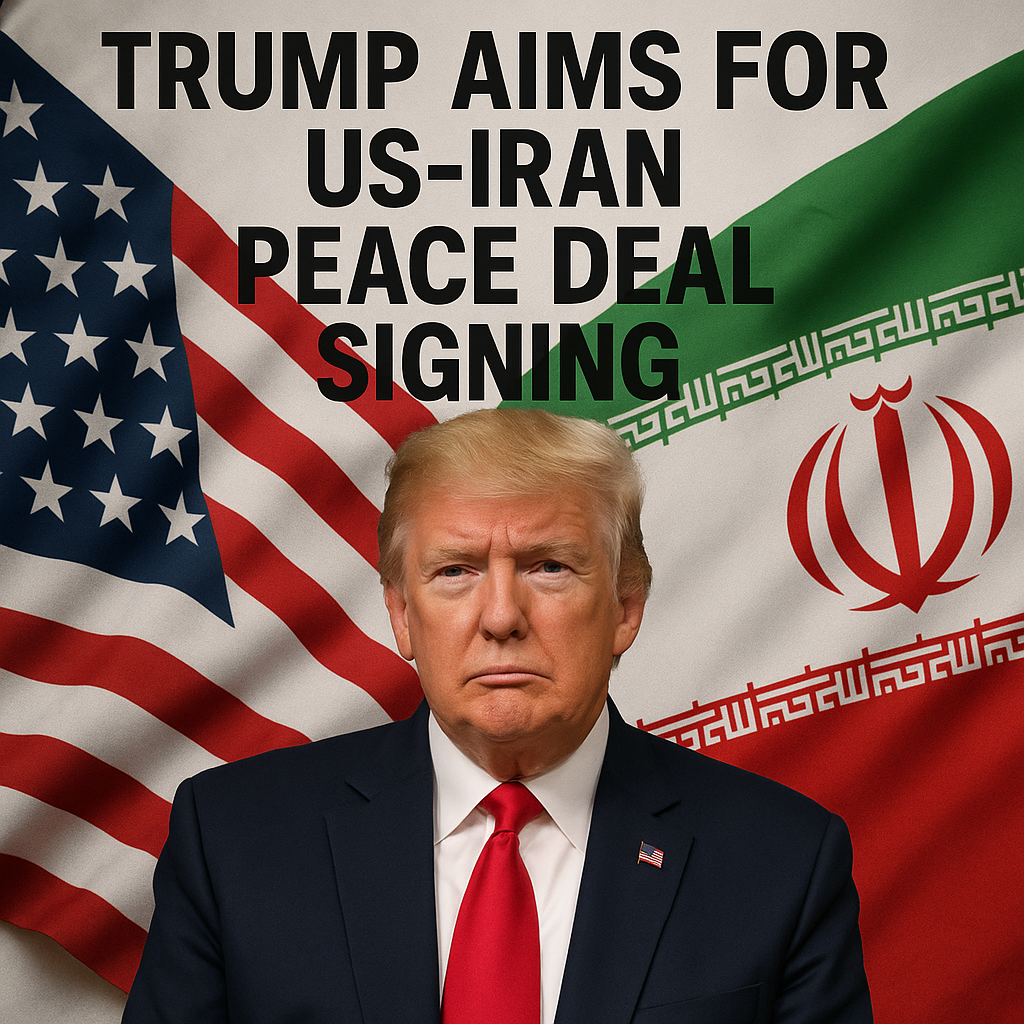
Trump Aims for US-Iran Peace Deal Signing
Trump Aims for US-Iran Peace Deal Signing
The prospect of a peace deal between the United States and Iran has once again come into the spotlight as former President Donald Trump aims to position himself as a peacemaker. Amid ongoing geopolitical tensions and the lasting repercussions of previous administrations’ policies, this initiative invites a closer examination of its feasibility and the reactions it has provoked.

A Shifting Landscape
Recent developments in U.S.-Iran relations have been marked by a series of complex interactions, from sanctions to direct diplomatic talks. With Trump hinting at the potential for a peace deal, many are left wondering whether this represents a genuine opportunity for reconciliation or if it is merely a political maneuver aimed at garnering support ahead of 2024.

Multiple news sources indicate that Trump’s renewed focus on foreign policy, particularly in the Middle East, has strategic implications. Al Jazeera reported that Trump’s approach aligns with a broader desire to reshape U.S. foreign relations, especially as tensions in the region have escalated again following the failed nuclear talks and renewed hostilities. Meanwhile, RT highlighted the skepticism surrounding Trump’s intentions, with analysts warning that such deals could be susceptible to political whims if he returns to the presidency.

Diverse Perspectives on the Peace Deal
When considering a potential peace accord, it’s essential to weigh the differing viewpoints surrounding the topic.
Supporters’ View
Supporters of the former president’s initiative argue that securing a peace deal could stabilize a volatile region, opening up diplomatic channels that have long been closed. Proponents assert that Trump’s prior dealings with North Korea showcased his capability to engage in diplomatic dialogue where previous leaders faltered. Many who support the initiative believe that a U.S.-Iran peace deal could lead to broader regional stability and economic benefits.
– Possible Benefits:
– Reduction in military tensions
– Economic cooperation leading to mutual benefits
– Enhanced diplomatic relationships with other Middle Eastern nations
Opponents’ View
Conversely, critics are skeptical about Trump’s approach. Detractors point out that his foreign policy record already includes significant disruptions, particularly the withdrawal from the Iran nuclear deal (JCPOA) in 2018, which has led to increased hostility. They express concern that a peace deal led by Trump may lack the necessary diplomatic groundwork and assurances that other leaders could provide.
Key arguments against the feasibility of such an agreement include:
– Political Motivation: Critics argue that Trump’s focus on Iran may be rooted more in electoral strategy than genuine peace-building.
– Lack of Trust: The longstanding mistrust between the U.S. and Iran raises questions about the sincerity and enforcement of any forthcoming agreements.
– Regional Reactions: Neighboring states and other global powers may react negatively or resist the idea if they perceive it as benefiting Trump politically rather than achieving true peace.
The Road Ahead: Uncertainties and Challenges
The question of whether a U.S.-Iran peace deal can be successfully negotiated and signed remains fraught with uncertainty. While Trump touts optimism, the road to a peace accord is inherently complex due to layered historical grievances, differing national interests, and the volatile regional geopolitical landscape.
Furthermore, the reactions from various stakeholders—from neighboring Gulf states to global powers like Russia and China—will play a pivotal role in shaping the feasibility of a peace deal. Each party has its agendas, which could either facilitate or impede progress.
As analysts continue to dissect the various potential outcomes, it’s important to acknowledge that no clear consensus has yet emerged regarding the actual effectiveness of such negotiations under Trump’s leadership. This situation underscores the broader complexities inherent in international diplomacy, where political aspirations often collide with entrenched historical positions.
In conclusion, while the ambition for a U.S.-Iran peace deal is compelling, it serves as a reminder of the intricate matrix of diplomacy, trust, and regional dynamics. Whether Trump can turn this ambition into reality is yet to be seen, and the months leading up to the next presidential election will no doubt shape both opportunities and obstacles in this critical arena of foreign policy.















