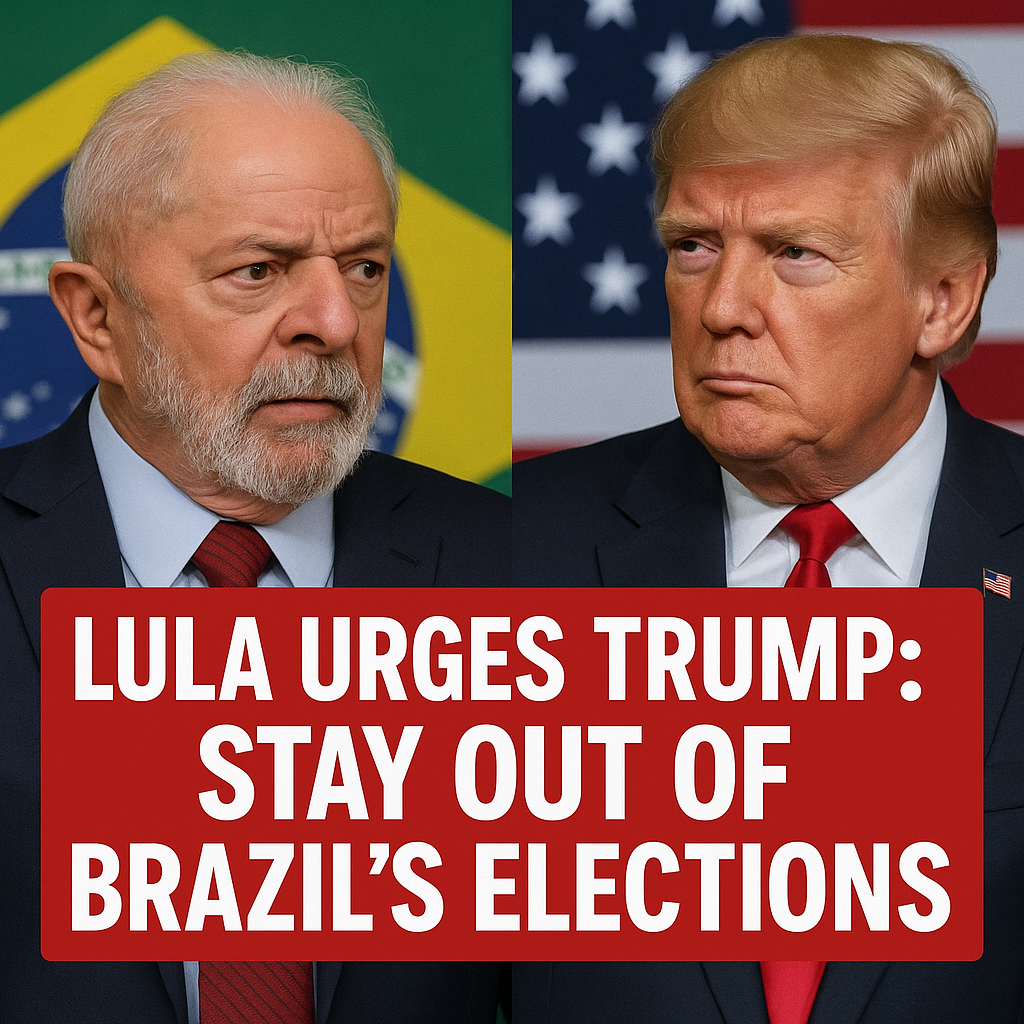
Lula Urges Trump: Stay Out of Brazil’s Elections

Lula Urges Trump: Stay Out of Brazil’s Elections

In an increasingly interconnected world, political figures often find themselves weighing in on the electoral processes of other nations. Recently, Brazilian President Luiz Inácio Lula da Silva, commonly known as Lula, issued a direct call to former U.S. President Donald Trump, urging him to refrain from intervening in Brazil’s impending elections. This appeal underscores a nuanced dialogue about international interference in domestic political processes.


The Context of Lula’s Urgings
Lula’s cautionary message to Trump comes amid heightened political tensions and a deeply polarized electorate in Brazil. As Lula prepares for the upcoming elections, he insists that Brazilian democracy must be protected from external influences, particularly as Trump has previously aligned himself with far-right elements within Brazil, including supporters of former President Jair Bolsonaro. Lula’s concerns are not merely reactive; they also reflect a broader sentiment in Latin America, where the shadow of U.S. foreign policy often looms large.


Lula articulated that the Brazilian electoral process must be navigated without foreign meddling. He stated, “We will not accept any interference that tries to destabilize our democracy. The votes will be counted, and the people will decide.” This declaration highlights his commitment to sovereignty and the importance of an independent electoral system, echoing similar sentiments voiced by leaders in various Latin American nations who wish to assert their autonomy in the face of historical U.S. interventions.
Reactions From the U.S. and Brazil
Responses to Lula’s assertiveness have varied. Supporters within Brazil largely praise his stance as a necessary defense of democratic integrity. In contrast, critics argue that Lula’s admonitions may be an attempt to distract from existing domestic issues, such as economic challenges and social disparities.
From a broader perspective, Trump’s history of questionable remarks regarding electoral integrity—mostly concerning the 2020 U.S. Presidential election—creates a basis for concern regarding his potential influence outside of American borders. Trump’s follower base within Brazil remains staunchly supportive of his agenda, which in some ways mirrors the populist strategies that often appeal to frustrated voters.
Conversely, Trump has made sporadic comments in past years about Latin America that could be viewed as dismissive or condescending. His administration’s policies, particularly around immigration and trade, have often sparked criticism across the region, contributing to a complex relationship between the U.S. and Latin American governments. This backdrop serves to highlight the significance of Lula’s call for non-interference; it is not merely a personal appeal but a plea for respect for Brazil’s autonomy.
Global Perspectives and Potential Outcomes
Amid the diverse viewpoints, the conversation around Trump’s potential influence in Brazil raises a larger question about the role of international figures in domestic elections. The general consensus among international analysts is that while collaboration and shared ideologies can facilitate alliances, outright interference is typically viewed as detrimental. The fear of foreign meddling could tarnish Brazil’s already contentious electoral environment, perhaps skewing public perception and trust in the political process.
The implications of Lula’s plea extend beyond Brazil’s borders. It resonates with calls from various global leaders who advocate for non-interference in sovereign affairs. The message serves as a reminder that effective democracy thrives on internal deliberation and that external influences can disrupt not just political stability, but also public trust in democratic institutions.
Conclusion: A Call for Respect
Ultimately, Lula’s appeal to Trump reflects a crucial need for the global leaders to respect the sovereignty of nations, particularly in the sensitive arena of electoral politics. As Brazil moves closer to its elections, the eyes of the world will be watching—not just for the outcomes of the elections themselves, but for how this situation encapsulates broader themes of international engagement and interference.
In framing this narrative, it becomes clear that though leaders like Lula and Trump command significant influence, genuine democracy requires a foundation built on respect, transparency, and internal consensus. Whether Trump heeds Lula’s request or whether his involvement will be minimal remains uncertain, but the underlying messaging about autonomy and the sanctity of democratic processes stands clear.