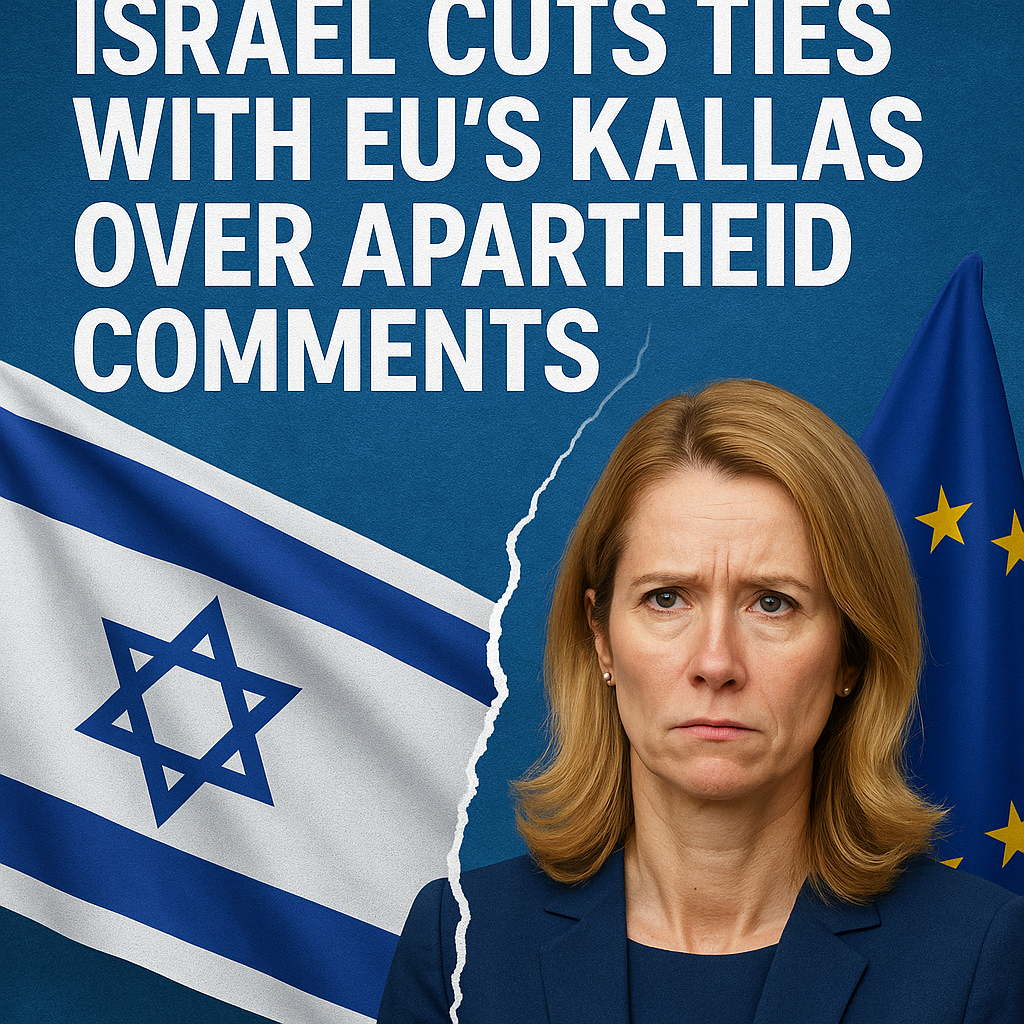
Israel Cuts Ties with EU’s Kallas Over Apartheid Comments
Israel’s recent decision to sever diplomatic ties with the European Union’s chief diplomat, Kaja Kallas, following her comments linking the Israeli state to apartheid has reignited tensions between Israel and the European Union (EU). This situation underscores the complexities involved in international relations, particularly regarding sensitive topics like human rights and national policies.

The Context of the Dispute
The rift emerged after Kallas stated during a press conference that the situation in the Palestinian territories and the treatment of Palestinians by the Israeli government could be described as apartheid. This assertion has been met with criticism from Israeli officials, who condemned the remarks as offensive and inaccurate, asserting that they mischaracterize the realities of Israel as a democracy. Israeli Foreign Minister Eli Cohen characterized these remarks as “unfounded” and claimed they hinder dialogue aimed at promoting peace in the region.

In light of Kallas’ statements, Israel announced its decision to withdraw its ambassador from Brussels. The move highlights a growing trend where diplomatic relations can swiftly erode over comments deemed incendiary. Critics argue that Israel’s response illustrates its sensitivity to international scrutiny regarding its policies in the Palestinian territories, while proponents of Kallas’ comments see her stance as a necessary critique of ongoing policies they view as oppressive.

Diverging International Perspectives
From the European perspective, Kallas’ comments resonate with concerns among various human rights organizations. Reports from groups such as Amnesty International and Human Rights Watch have similarly described certain Israeli policies towards Palestinians as tantamount to apartheid, calling for international accountability. Such findings create a backdrop of public and political pressure on EU leadership to take a more critical stance towards Israel.
Conversely, Israel’s supporters argue that portraying the Israeli state as an apartheid regime undermines the complexities of the Israeli-Palestinian conflict. They contend that this label disregards the rights and freedoms enjoyed by Arab citizens in Israel and simplifies the multidimensional nature of the conflict, which includes historical, cultural, and political underpinnings.
The Role of Diplomacy in Conflict Resolution
The diplomatic fallout from Kallas’ comments raises essential questions regarding the effectiveness of diplomatic engagements when rhetoric escalates. The severing of ties serves to illustrate a larger conflict between formal diplomatic language and the raw emotions tied to deeply-rooted political issues.
While some EU officials emphasize the need to approach the Israeli-Palestinian issue with sensitivity and diplomacy, Kallas’ comments have spurred debates over the effectiveness of criticism in facilitating genuine progress. Many argue that it is through vocal international opposition to perceived injustices that lasting change can take place. However, others caution that such statements may alienate key players and hinder constructive dialogues.
A Fragmented Landscape
The current situation serves as a reminder of how fragmented perspectives can be within global diplomacy. In a world where strong statements can lead to significant repercussions, the balance between critique and constructive engagement is a persistent challenge.
Kallas’ remarks were intended to provoke discussion about human rights, but the backlash from Israel exemplifies how diplomatic relations can become strained over interpretations of speech that are inherently subjective. As international stakeholders navigate this fraught landscape, the path to resolving an enduring conflict remains as convoluted as ever.
There is also a palpable sense of uncertainty about future EU-Israel relations, as the EU constantly grapples with its foreign policy directives. While Kallas asserts that her comments were meant to foster transparency and advocacy for Palestinian rights, Israel’s counteraction exemplifies the delicate balance that international actors must maintain when addressing contentious issues.
Conclusion: Navigating a Complex Future
Israel’s estrangement from the EU’s Kallas represents more than just a diplomatic row; it encapsulates broader themes of power, critique, and the precarious nature of international relations. As nations grapple with the implementation of human rights norms and how to voice dissenting opinions, examples such as this remind us that conversations surrounding human rights are fraught with consequences.
Going forward, the challenge will be how to facilitate open, honest dialogues while being attuned to the sensitivities of national identities and the narratives that define them. In this complex interplay of geopolitical dynamics, the road to reconciliatory dialogue will require patience, understanding, and an innovative approach to diplomacy that bridges divides rather than exacerbating them.