
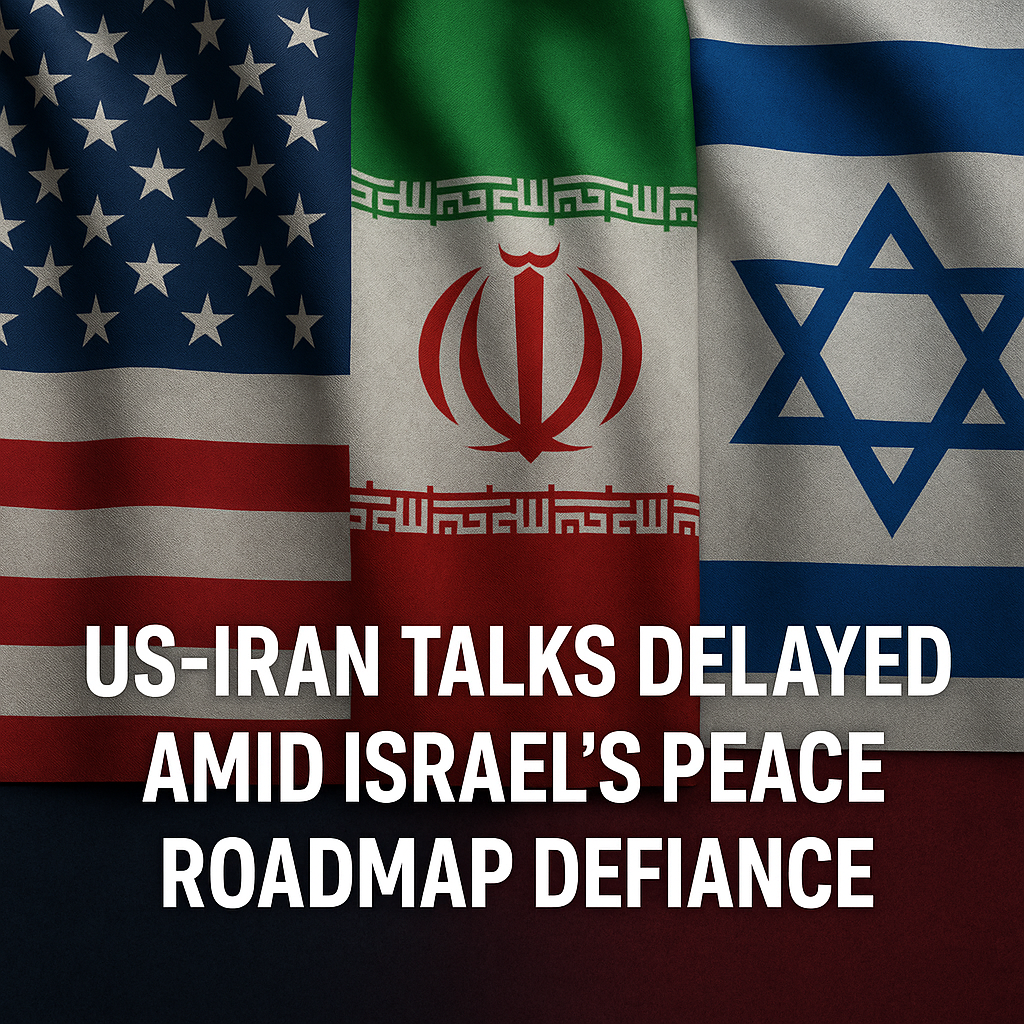
US-Iran Talks Delayed Amid Israel’s Peace Roadmap Defiance
US-Iran Talks Delayed Amid Israel’s Peace Roadmap Defiance
Recent developments have thrown a wrench into the ongoing negotiations between the United States and Iran. While both countries were reportedly moving towards a potential agreement, renewed tensions driven by Israel’s actions complicate the landscape further. The impasse illustrates not only the delicate dynamics in Middle Eastern geopolitics but also the broader implications for international diplomacy.

Contextualizing the Delay
The longstanding rivalry between the US and Iran has seen numerous ups and downs, particularly regarding nuclear negotiations. Historically, these talks have been fraught with mistrust, but there were indications of progress in recent months. However, according to reports from various sources including RT and Al Jazeera, the latest round of negotiations has hit a snag due to escalating confrontations involving Israel.

Israel’s defiance of international norms and continued military operations in Palestinian territories have heightened tensions. As observed in Al Jazeera’s coverage, the Israeli government’s aggressive stance makes any potential de-escalation between the US and Iran increasingly complex. The US has traditionally relied on Israeli intelligence and support, but this alliance is becoming strained amid conflicting priorities.

This unexpected delay in talks has resulted in diverse reactions. While some experts argue it illustrates the failure of US foreign policy to create a stable Middle East, others believe that it may allow for a more comprehensive peace framework, inclusive of all party concerns, particularly concerning Israel’s role in the region.
A Divided Perspective on the Way Forward
The dichotomy surrounding the US-Iran talks amid Israel’s actions is evident in the contrasting opinions from commentators and analysts. On one side, supporters of a firmer stance towards Iran view the delay as a necessary pause that could prevent further nuclear escalation. They argue that pressure must be maintained on Iran to adhere to its commitments under international agreements.
Conversely, critics warn that continued delays will create a vacuum of diplomatic engagement, allowing hardline elements within Iran to gain momentum. This viewpoint is echoed by various international relations experts who emphasize that prolonging negotiations only entrenches adversarial positions. As elaborated in an RT analysis, it could inadvertently empower factions within Iran that exploit domestic tensions over foreign interventions.
Here are some key takeaways regarding these contrasting positions:
– Proponents of Pressure on Iran:
– Argue that military threats should not be tolerated.
– Advocate for continued sanctions and international oversight.
– Believe this strategy will lead to compliance with nuclear provisions.
– Critics of a Hardline Approach:
– Warn that making the environment more hostile could backfire.
– Highlight the importance of dialogue in mitigating escalations.
– Suggest a more inclusive peace framework involving all key players, including Israel.
The Broader Implications for Peace in the Region
The ramifications of stalled US-Iran negotiations can extend far beyond the immediate parties involved. Israel’s actions against Palestinian territories have drawn criticism and condemnation from various quarters, complicating the already tense situation. Al Jazeera reports a rise in violence and civilian casualties, which discredits Israel’s claims of ensuring stability and security.
Moreover, should these negotiations continue to languish, the risk of a broader conflict looms large. The failure to stabilize relations could ignite regional hostilities, involving neighboring countries and further entrenching divisions within the Middle East. Thus, any solution that emerges must address not only the US and Iran’s concerns but also the impacts of Israel’s military policy on Palestinians and the wider Arab world.
Conclusion: Navigating Uncertainty
As the situation unfolds, the uncertainty surrounding US-Iran relations amid Israel’s defiance presents a complex dilemma. While there is no clear path to resolution, finding common ground remains crucial. Engaging in fruitful dialogues—acknowledging the multidimensional realities of Middle Eastern geopolitics—may ultimately be the key to achieving lasting peace in the region.
The ongoing discussions, or lack thereof, will likely persist in garnering international attention, as the stakes involve not just national interests, but the lives of countless individuals who remain affected by these power dynamics.















