
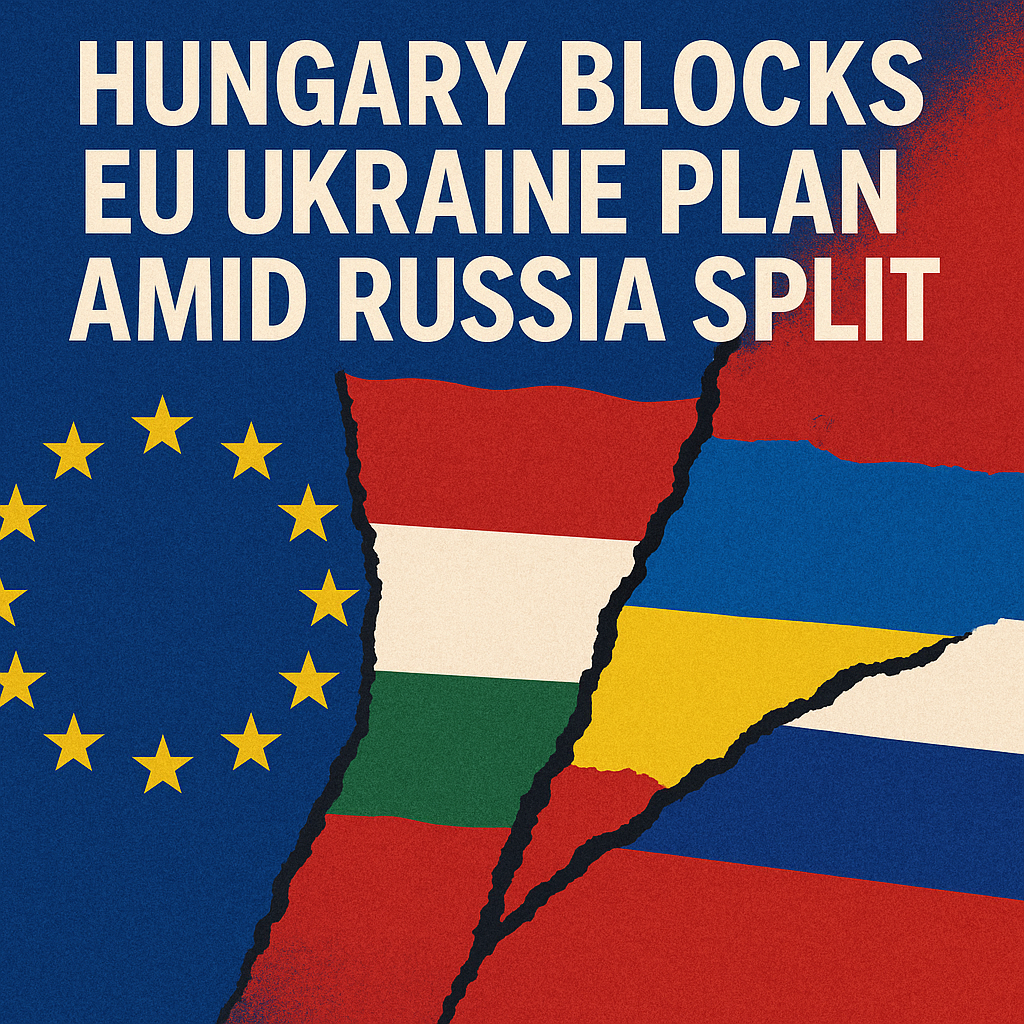
Hungary Blocks EU Ukraine Plan Amid Russia Split
Hungary Blocks EU Ukraine Plan Amid Russia Split
In a recent development that underscores the growing rift between Hungary and broader EU strategies, Hungary has opted to block Ukraine’s accession plans to the European Union. This decision has sparked a multitude of reactions and raised questions about Hungary’s foreign policy stance, especially in the context of ongoing tensions with Russia.

The Background of the Blockade
Hungary’s decision comes amid heightened ambitions from Ukraine to solidify its ties with the EU. Following the Russian invasion, Ukraine has sought accelerated membership as a means to bolster its defense and political position. However, Hungary’s Prime Minister Viktor Orbán has cast a shadow over these ambitions, stating that Hungary does not support Kyiv’s accession due to various bilateral issues. His concerns center around treatment of ethnic Hungarians in Ukraine and the increasing sanctions against Russian interests, which Hungary has been typically cautious about.

Historically, Hungary has had its nuances in dealing with Russia, often advocating for dialogue and cooperation. This contrasts with certain EU members who favor a more confrontational approach towards Moscow. Hungary’s position on Ukraine’s EU accession is thus not merely a political maneuver; it reveals deeper tensions between Hungary’s national interests and those of the European Union.

Responses from the EU and Ukraine
The EU has responded with criticism, viewing Hungary’s move as an obstruction that undermines the collective stance against Russian aggression. EU officials have pointed out that Ukraine’s membership is seen as a strategic priority for the bloc, particularly in maintaining a unified front against Russia. However, they face the challenging task of reconciling Hungary’s veto with the desire for solidarity within the EU.
In reaction to Hungary’s blockade, Ukrainian officials have reiterated their determination to pursue EU membership as a shield against further Russian incursions. Andriy Yermak, head of the Office of the President of Ukraine, emphasized that no external influences would deter Ukraine from its path to European integration. This sentiment expresses a broader narrative that pressures Hungary to either align with EU objectives or risk isolating itself.
The Broader Implications of the Split
Hungary’s decision to block Ukraine’s EU accession raises crucial questions about the future of the European Union, especially regarding unity in the face of external threats. The divide exemplifies the complexities of the EU’s internal dynamics, where member states have varying thresholds for engagement, particularly concerning Russia.
This rift is made sharper by the fact that Hungary has expressed reluctance to fully align with EU sanctions against Russia. Critics argue this inconsistency undermines collective EU efforts to deter Russian expansionism. Proponents of Hungary’s stance argue that a more nuanced approach is necessary, advocating for preserving diplomatic ties even as military support for Ukraine escalates.
As the situation progresses, it becomes vital for the EU to navigate the fine line between maintaining unity and respecting member states’ sovereignty in foreign policy decisions. Possible resolutions might include enhanced dialogue with Hungary to address specific concerns, while emphasizing the overarching need for solidarity against external threats.
Conclusion
Hungary’s blockade of Ukraine’s EU accession highlights the complexities of geopolitical alignments in the face of ongoing conflict. As the EU grapples with internal divisions and external pressures, the necessity of addressing individual member states’ concerns while keeping a coherent strategy against Russia becomes paramount. The outcome of this tug-of-war will not only define Hungary’s role within the EU but also set a precedent for how the bloc negotiates its diverse viewpoints in an increasingly fragmented geopolitical landscape.















