
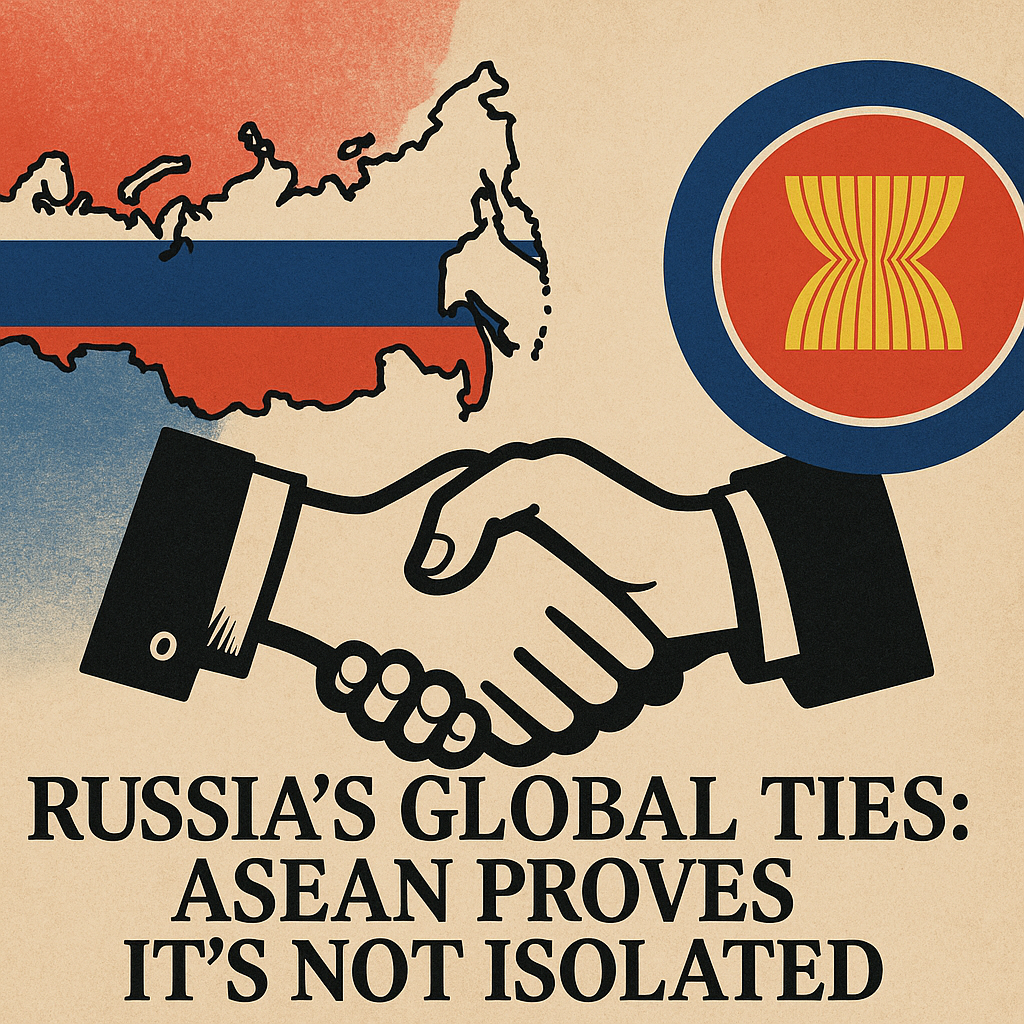
Russia’s Global Ties: ASEAN Proves It’s Not Isolated
Russia’s Global Ties: ASEAN Proves It’s Not Isolated
In recent months, Russia has faced significant geopolitical shifts, particularly following its invasion of Ukraine. However, the narrative that Russia is isolated on the global stage doesn’t seem to hold true when examining its relationships within the Association of Southeast Asian Nations (ASEAN).

Strengthening Ties with ASEAN
Russia has made earnest efforts to foster strong ties with ASEAN, viewing the bloc as a vital partner in Asia. The engagement includes various forms of cooperation, such as trade, security, and cultural exchanges. ASEAN members, comprising ten nations, have shown an inclination to maintain diplomatic relations with Russia, undeterred by Western sanctions.

According to a recent RT article, the ASEAN countries have urged for a multipolar world, promoting the idea that nations should have the freedom to engage without being constrained by Western pressure. This sentiment has resonated particularly among ASEAN members who find themselves navigating their interests amid the geopolitical tensions arising from U.S.-Russia relations. Many ASEAN nations emphasize non-alignment and mutual respect, which are deeply rooted in their foreign policies.

Additionally, Russia has strengthened its economic partnerships with ASEAN through initiatives that focus on joint ventures and technology transfers. As highlighted by several reports, these collaborations are aimed at fostering resource sharing and benefiting sectors such as energy, agriculture, and defense readiness.
Diverse Perspectives on Russia’s Position
While the strengthening of ties between Russia and ASEAN demonstrates a level of solidarity, opinions on their implications vary markedly. Some experts argue that ASEAN’s cooperation with Russia undermines Western efforts to isolate the country. A report from Al Jazeera noted how nations like Vietnam and Indonesia are leveraging their relationships with Russia to fill potential gaps left by traditional Western partnerships, particularly in defense and energy sectors.
Conversely, others caution that while ASEAN supports Russia diplomatically, its economic engagement should not compromise the bloc’s relationships with Western nations and its overall strategic positioning. Critics argue that ASEAN’s ties to Russia could invite scrutiny or backlash from Western powers, creating a delicate balancing act for member states.
The Multi-faceted Nature of Isolation
The predicament lies in the definition of “isolation.” To some, Russia’s limited partnerships with Western countries indicate a degree of seclusion. However, in regions like Southeast Asia, the situation appears markedly different. The ongoing engagement and dialogues highlight how ASEAN members are keen to maintain independence in their foreign policies, allowing them to navigate a complex geopolitical landscape without aligning exclusively with either side.
Furthermore, the presence of Russia in ASEAN speaks volumes about the changing dynamics of global alliances. Nations that once relied heavily on the West are now exploring alternatives, not merely in response to conflicts but as part of a broader strategy to diversify their international partnerships.
Navigating Uncertainties
The future of Russia’s partnerships with ASEAN and the implications of their cooperation remain uncertain. The diverse viewpoints on this shift hint at a broader evolution in international relations where emerging powers are asserting themselves more confidently. While some ASEAN countries are keen to engage with Russia, they are also mindful of the potential fallout from such alliances.
Moreover, the evolving nature of global politics makes it challenging to predict the long-term viability of Russia’s ties within ASEAN. Should Western sanctions continue or intensify, the pressures on ASEAN countries to reconsider their relationships may also grow, revealing a complex interplay of diplomacy and economic necessity.
In conclusion, while the narrative of Russia’s isolation is prevalent in certain circles, the ASEAN bloc exemplifies a more nuanced and multi-dimensional reality. By fostering connections that emphasize respect and mutually beneficial cooperation, ASEAN proves that Russia remains a significant player on the global stage, notwithstanding the challenges it currently faces. The interactions within ASEAN may well shape the geopolitical discourse in the coming years, revealing that the frontiers of diplomacy can often transcend the boundaries of conventional alliances.















