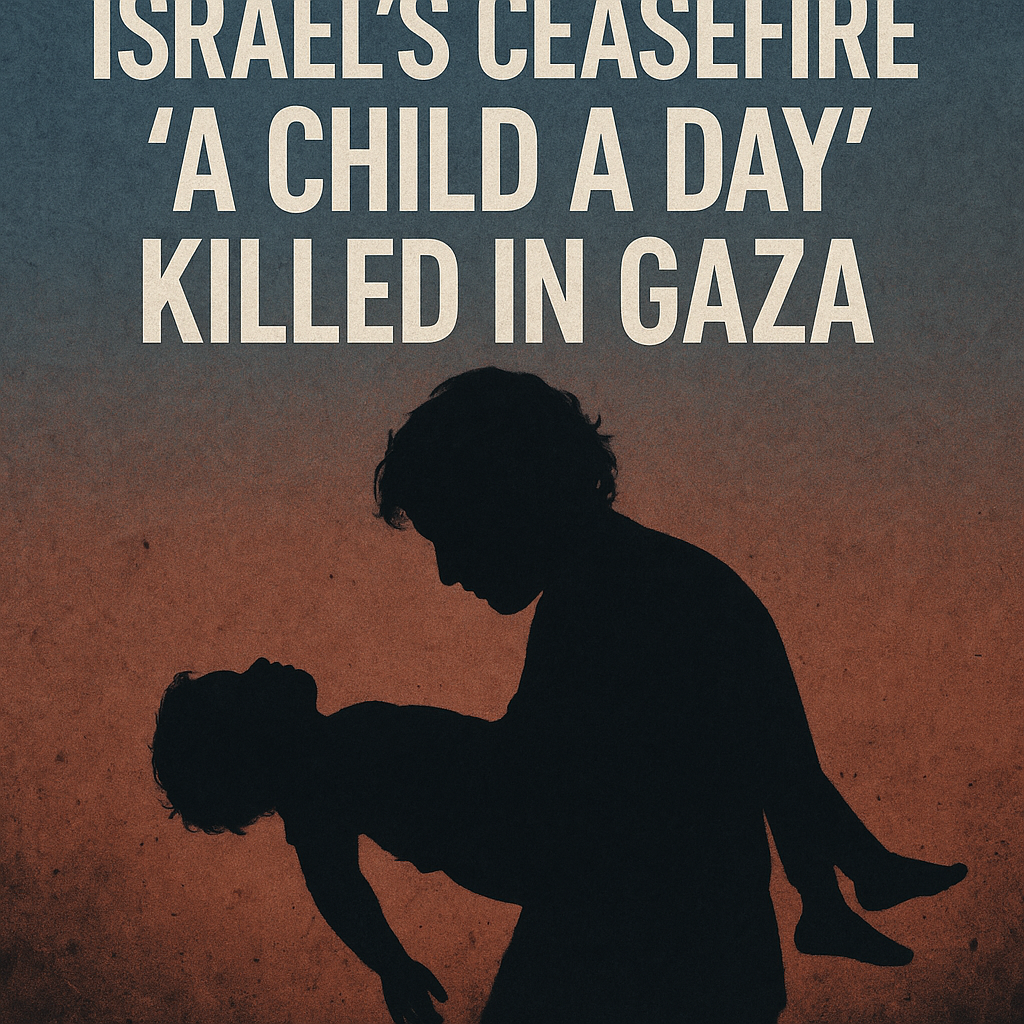
Israel’s Ceasefire: ‘A Child a Day’ Killed in Gaza
Israel’s Ceasefire: A Child a Day Killed in Gaza
In the midst of a fragile ceasefire, statistics reveal a devastating reality: approximately one child is killed every day in Gaza. This alarming figure, reported by various organizations and media outlets, underscores the ongoing humanitarian crisis in the region and calls into question the effectiveness of ceasefire agreements.

The Grim Toll of Conflict
The data reported by the United Nations highlight the tragic consequences of sustained violence in Gaza. While ceasefires are often formalized to facilitate peace talks and humanitarian aid, the persistent loss of life indicates that these agreements may not be effectively monitored or enforced. As reported by Al Jazeera, since the declaration of a ceasefire, the situation remains dire, with reports indicating a continued trend of child fatalities in the region. This tragic statistic has ignited outrage among human rights advocates and prompted calls for increased accountability from both Israeli forces and militant groups in Gaza.

– Historical Context: The long-standing conflict between Israel and Palestine has led to severe humanitarian crises, particularly in Gaza where blockades and military actions deeply impact civilian life. Historical grievances, territorial disputes, and security concerns further complicate the framework for establishing lasting peace.

– Recent Developments: Various media outlets, including Sky News and RT, have echoed the UN’s findings, emphasizing the need for international stakeholders to re-evaluate their strategies toward a resolution. Despite the ceasefire officially being in place, reports indicate that shelling and airstrikes continue, leading to civilian casualties, especially among children.
Diverse Perspectives on the Ceasefire’s Impact
The ongoing conflict poses pressing questions regarding the efficacy and integrity of ceasefire agreements. Perspectives on this situation vary significantly, with some arguing that ceasefires offer a necessary pause for diplomacy, while others contend they fail to alleviate the central issues driving the conflict.
The Argument for Ceasefire
Proponents of ceasefire agreements highlight their role in providing temporary relief to those affected by violence. Humanitarian access is often improved during these periods, allowing aid organizations to deliver much-needed resources. The ceasefire can also create an atmosphere conducive to dialogue aimed at long-term solutions, which is essential for both communities to construct a sustainable future.
– Humanitarian Access: Ceasefires can lead to improved conditions for aid distribution, enabling organizations to better support those impacted by ongoing violence. Reports indicate some humanitarian corridors have opened, allowing for essential supplies, including food, medical care, and clean water, to reach children and families in desperate need.
The Critique of Ceasefire Efficacy
However, critics argue that these agreements lack genuine enforcement mechanisms, rendering them ineffective. The continuous reports of civilian casualties illustrate gaps in the execution of ceasefire terms. Skeptics point out that when violations occur without consequence, the likelihood of a return to hostilities increases.
– Continuing Violence: The conflict has persisted even during ceasefires, with military actions often resuming soon after agreements are established. The tragic daily toll of children being killed echoes a pattern of violence that raises concerns over the commitment from involved parties to honor ceasefire terms.
Moving Toward a Sustainable Peace
Finding a path toward a sustainable peace in the Israel-Palestine conflict requires addressing complex issues affecting both parties, including territorial disputes, recognition, and security. While the current ceasefire has not led to a significant reduction in suffering—especially among the youngest and most vulnerable—there remains a strong call for international intervention and a reevaluation of existing diplomatic frameworks.
To move forward, stakeholders must ensure that any agreement encompasses stringent mechanisms that hold parties accountable for violations. Enhanced monitoring and rapid response frameworks may be essential in protecting civilian lives. International pressure and advocacy from global communities may serve as catalysts, compelling both sides to engage in meaningful dialogue rather than resorting to violence.
Conclusion
The grim reality of losing a child each day amidst a ceaseless conflict reveals a critical area that demands urgent attention. While ceasefires are a staple of diplomatic efforts, their current execution seems inadequate in preventing further loss of innocent lives. A reevaluation of this framework with a focus on accountability and genuine peace-building efforts is essential to protect the voices that matter most: those of the children caught in the crossfire.