
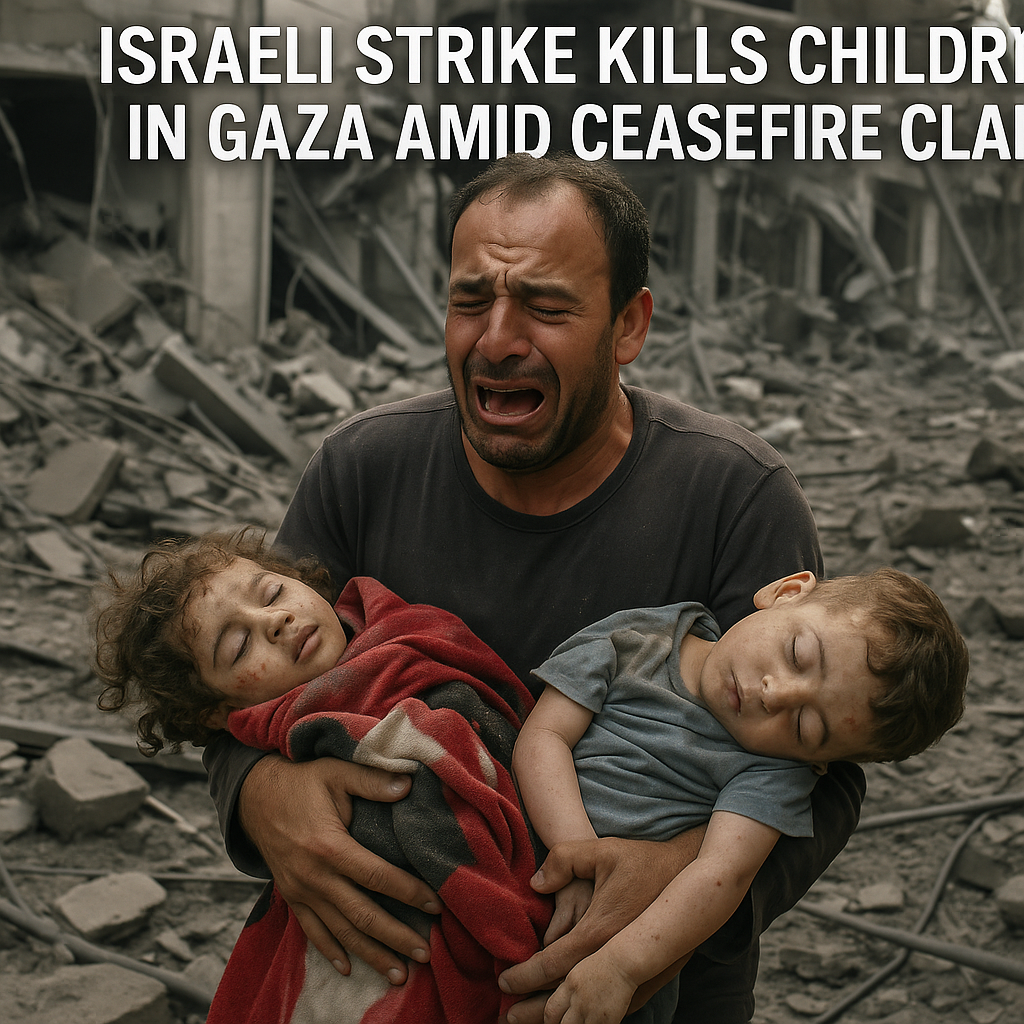
Israeli Strike Kills Children in Gaza Amid Ceasefire Claims
Rising Tensions: The Israeli Strike and its Impact on Civilians in Gaza
The recent Israeli strike that tragically resulted in the deaths of children in Gaza comes at a time of escalating violence and complicated geopolitical dynamics, despite claims of ongoing ceasefire efforts. This incident has reignited calls for a reassessment of military policies and humanitarian considerations amid the ongoing Israeli-Palestinian conflict.

Context of the Israeli-Palestinian Conflict
The roots of the Israeli-Palestinian conflict run deep, stemming from territorial disputes, historical grievances, and competing national narratives. While references to ceasefires often suggest a temporary respite, the realities on the ground illustrate a much more complex situation. Reports from Al Jazeera emphasize that civilian casualties, particularly among children, highlight the tragic human cost of ongoing military actions. Many families in Gaza live under the constant threat of violence, and this environment fosters deep-seated trauma and grief.

In contrast, proponents of Israeli military actions argue that strikes are necessary for national security and aimed at targeting militant groups that threaten Israeli citizens. RT’s coverage has pointed to the ongoing tension, asserting that Israel’s military operations are essential to protect its citizens from rocket fire originating from Gaza. However, this justification often clashes with eyewitness accounts from civilians who endure significant suffering as a result of these strikes.

Civilian Impact: A Humanitarian Crisis
The tragic loss of life among children is particularly poignant, drawing international condemnation and protests from human rights organizations. Various reports suggest that these casualties awaken a moral inquiry into the proportionality of military responses in populated areas. For instance, where Al Jazeera reported specific incidents of casualties, they emphasized the dire condition in hospitals overwhelmed with injured civilians.
The contemporary humanitarian crisis in Gaza has been exacerbated by blockades and limited access to essential resources. Families often find themselves caught in the crossfire with little means of escape or protection. This reality underscores the complexity of the “ceasefire” narratives employed by various political factions, which may not reflect the actual experiences of those living in conflict zones.
– Key Statistics:
– Reports indicate that approximately 50% of Gaza’s population consists of children.
– Human Rights Watch has often cited that the consequences of military strikes disproportionately affect non-combatants.
Statements and Reactions
International reactions to the recent strike have ranged from condemnation to calls for accountability. Sky News emphasized that various global leaders have expressed outrage over the civilian toll. The varied responses illustrate a dissonance in how different nations perceive the conflict. While some governments call for restraint and direct negotiations, others maintain firm support for Israel’s right to defend itself.
Conversely, there are voices within Israel and the international community urging for a more compassionate approach, advocating for the protection of civilians and criticizing actions perceived as indiscriminate. The debate isn’t merely black and white but is filled with shades of accountability, moral responsibility, and geopolitical strategy.
Conclusion: The Need for a Lasting Solution
As the situation in Gaza continues to evolve, the recent Israeli strike that claimed the lives of children serves as a sobering reminder of the conflict’s human cost. While the narratives surrounding military action often focus on immediate threats to national security, they frequently overlook the deeper humanitarian implications.
The unresolved conflicts demand a nuanced approach to peacebuilding—one that prioritizes dialogue, mutual respect, and understanding among all parties involved. It is essential for both local and international stakeholders to engage actively in discussions aimed at ensuring that future ceasefires are not merely temporary measures but part of a broader strategy toward lasting peace and security in the region.















