
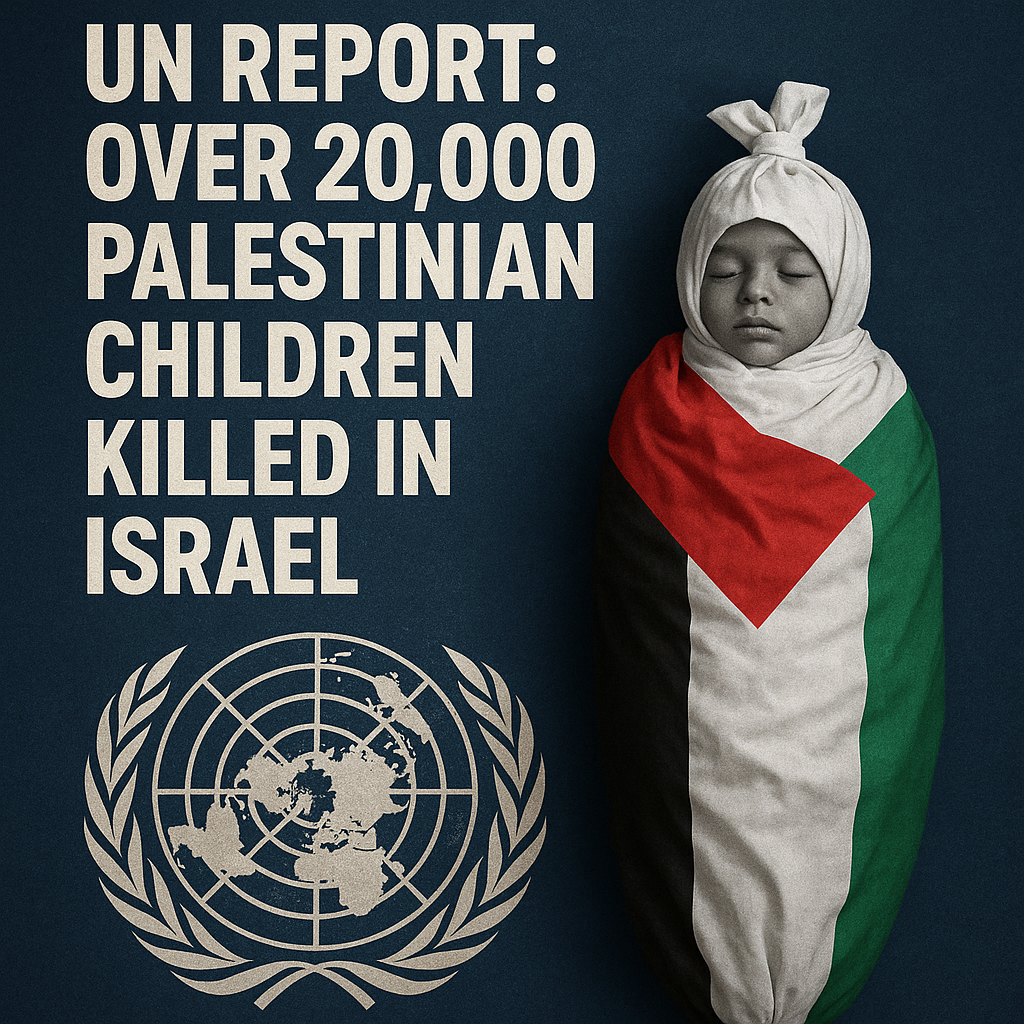
UN Report: Over 20,000 Palestinian Children Killed in Israel
UN Report: The Tragic Toll on Palestinian Children
Following a recent UN report that claims over 20,000 Palestinian children have been killed in the Israel-Palestine conflict, the international community is once again confronted with the harrowing humanitarian crisis. This figure highlights not only the devastating impact of the ongoing violence but also raises complex questions about accountability, the nature of conflict, and potential paths toward resolution.

Understanding the Context
The ongoing conflict between Israel and Palestine has been marked by cycles of violence, military incursions, and retaliatory attacks that have unfortunately taken a disproportionate toll on civilians. As the UN report suggests, children have been particularly affected, raising alarms among human rights advocates and international organizations.

Reports indicate that this alarming statistic stems from years of armed conflict, particularly during escalations such as the Gaza War of 2014 and more recent confrontations in 2021 and 2023. According to various sources, including humanitarian organizations operating in the region, these numbers underline a tragic reality where young lives are lost amid geopolitical disputes.

While international law proposes the protection of children from armed conflict, the persistence of violence has eroded these protections in many cases. The statistic cited in the UN report has prompted calls for greater accountability from both the Israeli government and various militant groups within Palestinian territories.
Diverse Perspectives on Accountability
The figures presented by the UN have sparked diverse reactions from commentators and officials worldwide. Some sources, such as Al Jazeera, emphasize the urgent need for international intervention, advocating for protection mechanisms that could safeguard children amidst conflict. They highlight how both sides bear responsibility for ensuring the safety of civilians, yet the burden on Palestinian families has been particularly severe.
Conversely, RT News offers a different perspective, arguing that the high casualties among children might be attributed to the tactics employed by militant groups in densely populated areas. They suggest that these groups sometimes operate from civilian surroundings, complicating military operations and inadvertently leading to civilian casualties during confrontations. This viewpoint often finds resonance in discussions about the intricacies of asymmetric warfare, where non-state actors utilize strategies that endanger their own populations.
Sky News reported comments from Israeli officials who assert that military actions are conducted under stringent guidelines aimed at minimizing civilian casualties. Nevertheless, they acknowledge the tragic outcomes that result from such engagements, stressing the need for peace negotiations rather than further escalation of violence.
The Humanitarian Crisis
Regardless of differing narratives, the humanitarian implications of the conflict cannot be overstated. Organizations like UNICEF have repeatedly called attention to the mental and emotional toll on children who survive, exposed to violence, loss, and instability. Many children grow up in environments marked by displacement, trauma, and loss, which can lead to long-term psychological impacts.
The UN’s mention of 20,000 casualties is not merely a statistic—it represents countless individual stories of loss, dreams stifled before they can truly begin. This suggests an urgent need for comprehensive strategies that prioritize child welfare in all aspects of conflict resolution. Humanitarian aid and psychological support must be integral to recovery efforts, promoting not only physical safety but also emotional healing for affected families.
A Call for Solutions
Debate continues around effective solutions to the Israel-Palestine conflict, with many advocating for renewed diplomatic efforts. Global leaders have expressed the need for a mechanisms that could lead to a ceasefire and eventual peace talks that prioritize the rights and safety of all civilians, particularly the most vulnerable—children.
Achieving lasting peace will require not only addressing immediate security concerns but also a commitment to building a framework for coexistence and mutual respect. The statistics from the UN report serve to remind the world of the human cost of conflict, urging both sides to consider the lives at stake beyond geopolitical interests.
In summary, while the contention continues regarding the context and reasons for the tragedy outlined in the report, one crucial consensus remains: the need to protect children in conflict zones. The international community must rally to ensure accountability and implement effective measures that safeguard future generations from the ravages of war.















