
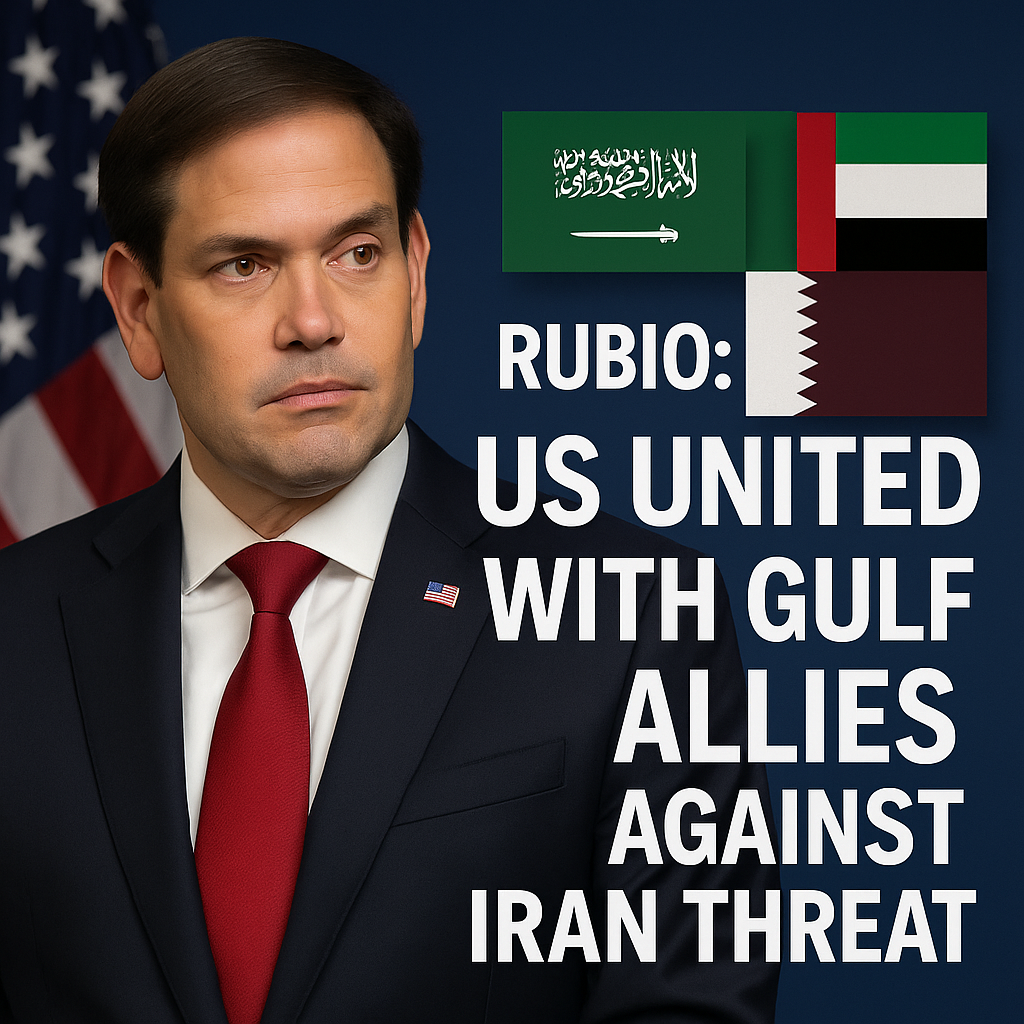
Rubio: US United with Gulf Allies Against Iran Threat
US and Gulf Allies: A Unified Front Against the Iranian Threat
In the ever-evolving landscape of Middle Eastern geopolitics, the commitment of the United States to its Gulf allies against the perceived threat from Iran has never been more pronounced. Senator Marco Rubio recently underscored this alignment, asserting that the U.S. stands “completely aligned with Gulf allies on Iran.” This declaration coincides with growing tensions in the region, elevating discussions about security and partnership strategies among nations.

The Current Landscape: Threat Perceptions and Alliances
The nature of the Iranian threat, articulated by U.S. officials and allied nations, revolves around Iran’s military ambitions and its influence over proxy groups across the region. Gulf states like Saudi Arabia and the United Arab Emirates have long viewed Iran’s activities with suspicion, especially in light of its missile capabilities and support for groups like Hezbollah and the Houthis.

Reports from Al Jazeera highlight how Rubio emphasized the importance of military cooperation and intelligence sharing in fortifying defenses against potential Iranian hostilities. This partnership extends beyond mere rhetoric; it involves actual military exercises and joint strategies aimed at countering drone threats and missile strikes that have plagued Gulf states.

Conversely, outlets like RT present a different perspective, framing the U.S. militarization in the Gulf as part of a broader strategy to exert dominance rather than as a defensive measure. Critics argue that this alignment could escalate tensions rather than mitigate them, leading to a potential arms race in the already volatile region.
Diverging Views: U.S. Policy and Regional Reactions
Rubio’s statements reflect a more hawkish stance that aligns with certain factions eager to confront Iran directly. This contrasts sharply with foreign policy approaches that advocate for diplomacy and engagement. For instance, some analysts emphasize the detrimental effects of heightened military presence in the Gulf, arguing that it could inadvertently provoke Iran and foster hostility among Middle Eastern populations.
Gulf countries themselves are not a monolith. While some, like Saudi Arabia, support U.S. military engagements, others are cautious, advocating for a balance between deterrence and diplomatic channels. This nuance presents a complicated scenario for U.S. policy, where the perception of support may not translate into a unified approach among its allies.
The Road Ahead: Balancing Deterrence and Diplomacy
Looking forward, the U.S. must navigate this complex landscape with care. As Rubio and other leaders push for stronger military postures, they must also consider alternative approaches that prioritize diplomatic initiatives. The risk of miscommunication or miscalculation in a highly charged environment remains a pressing concern.
Increased engagement with Iran, coupled with steadfast support for Gulf partners, might provide a more balanced strategy to diminish threats without exacerbating tensions. For instance, previous negotiations surrounding Iran’s nuclear program serve as a reminder of the potential benefits and pitfalls of diplomatic intervention.
Moreover, global dynamics—such as shifts in alliances, economic dependencies, and regional conflicts—will profoundly influence how the U.S. and its allies formulate their policies moving forward. The mention of potential risks associated with exclusive military cooperation has been echoed by several experts who caution against becoming entangled in proxy wars that have historically destabilized the region.
In summary, while the narrative of U.S. alignment with Gulf allies against Iran is compelling and often repeated, a more nuanced understanding acknowledges the complexities involved. Striking the right balance between military deterrence and diplomatic engagement will be key to fostering both regional stability and lasting partnerships.















