
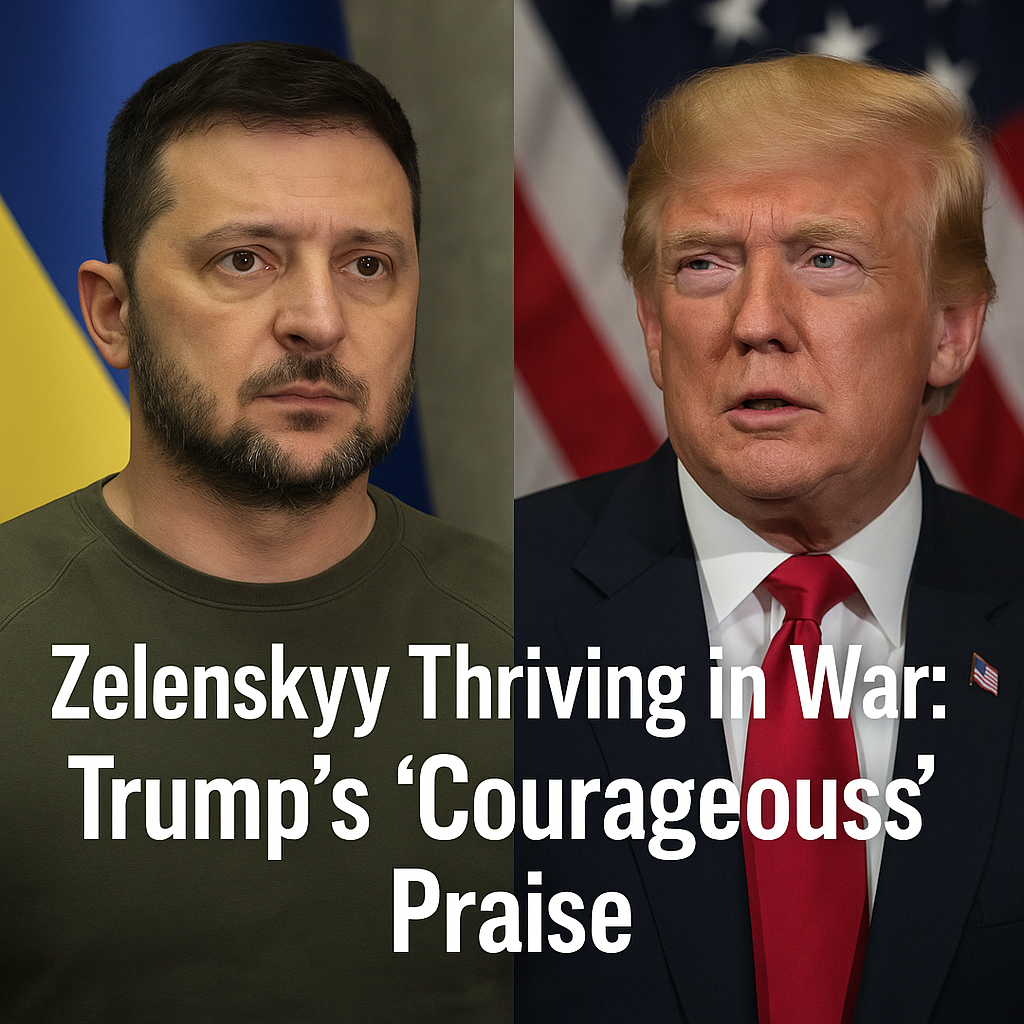
Zelenskyy Thriving in War: Trump’s ‘Courageous’ Praise
Zelenskyy Thriving in War: Trump’s ‘Courageous’ Praise
Ukrainian President Volodymyr Zelenskyy has captured global attention for his leadership amid the ongoing conflict with Russia, earning commendations from a variety of political figures—including former President Donald Trump, who described him as “courageous.” This praise presents a fascinating perspective on Zelenskyy’s role and his impact during these tumultuous times.

A Shift in Perspective
Trump’s comments, as reported by Sky News, came during a recent interview where he remarked on Zelenskyy’s effectiveness in rallying global support for Ukraine. By calling him “courageous,” Trump emphasized a noteworthy transformation: the former president, known for his critical stance towards foreign aid during his administration, has shifted to acknowledge Zelenskyy’s unique ability to navigate a crisis.

Zelenskyy’s leadership has indeed appeared effective, especially in terms of mobilizing international support. Since the beginning of the war, he has been instrumental in securing arms and financial aid from Western nations, which has bolstered Ukraine’s defenses considerably.

However, not all perspectives align neatly with Trump’s praise. Critics of his administration argue that tapping into Trump’s support risks misinterpreting Zelenskyy’s broader objectives. While former military officials and political analysts generally agree on the importance of the U.S. backing Ukraine, they maintain that reducing complex geopolitical issues to personal commendation—or criticism—simplifies the narrative.
Navigating Complexity: The Duality of Praise
As the war in Ukraine unfolds, the dichotomy of praise and skepticism surrounding Zelenskyy’s leadership speaks to the evolving geopolitical landscape. Supporters of Zelenskyy cite moments of unity and resistance, with his speeches often becoming rallying cries for not just Ukrainians but for democratic ideals worldwide. This narrative is further reinforced by international organizations and states pledging unwavering support, showcasing an almost universal condemnation of Russia’s aggression.
Conversely, there remains a contingent of analysts who caution against viewing such support as monolithic or devoid of complicating factors. For instance, some voices on RT have highlighted the challenges Zelenskyy faces domestically, including partisan divides and economic strain exacerbated by the ongoing conflict. They argue that while external support is vital, attention must also be paid to internal governance and sustainability of public support within Ukraine.
In essence, while Trump’s description of Zelenskyy as “doing pretty well” captures a snapshot of his public image, it glosses over multifaceted issues such as humanitarian crises and potential erosion of civil liberties in wartime Ukraine. Thus, the narrative around Zelenskyy thrives on complexity, needing an examination that transcends momentary praise or criticism.
Divergent Paths and Unified Goals
Amidst the applause, it’s crucial to recognize the challenges that often go underreported. Reports indicate that not only has Zelenskyy been vital in keeping morale high, but he has also faced mounting opposition from various fronts, including political opposition and economic hardships. Al Jazeera cites increasing frustrations among Ukrainians about corruption and governance, even as they rally together against an external enemy.
Despite mixed sentiments surrounding his leadership, one common goal emerges across diverse viewpoints: a desire for peace and stability in Ukraine. This overarching aim ties together various political factions and ideologies both within and outside Ukraine, from staunch supporters of military aid to those advocating for more diplomatic routes.
Ultimately, the evolving narrative around Zelenskyy, influenced by figures like Trump, showcases a broader dialogue about leadership during crisis—one that ideally prioritizes both external recognition and internal integrity.
Conclusion: An Uncertain Path Forward
While Trump’s commendation of Zelenskyy underscores a moment of bipartisan acknowledgment of Ukraine’s plight, it also raises essential questions about the nature of leadership during war. The complexity of the situation requires a balanced view that weighs the successes against the backdrop of ongoing struggles.
As the war continues, how Zelenskyy navigates these complexities remains to be seen. His ability to maintain national unity while securing international support will be crucial in determining Ukraine’s future resilience against external pressures and internal challenges alike.















