
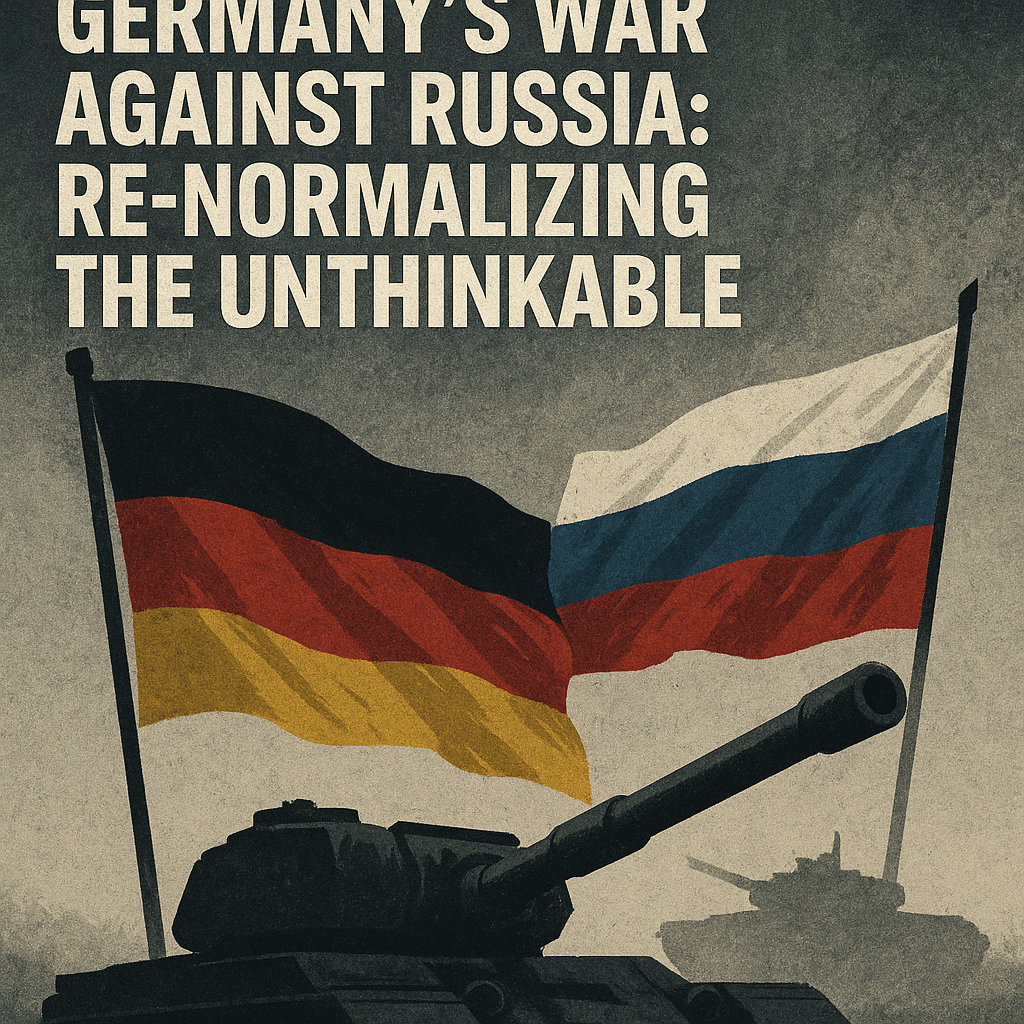
Germany’s War Against Russia: Re-Normalizing the Unthinkable
Germany’s ongoing relationship with Russia has entered a complex new phase, marked by heightened tensions and a re-evaluation of foreign policy strategies. As the conflict in Ukraine escalated, Germany’s approach has evolved from cautious diplomacy to a more assertive stance, raising questions about the implications of its actions and the broader geopolitical landscape.

The Shift in German Foreign Policy
Historically, Germany has maintained a delicate balance in its relations with Russia, characterized by economic interdependence and diplomatic dialogue. However, the recent invasion of Ukraine by Russia has prompted a significant policy shift. The German government, under Chancellor Olaf Scholz, has emphasized the need to support Ukraine while also reconsidering its long-standing approach to Russia.

Recent reports indicate that Germany is stepping up military aid to Ukraine, a move that marks a stark departure from its previous hesitance to provide lethal weapons. This shift is being framed as a necessary response to both ethical considerations and national security interests. Scholz has articulated that “Germany must lead NATO to strengthen our collective defense” involved a “dramatic shift” in policy that resonates with many Western allies.

While some analysts applaud Germany’s pivot as a long-overdue embrace of its post-war responsibilities, others express concern over the potential ramifications. Critics argue that increasing military involvement could entrench Germany in a protracted conflict, risking further escalation with Russia.
Diverse Perspectives on Military Support
The calls for enhanced military assistance to Ukraine arise from varied perspectives. Proponents assert that German support is vital for Ukraine’s defense and stopping Russia’s advancement in Europe. Economic security and stability in the EU are at stake, and many believe Germany has a moral obligation to aid a nation defending itself against aggression.
On the other hand, some voices in the German political landscape worry that increased military assistance could provoke a backlash from Russia, complicating an already fragile relationship. They argue that Germany’s historical context as a key player in Europe necessitates a more diplomatic approach instead of direct military involvement. The tension between moral imperatives and geopolitical strategy represents a significant dilemma for German policymakers.
The Economic Dimension of War
In addition to military commitments, Germany’s economic repercussions from the war cannot be understated. The country is heavily reliant on Russian energy resources, particularly natural gas. Recent reports illustrate the delicate balancing act the German economy faces: supporting Ukraine while mitigating the disruption to its energy supply.
The European Union (EU) has initiated measures to reduce dependence on Russian energy, including sanctions and diversification strategies. However, Germany’s transition has been slow, indicating a reluctance to sever ties abruptly with a major supplier. This dependency complicates the narrative around Germany’s full commitment to a wartime posture against Russia, as any full-scale conflict could collide with economic interests.
Understanding the Complexity of Re-Normalization
As Germany embarks on this strategic re-normalization of its stance toward Russia, uncertainties loom large. The dialogue surrounding the need for a balanced approach—between deterrence and diplomacy—continues. Some experts suggest that a robust diplomatic framework remains essential to avoid further escalations while preserving collective security in Europe.
Critics argue that Germany risks alienating not just Russia but also voices within its borders calling for peace negotiations. “To re-normalize relations with Russia while the war continues poses significant ethical questions,” states Hans Schneider, a German political analyst. “Can we reconcile the need for dialogue with the reality of aggressions?”
As Germany navigates these treacherous waters, the international community will be watching closely. While the calls for greater military commitment resonate with many, how these translate into sustainable and effective policy remains uncertain.
The interplay between ethical imperatives and foreign policy leads to a nuanced understanding of Germany’s trajectory as it redefines its role on the global stage. The conversation around military assistance, energy dependencies, and diplomatic relations does not have straightforward answers; it is a constantly evolving discussion that reflects the complexities of a post-war Europe reshaped by conflict.
In conclusion, Germany’s renewed engagement in military support for Ukraine marks a pivotal moment in its historical participation in global affairs. The implications of this choice extend beyond European borders, compelling Germany, Europe, and the international community to grapple with the realities of conflict in an increasingly interconnected world. The path forward will require measured diplomacy, strategic economic planning, and an unwavering commitment to principles of sovereignty and peace.















