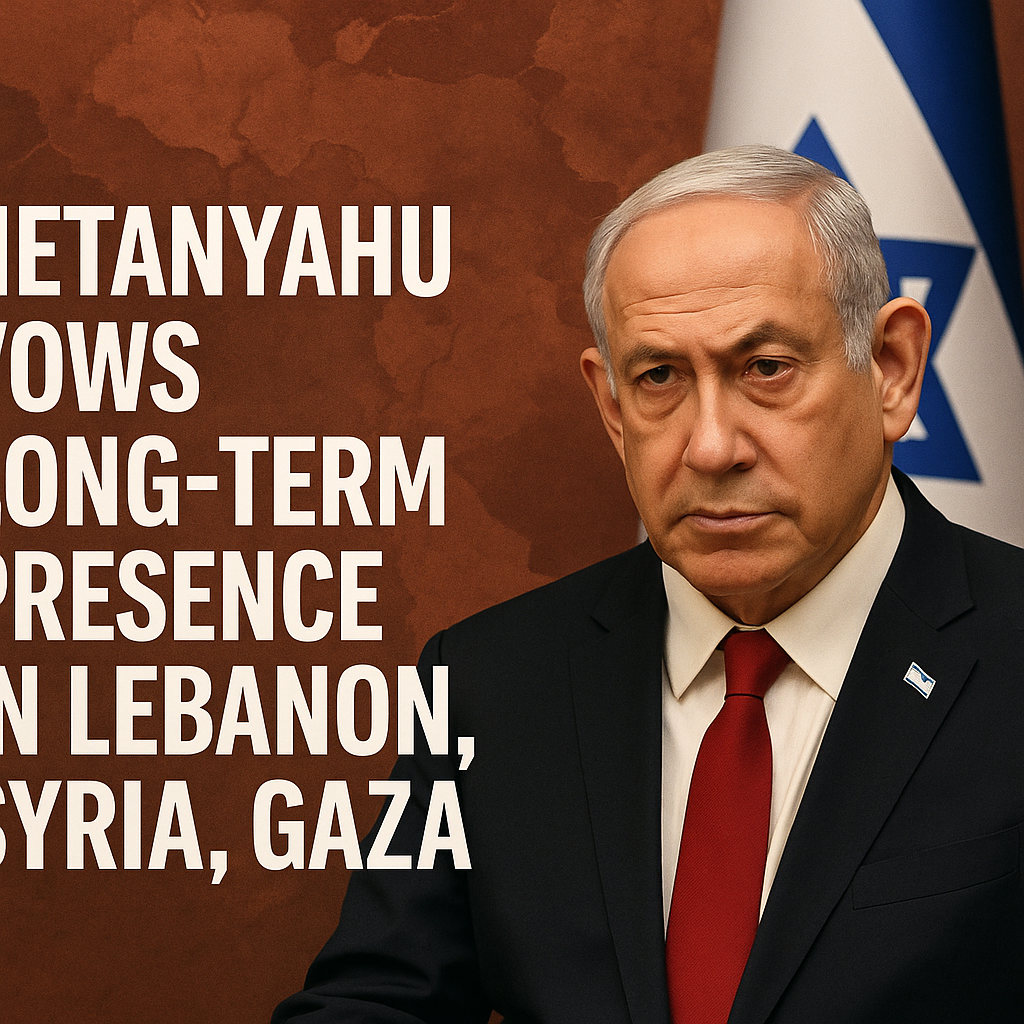
Netanyahu Vows Long-Term Presence in Lebanon, Syria, Gaza

Netanyahu’s Recent Declaration on Presence in Lebanon, Syria, and Gaza

Israeli Prime Minister Benjamin Netanyahu has recently made headlines with his assertion that Israel will maintain a prolonged military presence in Lebanon, Syria, and Gaza. This statement underscores ongoing tensions in the region and sheds light on Israel’s strategic objectives amid dynamic geopolitical realities. Netanyahu’s assertion raises vital questions regarding Israel’s military posture and its implications for regional stability and peace.


The Strategic Rationale Behind the Declaration
Netanyahu’s commitment to a long-term presence in these territories aligns with historical Israel’s approach to security relations with neighboring states. The Israeli Defense Forces (IDF) have long argued that maintaining a foothold in Lebanon and Syria is essential for thwarting threats from militant groups like Hezbollah and Hamas. According to Netanyahu, this strategy is not merely defensive but seeks to project power, deter adversaries, and ensure that hostile entities cannot establish a robust military presence along Israel’s borders.


In a statement aired on Al Jazeera, Netanyahu emphasized, “We will remain in Lebanon, Syria, and Gaza for as long as it takes to secure our citizens.” This rhetoric reflects a growing sentiment among Israeli leadership that prioritizes military engagement as a means of preserving national security. Critics, however, point to the dangers of such a stance, arguing that prolonged military occupation could incite further hostility and violence in the already volatile region.
Diverse Perspectives on the Policy
The international reaction to Netanyahu’s declaration has been multifaceted. Supporters, primarily within Israeli political circles, argue that a sustained military presence is a necessity in the face of persistent threats from uncivilized actors. They posit that Israel has historically faced aggression, notably from non-state actors in Lebanon and Gaza, and that proactive measures are required to safeguard citizens. This viewpoint suggests that military presence acts as a deterrent, crucial for national security.
Conversely, numerous international analysts and advocates for peace, including organizations like Human Rights Watch, have cautioned against a heavy-handed approach. They argue that an extended military presence risks inflaming tensions, leading to further cycles of violence. A report published by Sky News highlights the civilian toll of military operations, stating that “escalation in airstrikes and ground invasions not only results in loss of life but deepens societal fractures within both Israeli and Palestinian communities.” Such sentiments suggest that while Netanyahu’s approach may secure short-term military objectives, the long-term ramifications could be detrimental to regional stability.
The assessment of risks posed by various hostilities in the region is complicated. Figures from Reuters indicate that violence has surged in areas bordering Gaza and Lebanon, with increased rocket fire and retaliatory strikes since Netanyahu’s announcement. This volatile environment fosters skepticism regarding the Israeli government’s strategy, as many question whether a military-centric approach can effectively address the underlying conflicts driving animosity.
Long-Term Implications and the Path Forward
Netanyahu’s insistence on remaining engaged in Lebanon, Syria, and Gaza raises important considerations for future policy. On one hand, maintaining a military presence is seen as crucial for immediate security; on the other hand, it may undermine the possibility of peace. Experts on foreign relations argue that without addressing root causes—like socio-economic issues and political disenfranchisement—the cycle of violence is likely to continue.
The lack of a comprehensive peace strategy from Israel exacerbates the situation. A notable absence of dialogue has been highlighted by various analysts, suggesting that building sustainable peace requires engagement with opposition groups and addressing grievances that fuel conflict. Both sides must engage in dialogue, addressing not only military concerns but also humanitarian issues, to shift from a cycle of retaliation to one of reconciliation.
As international observers continue to scrutinize Netanyahu’s declaration, the intricate balance between security and peace remains a paramount challenge. The ongoing tensions in the region underscore the complexity of military engagements and their long-lasting effects on nations and people alike. The future of Israel’s security strategy may depend on a significant recalibration of its approach, incorporating measures that transcend military dominance in favor of fostering dialogue and mutual understanding.