Bedouins Protest Israel’s Home Demolitions in Negev Desert

Bedouins Protest Israel’s Home Demolitions in Negev Desert
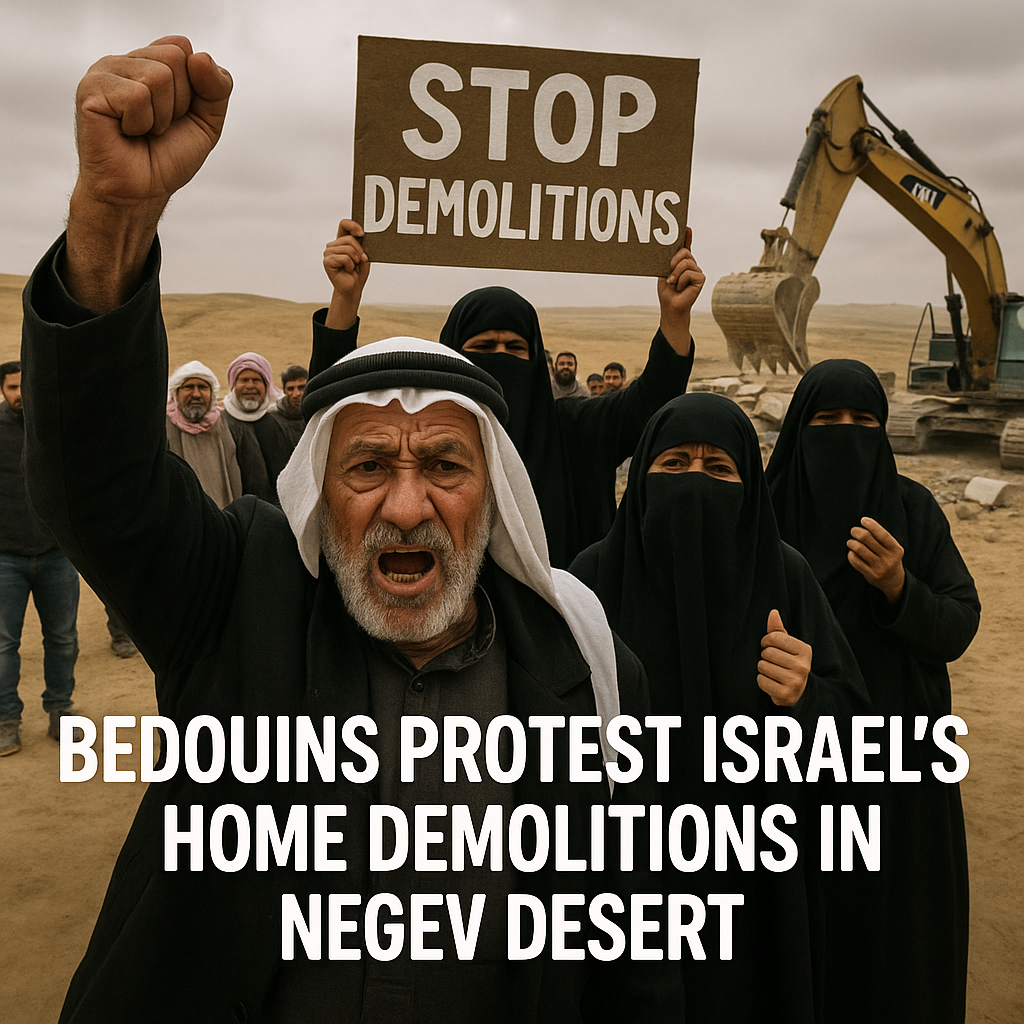
The ongoing home demolitions affecting Bedouin communities in the Negev Desert have ignited widespread protests, drawing attention to the complex interplay between state policies and indigenous rights in Israel. These demolitions, often framed as part of urban planning initiatives, raise fundamental questions about sovereignty, identity, and the historical claims of the Bedouin people to their land.

The Context of Displacement
In the Negev Desert, where the Bedouin population has faced systemic challenges to their housing and land rights, recent actions by the Israeli authorities have escalated tensions. State-led demolitions are often justified on the grounds of legality and urban development. However, many Bedouins argue that these actions represent a continuation of historical dispossession and cultural erasure. As reported by Al Jazeera, community leaders have mobilized large-scale protests, emphasizing their plight against what they perceive as the marginalization of their rights.


The Israeli government’s position centers on the notion that many Bedouin homes are built without permits, which it argues are necessary for planning and development. These claims are contested by Bedouin activists who assert that they are often unable to obtain permits due to discriminatory practices by local authorities. Despite living in the Negev for generations, the Bedouin’s relationship to their land remains precarious and highly politicized.


Diverse Perspectives on the Issue
There is no monolithic viewpoint on the demolitions; perspectives vary significantly across different groups both within and outside Israel. Proponents of the demolition policy argue that orderly urban development is necessary for the region’s future, citing issues of safety and planning. They emphasize that the law must be upheld uniformly regardless of ethnic background.
Conversely, critics of this approach highlight the implications of such policies on human rights and community stability. RT News reported statements from Bedouin leaders who stress that the demolitions are a form of collective punishment that disproportionately impacts the poorest sections of society. The community often finds itself stuck in a cycle of displacement, with little recourse to legal protection or support from governmental bodies.
Community Responses and Solidarity
The protests themselves have not only featured local residents but have garnered international attention and support from various organizations advocating for indigenous rights. As massive rallies continue in the Negev, Bedouin leaders call for solidarity from human rights advocates worldwide. They argue that the situation in the Negev is emblematic of broader issues regarding indigenous populations globally, where state interests often supersede traditional land rights.
Additionally, social media campaigns and grassroots organizations have played a crucial role in rallying support, creating a platform for Bedouin voices. Utilizing hashtags and live broadcasting events, activists have made efforts to draw attention to the ongoing struggle against home demolitions, hoping to foster a greater understanding of their plight among global audiences.
The Way Forward: A Call for Dialogue
The path forward is fraught with complexity as both sides have entrenched positions. Nonetheless, some analysts argue for a dialogical approach that involves negotiations between the Israeli government and Bedouin representatives. This could lead to a more equitable solution that recognizes the historical rights of the Bedouin while addressing urban planning needs.
Ultimately, understanding the nuances of this situation is key. Many residents are not merely resisting state policy; they are fighting for recognition, respect, and a sustainable future. As more people become aware of the grim realities faced by Bedouin communities, there may be a greater push for change that values human dignity over administrative convenience.
In conclusion, the protests against home demolitions in the Negev Desert reflect deep-seated issues of identity, rights, and belonging. Both Bedouin communities and the Israeli state must engage in meaningful discourse to seek resolutions that move beyond surface-level fixes. Only through understanding and compromise can a just solution be reached that honors the complex history of the land and its people.