
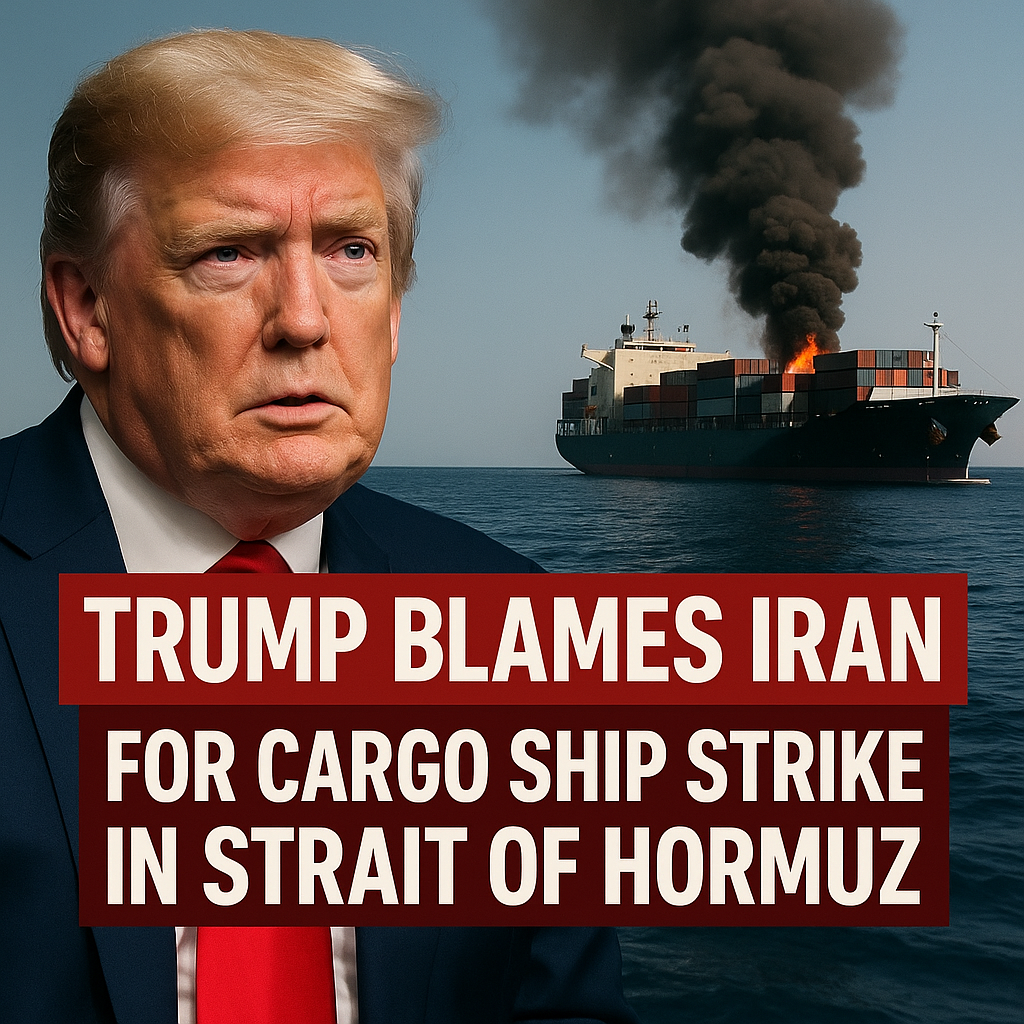
Trump Blames Iran for Cargo Ship Strike in Strait of Hormuz
Trump Blames Iran for Cargo Ship Strike in Strait of Hormuz
The geopolitical tension in the Strait of Hormuz has flared up once again, with former President Donald Trump accusing Iran of responsibility for the recent strike on a cargo ship in the region. This incident underscores the broader complexities involving Iran and maritime security, particularly in a vital waterway that carries a significant portion of the world’s oil supply.

Rising Tensions and Strategic Importance
The Strait of Hormuz is one of the world’s most critical chokepoints for oil transportation, with about 20% of global oil consumption passing through its waters. This strategic significance makes any conflict in the area especially alarming. Trump’s remarks come in the wake of increasing confrontations involving Iranian Revolutionary Guard units and various shipping vessels. Reports indicate that the cargo ship, which was not identified, suffered damage during the attack but managed to avoid sinking.

In the wake of the incident, Trump labeled the strike “foolish,” asserting that it marks a continuation of Iran’s hostile activities in the region. While his statements have resonated with those who favor a harder stance on Tehran, opinions are diverse among international observers. Some argue that Trump’s approach primarily reflects U.S. domestic politics rather than providing a comprehensive strategy for addressing shared security concerns.

Divergent Perspectives on Iran’s Role
The attribution of blame to Iran is not without contention. Proponents of varying viewpoints have emerged in response to the rising conflicts. On one hand, analysts from Al Jazeera noted that evidence surrounding notably aggressive maneuvers by Iranian forces could indeed suggest culpability. This perspective emphasizes the pattern of Iran’s activities in attempting to assert control over maritime navigation and “sending a message” to Western nations.
Conversely, other sources, such as RT, caution against jumping to conclusions. They highlight the possibility that the strike could be used as a pretext for increased military involvement in the area. This view posits that while Iranian actions need scrutiny, attributing blame without irrefutable evidence could escalate tensions unnecessarily, further complicating diplomacy.
Furthermore, experts recommend examining the background of the incident in the broader context of Iran’s geopolitical strategy. It may serve to further assert its influence amid ongoing negotiations regarding nuclear programs and sanctions.
The Path Forward
As the tension grows, the ramifications of Trump’s comments could ripple through diplomatic corridors. His remarks may galvanize supporters advocating a more aggressive posture toward Tehran. Yet this might clash with calls from other political leaders who favor diplomacy over confrontation.
Moving forward, there are several considerations for policymakers:
– Engagement with Regional Allies: Collaborating with Gulf Cooperation Council nations could create a unified front to guarantee the safety of navigation through the Strait of Hormuz.
– Direct Negotiations: There remains a necessity for dialogue with Iran to address broader regional security concerns, including the nuclear deal.
– Public Perception: Understanding how such actions are perceived domestically and in the international community is vital for ensuring a well-rounded approach that doesn’t overlook potential consequences.
Conclusion
The issue surrounding Trump’s allegations is multifaceted, encompassing geopolitical strategy, economic implications, and the potential for military action. While Iran’s aggressive maneuvers certainly warrant scrutiny, attributing blame without comprehensive evidence can lead to miscalculations. As this situation evolves, it is crucial that Western powers adopt a balanced approach, weighing both the need for security and the benefits of diplomacy in a region fraught with uncertainty.















