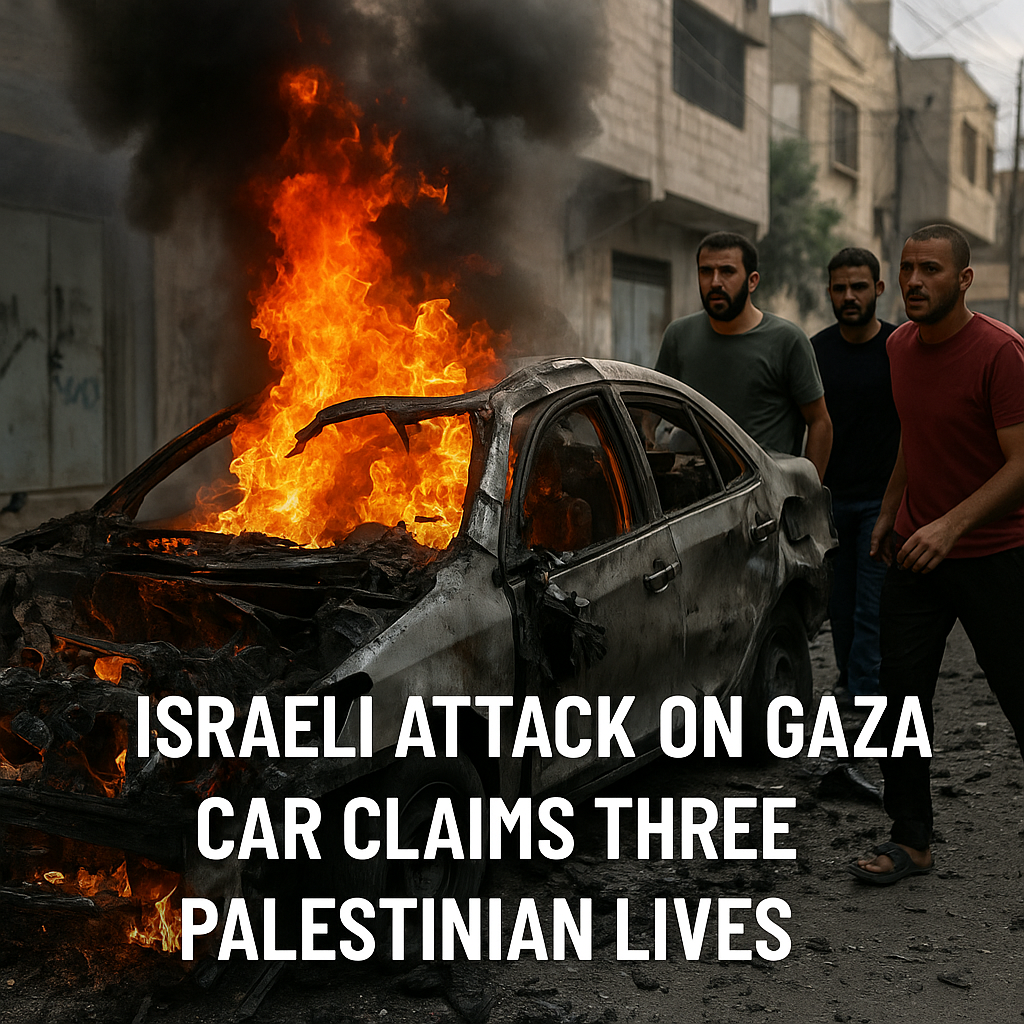
Israeli Attack on Gaza Car Claims Three Palestinian Lives
Tragedy in Gaza: The Impact of Israeli Attacks
The recent Israeli attack on a vehicle in central Gaza has claimed three Palestinian lives, drawing attention to the escalating violence in the region. This incident has not only intensified existing tensions but has also sparked a myriad of responses from various stakeholders, highlighting the complexities of the ongoing conflict.

Context of the Attack
On June 26, 2026, a car was struck during an air assault, resulting in the tragic loss of life. According to reports from Al Jazeera, the attack was aimed at an armed group within the territory, reflecting the Israeli government’s continued military actions targeting perceived threats. The Israeli Defense Forces (IDF) often justify such operations by citing the need to neutralize militant activity that poses a danger to Israeli citizens.

Conversely, the response from Palestinian officials has been one of condemnation, labeling the attack as an act of aggression. Palestinian leaders argue that such military strikes not only endanger civilian lives but also impede any path toward peace. They emphasize that these incidents contribute to a cycle of violence that keeps the region in turmoil, further undermining hopes for a peaceful resolution.

Varied Perspectives on the Incident
Different viewpoints persist regarding the justification and consequences of military actions in Gaza. Supporters of Israel’s approach argue that the nation has the right to defend itself against threats, suggesting that targeted attacks can reduce the operational capabilities of militant groups like Hamas. They claim that these strikes are surgical and intended to minimize civilian casualties while aiming to dismantle terrorist infrastructure.
In contrast, human rights advocates stress the rising number of civilian deaths and the significant humanitarian implications of such attacks. Reports indicate that areas in Gaza often face severe destruction, exacerbating an already dire humanitarian situation. According to an assessment from Sky News, the ongoing conflict has left many residents without adequate access to basic needs such as food, clean water, and medical care. Emphasizing the disproportionate nature of military responses, critics of Israel’s actions advocate for dialogue and negotiation instead of military solutions.
The Cycle of Violence and Its Implications
The incident, while tragic in itself, is symptomatic of a broader cycle of violence that plagues both Palestinian and Israeli communities. Each attack fuels retaliatory actions, which often lead to further loss of life and heightened animosity. The human toll of these military engagements is immense; three lives lost in one assault reflect a broader reality where the innocent frequently bear the brunt of political and military strategies.
Organizations such as the United Nations have repeatedly called for restraint and a re-evaluation of tactics, urging a shift from militarized responses to diplomatic engagement. However, the entrenched positions of both Israeli and Palestinian sides complicate any attempts for genuine dialogue.
The Path Forward
While the immediate responses to the attack in Gaza continue to emerge, the overarching challenge remains: how to break the cycle of violence that has persisted for decades. The perspectives surrounding this tragedy illustrate a complex landscape where military actions are juxtaposed against humanitarian needs.
The future of both Israeli and Palestinian states is contingent upon their ability to navigate these tensions, recognizing the impact of violence on everyday lives. As international observers watch closely, the hope remains that such incidents can serve as catalysts for peace rather than justification for further escalation.
In conclusion, the tragic loss of three lives in Gaza reaffirms the urgency for addressing persistent conflicts in the region. It is imperative for all parties involved to seek solutions that recognize the humanity of those affected and prioritize a transition toward lasting peace.