
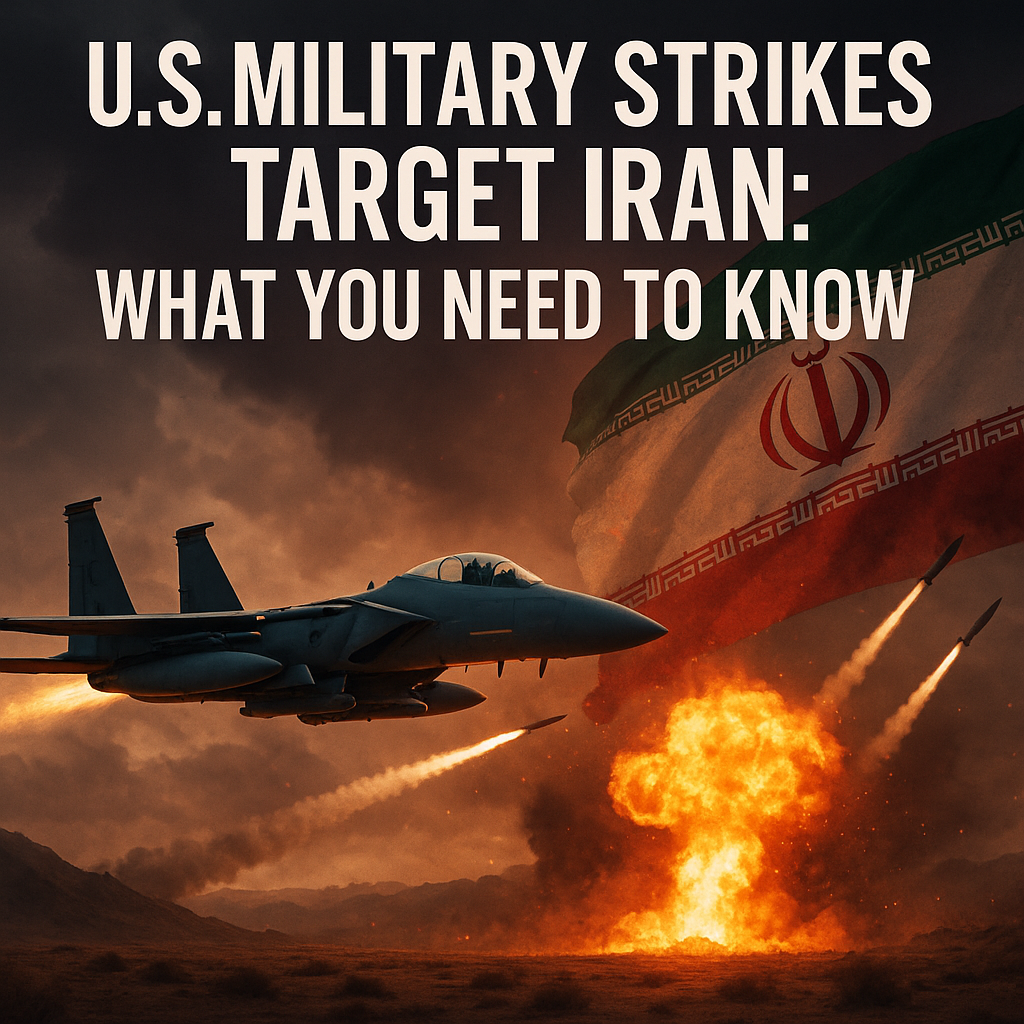
US Military Strikes Target Iran: What You Need to Know
US Military Strikes Target Iran: What You Need to Know

Recent military actions have escalated tensions between the US and Iran, with reports confirming targeted strikes carried out by the US against Iranian interests. These developments warrant scrutiny, not just for their immediate military implications but also for their broader geopolitical consequences.

Understanding the Background of US-Iran Relations
Historically, the relationship between the United States and Iran has been marked by conflict and distrust, particularly after the 1979 Iranian Revolution, which resulted in the overthrow of the US-backed Shah. Over the decades, tensions have intensified due to factors such as Iran’s nuclear program, its regional influence through proxies, and its opposition to US interests in the Middle East.

The recent strikes are a continuation of this fraught history, reportedly aimed at Iranian military facilities accused of supporting militant operations against US forces in the region. Statements from US military officials suggest that these strikes are viewed as both a defensive measure and a direct response to provocations attributed to Iranian-backed groups.
The Rationale Behind the Strikes
According to various sources, the US government justified the strikes as necessary to protect American troops stationed in the region. A senior US defense official stated, “These are defensive actions aimed at deterring further aggression.” The official narrative posits that by striking Iranian facilities, the US aims to send a clear message that aggression towards American forces will meet with a swift and effective response.
Conversely, this aggressive posture has drawn criticism from various quarters. Opponents of the strikes argue that such actions may further inflame regional tensions and risk drawing the US deeper into another protracted conflict in the Middle East. Voices from advocacy groups and some political analysts warn that historical precedents demonstrate that military strikes often fail to achieve long-term peace and may instead catalyze a cycle of retaliation.
Consequences and Perspectives on Future Relations
The consequences of these military actions extend beyond the immediate battlefield. Analysts suggest that renewed strikes could instigate Iran to ramp up its nuclear activities or increase support for proxy groups in the region, which may further destabilize an already volatile situation.
International Response and Diplomacy
Reactions to the US strikes have varied widely on the international stage. Some regional allies have expressed support for the US actions, viewing them as necessary to curb Iranian aggression. In contrast, countries opposed to US involvement in the region—such as Russia and China—have condemned the strikes, suggesting they undermine international stability and peace efforts.
Diplomatic solutions remain fraught with challenges, particularly as trust erodes further. The possibility of renewed negotiations regarding Iran’s nuclear program and regional conduct appears increasingly tenuous. The diplomatic community is now tasked with navigating a complicated landscape marked by military escalation, economic sanctions, and public discontent in both the US and Iran.
Public Sentiment and Future Implications
Public opinion in the US regarding military involvement in Iran is mixed. Many Americans express fatigue over continued military engagements in the Middle East, yearning for a shift towards diplomacy rather than confrontation. Polling data reflects growing skepticism about the efficacy and morality of military action, especially in light of past involvements in Iraq and Afghanistan.
In Iran, the government’s narrative frames the US strikes as an act of aggression, which eases domestic pressure by uniting national sentiment against a common adversary. The Iranian leadership is likely to leverage these actions to bolster its position both domestically and regionally, potentially justifying further investments in military capabilities and proxy engagements.
A Complex Path Forward
The path forward for US-Iran relations is undeniably complex. The recent military actions serve as a stark reminder of the fragile balance of power in the Middle East. While the US seeks to protect its interests, it must also grapple with the potential for backlash and unintended consequences.
As stakeholders on both sides digest these developments, it becomes increasingly clear that a multifaceted approach involving diplomacy, aggressive deterrence, and conflict de-escalation is essential. The ongoing situation calls for careful consideration of actions and responses, underscoring the need for dialogue in a landscape often dominated by militaristic solutions.
In summary, the recent US military strikes targeting Iranian interests are not merely tactical moves; they symbolize a critical juncture in a long and complicated relationship. As events unfold, the interplay between military engagement and diplomatic efforts will shape the future of US-Iran relations, making it imperative for policymakers to thoughtfully consider the full spectrum of potential outcomes.















