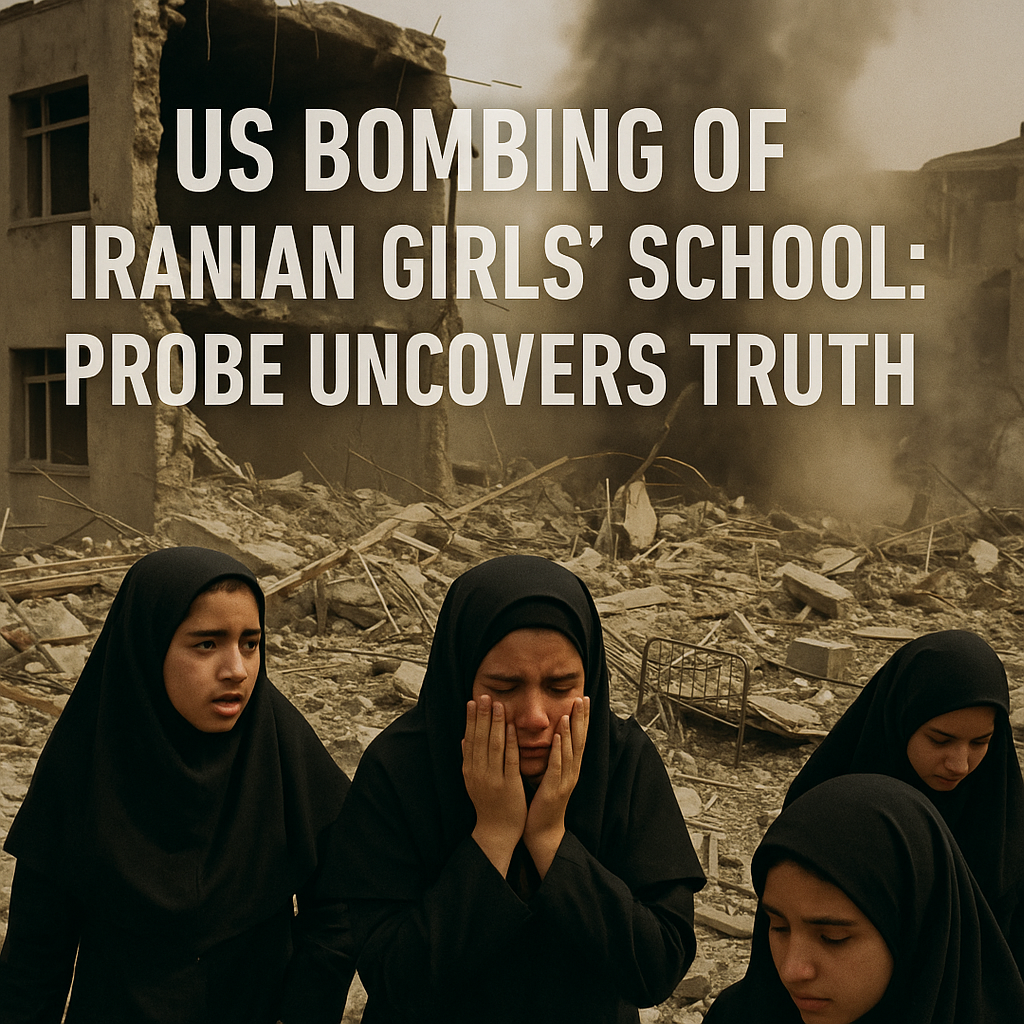
US Bombing of Iranian Girls School: Probe Uncovers Truth
US Bombing of Iranian Girls School: Probe Uncovers Truth
The recent US bombing of an Iranian girls’ school has ignited a complex debate regarding military accountability and civilian safety during times of conflict. This incident not only raises questions about operational protocols but also highlights the deeper implications of military interventions in politically charged regions.

Context of the Incident
The bombing reportedly occurred amid ongoing tensions between the US and Iran, during a period marked by escalating military operations in the region. According to multiple reports, the airstrike was initially justified under claims that the school was being used as a cover for militant activity. The Pentagon maintained that such operations are necessary to thwart emerging threats. However, further investigations have revealed nuances that challenge this narrative and prompt a reevaluation of the bombings’ justifications.

In a revealing report from RT, it was noted that the bombing led to widespread outcry among local and international communities. Critics argue that the justification used by the US military was insufficient, as military intelligence often fails to accurately assess civilian structures, particularly educational institutions that are traditionally seen as non-combatant areas. Furthermore, advocates for civilian safety stress the moral obligation of military forces to protect vulnerable populations, especially children.

Mixed Reactions to the Bombing
The international response to the bombing has been markedly divided. On one hand, proponents of the military action highlight the necessity of targeting potential threats in the region. They argue that stifling militant operations can lead to broader regional stability. However, numerous humanitarian organizations and activist groups have condemned the bombing as an egregious violation of international law, emphasizing the protection owed to civilians under such circumstances.
Al Jazeera’s coverage points to a growing body of evidence that suggests the bombing resulted in significant civilian casualties, including students and teachers at the targeted school. This incident feeds into the broader narrative concerning the lack of strategic precision in military operations, particularly in areas where distinctions between combatants and non-combatants often blur. The devastation wreaked on innocent lives has prompted widespread calls for accountability and demands for transparent investigations into military operations.
Ethical Considerations and Accountability
Amidst the clamor of diverse opinions, it’s essential to consider the ethical dimensions surrounding military operations in populated civilian areas. The principles of proportionality and distinction are cornerstone tenets of international humanitarian law, providing frameworks that maintain that military actions should avoid civilian casualties whenever possible. The impact of this bombing reveals a significant challenge in achieving these standards in modern warfare.
One perspective presented by Sky News emphasizes the evolving nature of warfare, where technological advancements in warfare often fail to translate into better outcomes for civilian populations. Drone strikes and precision bombings, while touted for their accuracy, can still lead to catastrophic misunderstandings that result in tragic losses. Activists argue that the accountability mechanisms in place currently do not suffice in preventing such incidents. The need for reforms in military engagement protocols is becoming increasingly pressing.
The Way Forward
In light of this tragic event, it is crucial to examine how future military operations can ensure better adherence to humanitarian standards. This situation underscores the importance of intelligence accuracy and the necessity of comprehensive training for military personnel regarding the sanctity of civilian life.
Calls for comprehensive investigations are paramount. They should not only address the facts surrounding this specific bombing but also analyze the overarching military strategies that lead to such outcomes. Reforming military protocols and enhancing the sensitivity of military operations towards civilian life can potentially mitigate the consequences of future conflicts.
While nations may weigh their security interests against foreign threats, the manner in which these interests are pursued must evolve to prioritize humanitarian considerations. As the dialogue continues around the implications of military actions like the bombing of an Iranian girls’ school, there lies a significant opportunity to foster greater accountability, transparency, and protection for civilians caught in the crossfire of geopolitical skirmishes.
In reflection, this incident serves as a poignant reminder of the complexities surrounding military operations in sensitive regions. The interplay of strategic aspirations and the ethical obligation to protect human lives must coexist to navigate the precarious landscape of modern warfare.