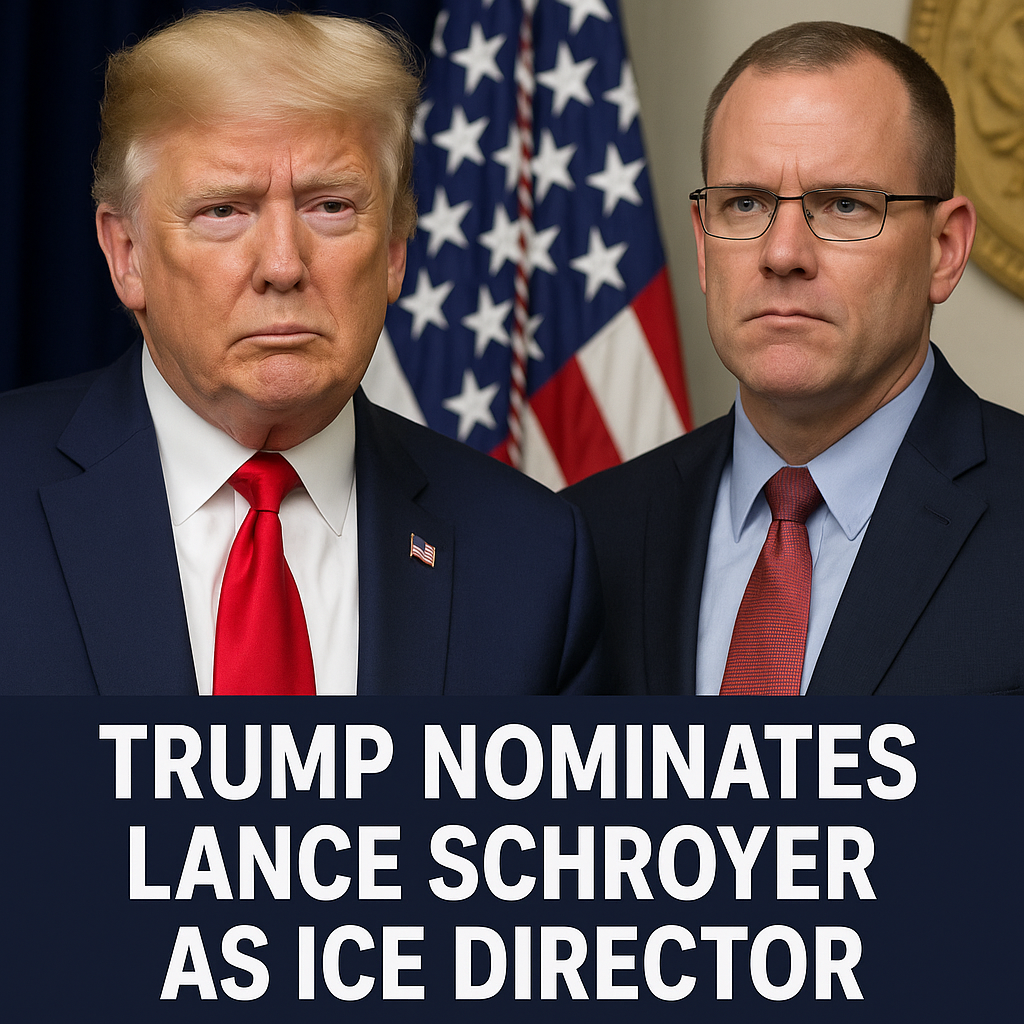
Trump Nominates Lance Schroyer as ICE Director
In a significant move that has sparked discussions across the political spectrum, Donald Trump has nominated Lance Schroyer to serve as the new Director of U.S. Immigration and Customs Enforcement (ICE). This nomination comes amid ongoing debates about immigration policies and the role of federal agencies in enforcement practices.

Overview of the Nomination
Lance Schroyer, a former senior official at ICE, has a background that suggests a commitment to the agency’s enforcement mission. According to various sources, Schroyer has been involved in several initiatives aimed at enhancing border security and improving the efficiency of immigration enforcement. His track record demonstrates familiarity with the challenges the agency currently faces, including a significant influx of undocumented immigrants in recent years.

Supporters of Schroyer’s nomination argue that his previous experience ideally positions him to address the complex and often contentious issues surrounding immigration. His nomination signals a continuation of President Trump’s hard-line stance on immigration, a cornerstone of his administration’s policy agenda.

Critics, however, express concern over Schroyer’s approach to immigration policy. They point to the controversial measures implemented during his predecessors’ tenures, which often faced backlash for their perceived harshness. Activists and civil rights groups warn that reinforcing such policies could exacerbate tensions in communities and lead to the further marginalization of immigrant populations.
Diverse Perspectives on Immigration Policy
The nomination has revived debates about immigration enforcement across a variety of platforms. On one side, proponents argue for a strict enforcement regime, emphasizing the need for national security and the importance of dissuading illegal immigration. They believe that Schroyer’s leadership could bring additional focus to these goals, potentially restoring public confidence in the agency.
Conversely, opponents advocate for a more compassionate approach. They argue that harsh enforcement tactics can lead to unnecessary suffering and division within society. For these critics, Schroyer’s history suggests a continuation of what they see as oppressive policies that disproportionately affect vulnerable communities.
Recent discussions in media circles reveal a spectrum of viewpoints. For instance, some immigration experts have highlighted the need for a comprehensive overhaul of immigration policies rather than a simple continuation of existing practices. They argue that addressing root causes—such as economic instability in source countries—should be part of any effective strategy, rather than solely focusing on enforcement.
The Challenges Ahead for Schroyer
Should Schroyer be confirmed, he will encounter immediate challenges. These include managing relationships with local law enforcement agencies, which can be strained due to concerns over collaboration with federal authorities. Additionally, he will face the daunting task of balancing enforcement with community trust.
Furthermore, Schroyer’s approach to ICE’s role could have implications beyond just enforcement. Advocates for immigration reform assert that a shift towards community-based solutions—like pathways to legal residency or support services for immigrants—could build broader societal support.
The polarization regarding immigration policy underscores the complexities involved in Schroyer’s potential leadership. As debates intensify around the nomination, various stakeholders, including lawmakers and community organizations, will undoubtedly continue to weigh in.
Conclusion
Lance Schroyer’s nomination as ICE Director marks a pivotal moment in the ongoing dialogue about immigration enforcement in the United States. While his supporters highlight his qualifications and commitment to security, his critics remain wary of his potential policies and the impact they may have on immigrant communities. As the confirmation process unfolds, it remains essential to consider the diverse perspectives on this crucial issue and the future direction of ICE under Schroyer’s leadership. Ultimately, the effectiveness of his tenure will depend not only on his strategies for enforcement but also on his ability to engage in a broader dialogue about immigration that transcends partisan divides.