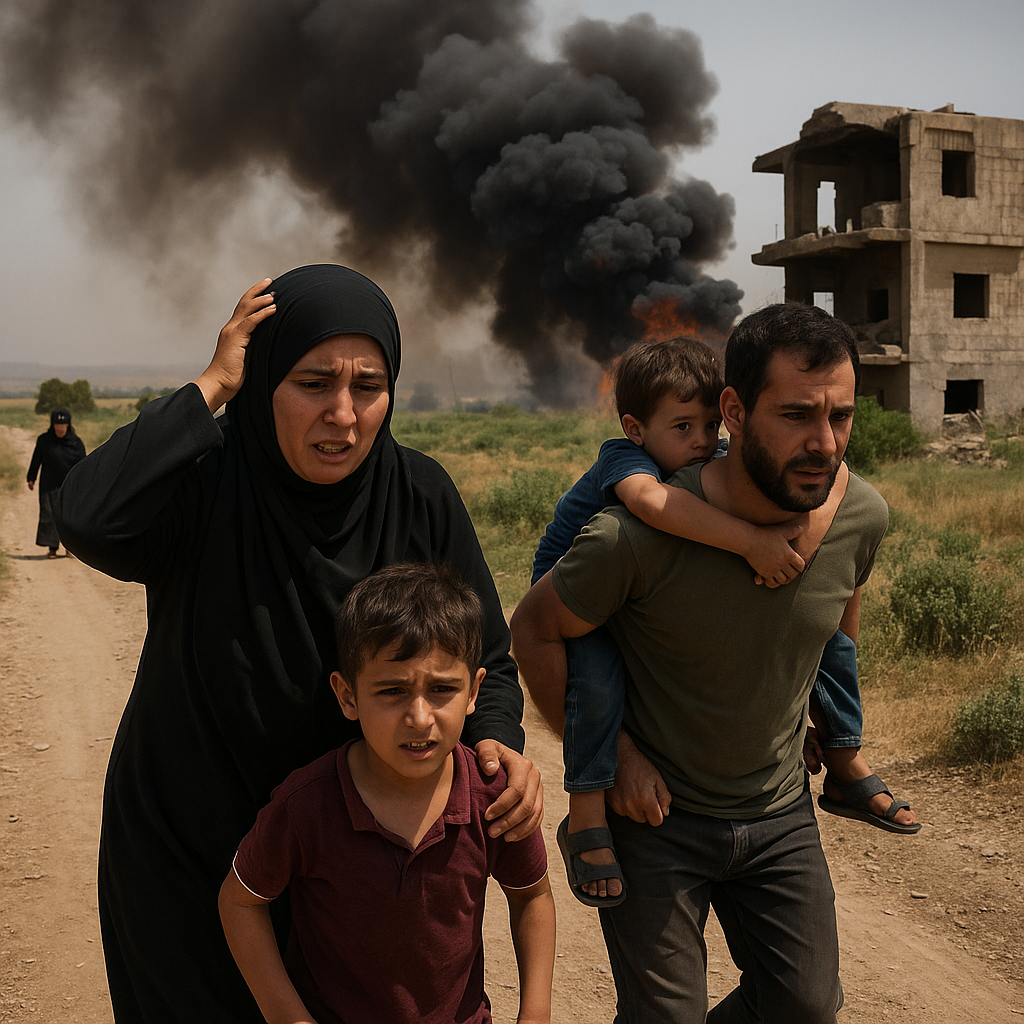
Israeli Assault in Southern Syria Forces Families to Flee
Israeli Assault in Southern Syria Forces Families to Flee
The recent Israeli assault in southern Syria has ignited a significant humanitarian crisis, compelling numerous families to abandon their homes in search of safety. This military action has drawn attention not only for its immediate consequences but also for its broader implications within the region.

The Context of the Assault
Israel has long viewed Syrian territory as a strategic area, particularly in relation to the presence of Iranian forces and Hezbollah. According to reports from Al Jazeera, the recent offensive specifically targeted locations believed to be Iranian military sites, with the Israeli military stating that such operations are essential for maintaining national security. The attacks have reportedly led to multiple casualties and substantial property damage, with local populations severely affected.

Moreover, various news outlets highlight that this escalation is not an isolated incident but part of a continuing trend of Israeli strikes in Syria. Officials from Tel Aviv insist that these operations are necessary precautions against perceived threats, particularly as Iran solidifies its presence in the region. On the other hand, critics argue that such actions further exacerbate an already volatile situation, undermining any potential for peace.

Humanitarian Impact on Civilians
As families flee the escalating violence, the humanitarian impact becomes increasingly dire. Witness accounts indicate that many people are resorting to makeshift shelters, living in overcrowded conditions with limited access to basic necessities such as food and medical care. A report from RT emphasizes the psychological toll this situation exerts on the population, particularly children, who are facing unimaginable stress and trauma.
The mass displacement raises urgent questions about international humanitarian law and the protection of civilians during armed conflict. Human rights organizations are calling for immediate action to alleviate suffering, insisting that the ongoing attacks violate the rights of civilians as stipulated in multiple international treaties. As families continue to flee, the international community faces increasing pressure to respond to this crisis in ways that acknowledge the urgent human rights concerns at play.
Contrasting Perspectives
Different perspectives on the Israeli assault reveal a complex narrative filled with geopolitical implications. Proponents of Israel’s military actions assert that they are a necessary deterrent against existential threats posed by Iranian activity in neighboring Syria. They argue that a strong military stance is critical for preserving stability and the sovereignty of Israel.
Conversely, critics argue that the continued aggression contributes to an ongoing cycle of violence that undermines peace prospects and increases regional instability. The situation in southern Syria is emblematic of broader tensions surrounding Israel’s military engagements and the responses of its adversaries. As families pack their belongings and leave their homes behind, the cycle of conflict feels unending, leaving many to question the path forward.
This complex interplay of military action, humanitarian impact, and political rhetoric highlights the multifaceted nature of the crisis. While Israeli officials defend their operations as protective measures, the stark reality for families on the ground speaks to a more harrowing narrative of loss and desperation.
Conclusion: A Call for Compassion and Resolution
The Israeli assault in southern Syria not only points to immediate military engagements but also shines a light on the long-standing humanitarian issues faced by those caught in the crossfire. As families flee their homes, the international community must grapple with its responsibility to protect civilians and advocate for a cessation of hostilities. The situation serves as a reminder of the urgent need for dialogue and diplomacy in a region fraught with tension, and the necessity for compassion toward those who suffer the most during these conflicts. As the world observes, it becomes increasingly imperative to address the underlying issues that fuel such violence, paving the way for a more peaceful future.