
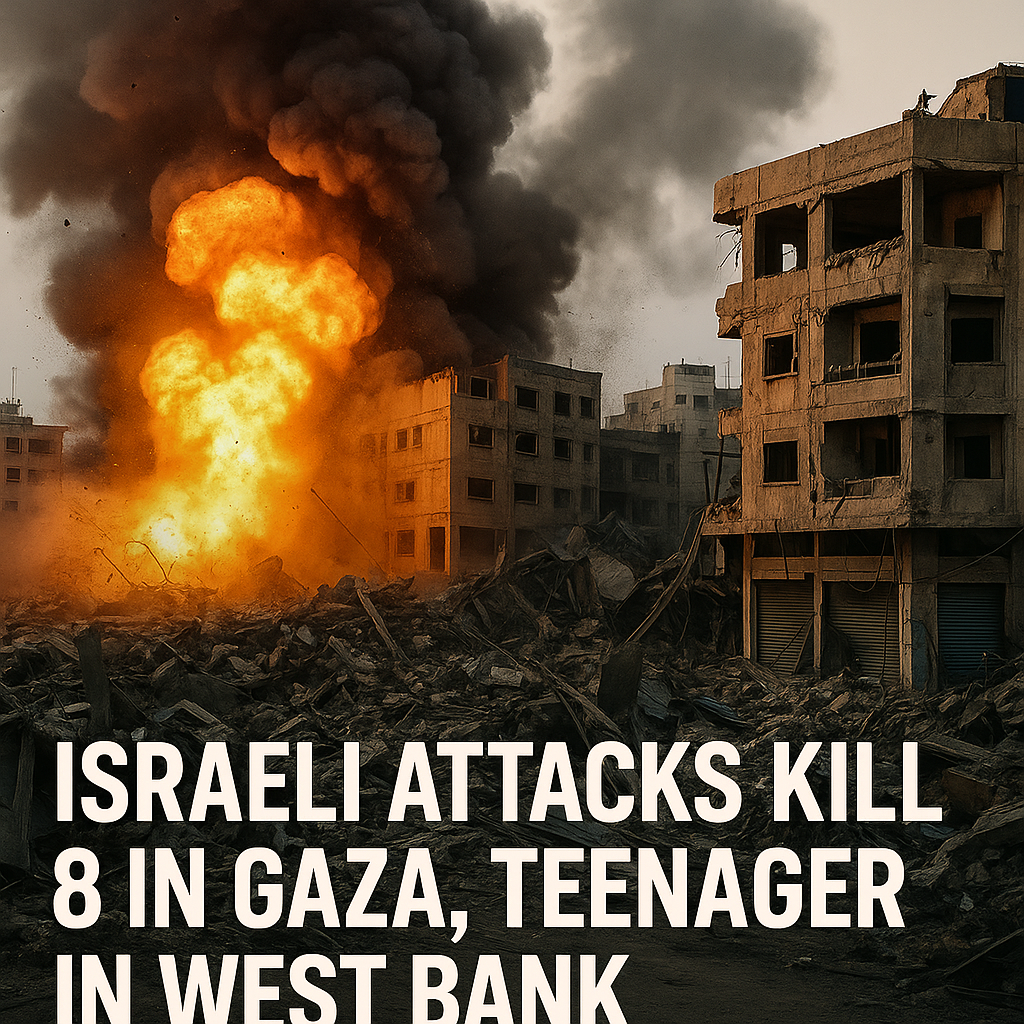
Israeli Attacks Kill 8 in Gaza, Teenager in West Bank
Escalating Violence: A Look at Recent Israeli Attacks
Recent events have underscored the tragic complexity of the Israeli-Palestinian conflict. With reports indicating that Israeli attacks killed eight individuals in Gaza, alongside the death of a teenager in the West Bank, the situation calls for an analytical perspective that encompasses the varied and often conflicting narratives within this ongoing crisis.

Context of the Attacks in Gaza
The escalation in hostilities in Gaza has roots that run deep, intertwined with historical grievances and profound animosities. Al Jazeera reported that among the casualties were four men and a young boy, with fatalities resulting from airstrikes in what the Israeli Defense Forces (IDF) claim were operations targeting militant factions. The Israeli government often justifies these military actions as necessary for national defense, asserting that they aim to dismantle terrorist capabilities that threaten its citizens.

However, these statements are met with skepticism by numerous international observers and human rights organizations. Reports from various sources suggest a pattern of disproportionate retaliation that has significant civilian consequences. Humanitarian groups frequently contend that the implications of such strikes extend beyond immediate loss of life, exacerbating an already dire humanitarian crisis in Gaza, where blockades have severely restricted access to essential services and supplies.

A Tragic Narrative in the West Bank
Contrasting the situation in Gaza, the West Bank continues to experience its own waves of violence. The death of a teenager during recent confrontations has reignited discussions regarding the practices of IDF soldiers in the region. Sky News highlighted that the young man was reportedly shot during clashes which erupted amid protests against Israeli policies. These incidents reflect not only the immediate triggers of violence but also a larger narrative of frustration among Palestinians, deeply rooted in displacement and ongoing occupation.
Experts remind us that the West Bank has its own unique dynamics, shaped by settlement expansion and military presence. The death of young Palestinians in such contexts often ignites widespread outrage, further fueling cycles of violence and retaliation. Critics argue that the Israeli government fails to adequately address these grievances, which could potentially ease tensions.
Diverging Perspectives on Responsibility
In analyzing the differing narratives, it becomes clear that perspectives vary significantly depending on geographical location and societal context. For example, the Israeli government frames its military actions in Gaza through a lens of security and counter-terrorism, emphasizing the threats posed by groups such as Hamas. Meanwhile, Palestinian representatives and their supporters argue that Israeli military tactics amount to collective punishment, further entrenching the cycle of violence.
A consensus emerges that both sides have borne heavy civilian tolls, yet the interpretation of these events remains steeply polarized. While some call for accountability for what they perceive as state-sanctioned violence against Palestinians, others assert the need to protect Israeli civilians from attacks originating from the territories, citing a rationale of self-defense.
Searching for a Path Forward
As the situation continues to evolve, the pressing questions surrounding accountability, justice, and peace get increasingly complex. Numerous analysts advocate for sustained international engagement to mediate a dialogue that acknowledges both the security concerns of Israel and the rights of Palestinians, including their right to self-determination. While immediate solutions seem distant, the international community’s role in fostering discussions around these disparities could offer a glimmer of hope in an otherwise desolate landscape.
In conclusion, the tragic instances of violence reported from Gaza and the West Bank illuminate the ongoing humanitarian and political crises that both sides face. As these narratives unfold, it is crucial to maintain an objective perspective that recognizes the complexity and depth of each viewpoint, aiming to foster understanding rather than further division. The deaths of innocent lives, whether in Gaza or the West Bank, are stark reminders of the urgent need for dialogue and resolution in this long-standing conflict.















