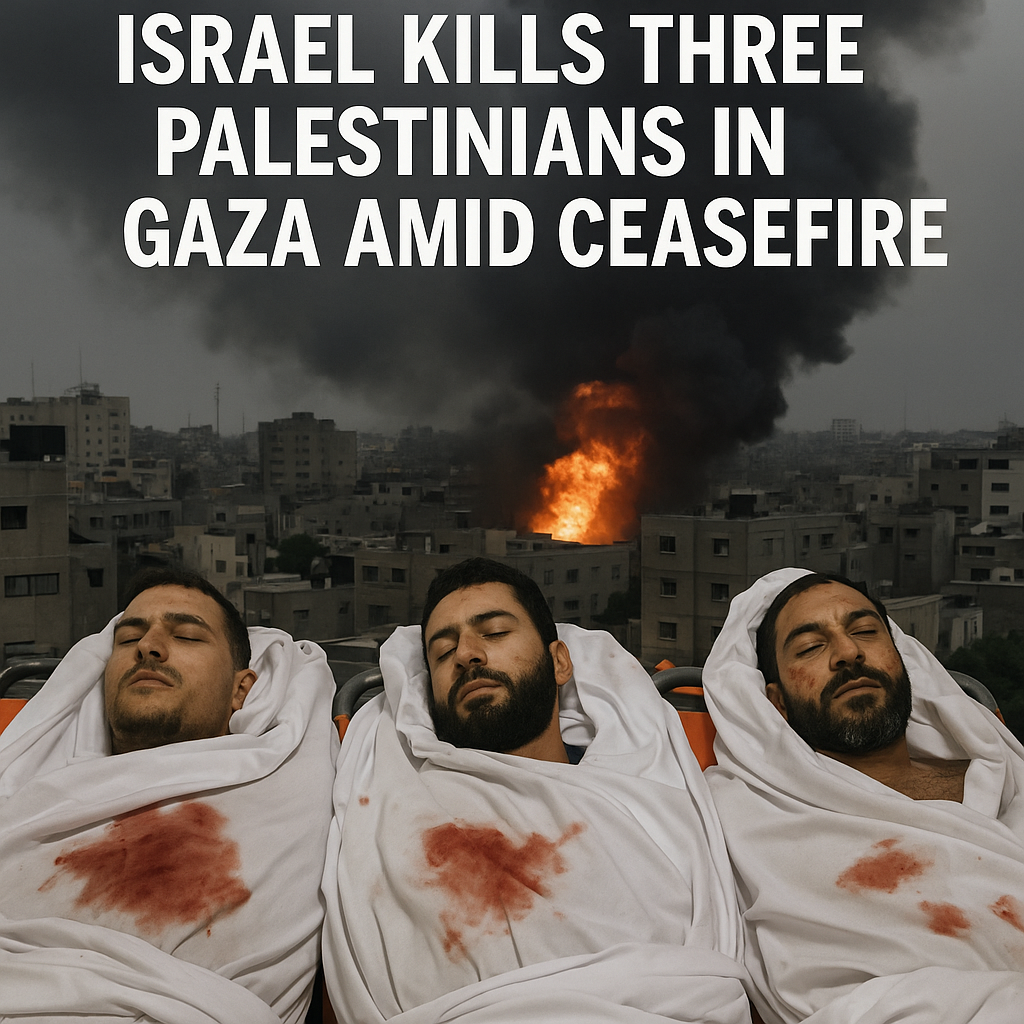
Israel Kills Three Palestinians in Gaza Amid Ceasefire
Escalating Tensions: Israel Kills Three Palestinians in Gaza Amid Ceasefire

The delicate situation in Gaza continues to unravel as recent reports confirmed that Israeli forces killed three Palestinians on July 1st, raising alarms regarding the ongoing ceasefire agreement. This troubling incident is indicative of a larger pattern of hostilities that define the Israel-Palestine conflict, where ceasefires often prove tenuous in the face of escalating violence.

Understanding the Context of the Ceasefire
Ceasefire agreements are delicate arrangements that aim to ensure peace between conflicting parties, particularly in regions as historically fraught as Gaza. The most recent ceasefire was brokered after significant escalations earlier in the year, where violence claimed numerous lives. However, the killing of three Palestinians, reported by Al Jazeera and corroborated by other news outlets like Sky News, suggests that underlying tensions remain unresolved.

Israeli authorities have justified their actions, stating that the individuals targeted were allegedly involved in militant activities. This assertion adds layers to the complexity of the situation, highlighting the differing perspectives on accountability. Critics, including human rights organizations, argue that such targeted killings undermine the ceasefire’s intended purpose and further exacerbate the cycle of violence.
Diverse Reactions and Opinions
The reactions to this incident have been swift and varied. Al Jazeera emphasized that the event has sparked widespread condemnation, particularly among Palestinian leaders who view these actions as a severe violation of international humanitarian standards. In a statement, the Palestinian Authority decried the killings as “a blatant act of aggression,” calling for heightened international intervention.
Conversely, some Israeli officials have portrayed this action as necessary for national security, stating that eliminating perceived threats is essential for the safety of Israeli citizens. This framing illustrates a significant divide in how each side narrates the conflict, underscoring the challenges in reaching a mutual understanding or sustained peace.
International Perspective and Implications
Global reactions to this incident have varied, reflecting broader geopolitical alliances. Countries that traditionally support Palestinian rights have condemned Israel’s actions, particularly in light of the renewed cycle of violence. Reports from RT highlight that international observers have urged both sides to adhere to ceasefire terms, suggesting that violations could jeopardize global diplomatic efforts aimed at fostering long-term peace.
The implications extend beyond immediate political ramifications. Civilians caught in the crossfire often bear the brunt of such escalations, leading to humanitarian crises. Humanitarian organizations have pointed out that many in Gaza already face challenges related to access to adequate healthcare, clean water, and food security. The situation grows increasingly precarious with every act of violence, which further erodes the possibility for meaningful dialogue.
Moving Forward: Challenges in Achieving Peace
The cycle of violence in Gaza illustrates the broader struggle both parties face in moving toward peaceful resolution. Despite the ceasefire, mistrust remains deeply rooted among both Israelis and Palestinians. This violence underlines the urgent need for conflict resolution strategies that address underlying grievances rather than just the symptoms.
For any potential peace negotiations to succeed, they must prioritize the humanitarian dimensions of the conflict. Acknowledging the experiences and needs of civilians, coupled with a commitment to genuine dialogue, will be crucial steps forward. Moreover, the international community must play a proactive role in facilitating constructive exchanges and addressing the root causes of violence rather than reacting to its manifestations.
Conclusion
The recent killings of Palestinians in Gaza amid a ceasefire underline the fragility of peace efforts in a conflict characterized by prolonged violence, complex narratives, and deep-seated grievances. As reactions unfold globally, both sides will face heightened pressure to reconsider their approaches to peace and security. Without sustained efforts to foster dialogue and address humanitarian needs, the cycle of violence may continue, leaving behind a trail of destruction and despair.