
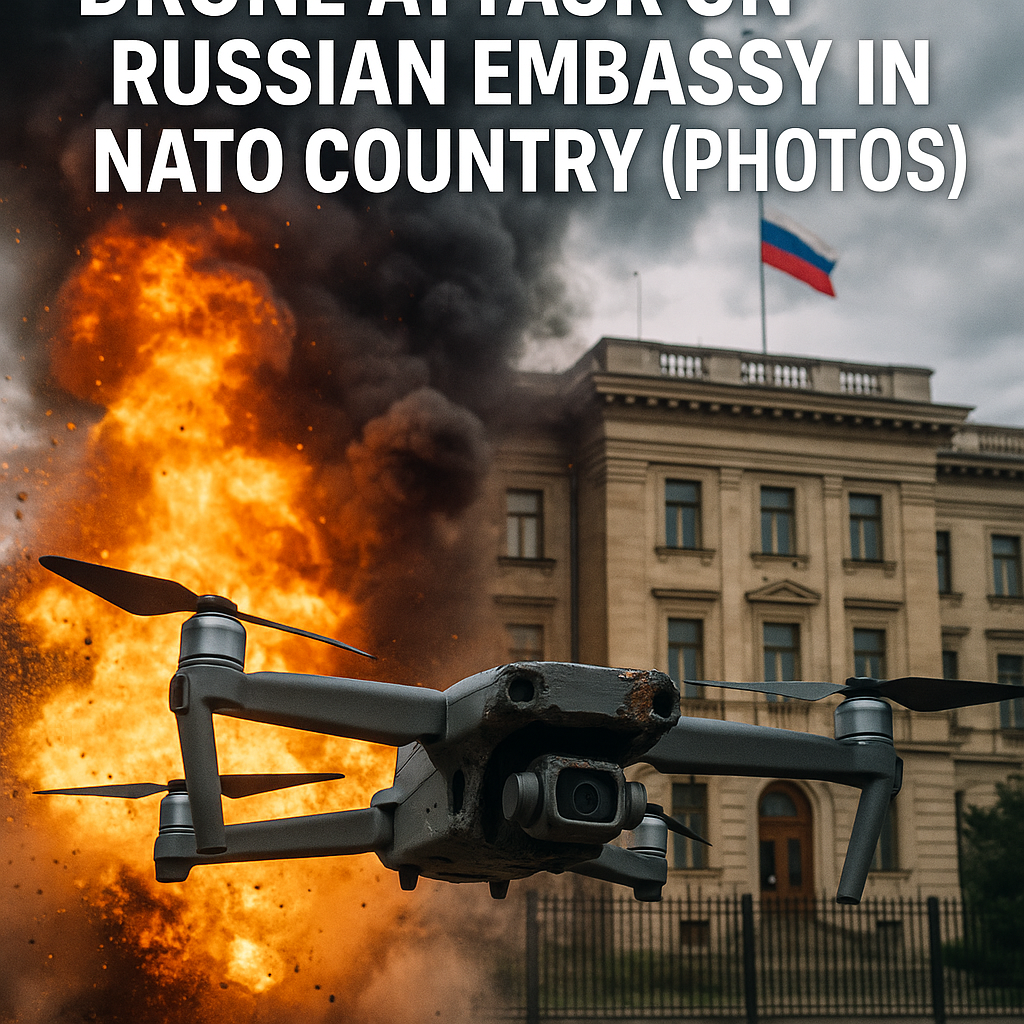
Drone Attack on Russian Embassy in NATO Country (PHOTOS)
Drone Attack on Russian Embassy in NATO Country: A Complex Incident
The recent drone attack on the Russian embassy in Sweden has sparked widespread debate and concern regarding escalating tensions between NATO countries and Russia. This incident not only raises questions about security protocols in diplomatic zones but also sheds light on the broader geopolitical landscape, drawing various opinions and interpretations.

The Incident Overview
On [date], a drone was reportedly used to drop what appeared to be a bomb-like device near the Russian embassy in Stockholm. Initially, local authorities indicated that the device might be a fake bomb. However, the implications of such an attack are far-reaching, highlighting both the vulnerability of diplomatic missions and the potential for misinterpretations amid ongoing hostilities between Russia and several NATO members.

Eyewitness reports and initial investigations suggest that the drone was operated remotely, raising concerns about the increasing use of unmanned aerial vehicles in urban environments. The Swedish security agencies swiftly condemned the act, underscoring its breach of diplomatic courtesy and international norms. In a statement, a Swedish government representative emphasized that “the protection of embassies is inviolable and must be respected.”

The Response: Perspectives from Multiple Sources
While the Swedish government has taken a firm stance condemning the attack, Russia’s response has been equally pointed. Russian officials labeled the act as “provocative” and warned of potential ramifications. They called for a thorough investigation while expressing concern about the growing anti-Russian sentiment in Sweden, which they argue is fueled by western media narratives.
Contrastingly, some commentators suggest that the attack, regardless of its authenticity, reflects a desperate attempt by fringe groups to make a statement amid the ongoing conflict in Ukraine and NATO’s military support for Kyiv. Various analysts have pointed out that such acts could inadvertently escalate tensions, potentially provoking harsher retaliatory measures from Russia.
Implications for Diplomatic Relations
This incident not only places a spotlight on Sweden’s security measures but also opens up broader questions regarding NATO’s stance and Russia’s perception of threats. Experts argue that incidents like these could complicate diplomatic efforts between NATO countries and Russia, particularly as the latter feels increasingly isolated due to sanctions and military posturing from the West.
According to a report by Al Jazeera, the drone attack is symptomatic of a larger trend where non-state actors are becoming more emboldened in their actions against perceived adversaries. These developments could lead to calls for more stringent regulations surrounding drone technology and an urgent reexamination of how embassies are protected in conflict-laden environments.
Public Reaction and Future Consequences
The public response has been mixed. While many express outrage at the attack as a dangerous provocation, others discuss the broader societal implications of rising militarization within civilian spaces. Social media platforms have become a battleground of sorts, with various stakeholders weighing in—some calling for greater accountability from governments, while others advocate for diplomacy over aggression.
As tensions continue to simmer, it remains unclear how this incident will influence future diplomatic relations between Sweden, NATO, and Russia. Analysts warn that failing to address the underlying issues could lead to further provocations, creating a cycle of retaliatory actions that deteriorate international relations.
In conclusion, the drone attack on the Russian embassy in a NATO country has multifaceted implications. It serves as a reminder of the precarious state of global diplomacy, especially as new technologies transform the landscape of conflict and communication. As nations attempt to navigate this treacherous terrain, it is crucial to remain vigilant and open to dialogue, even amid rising tensions.















