
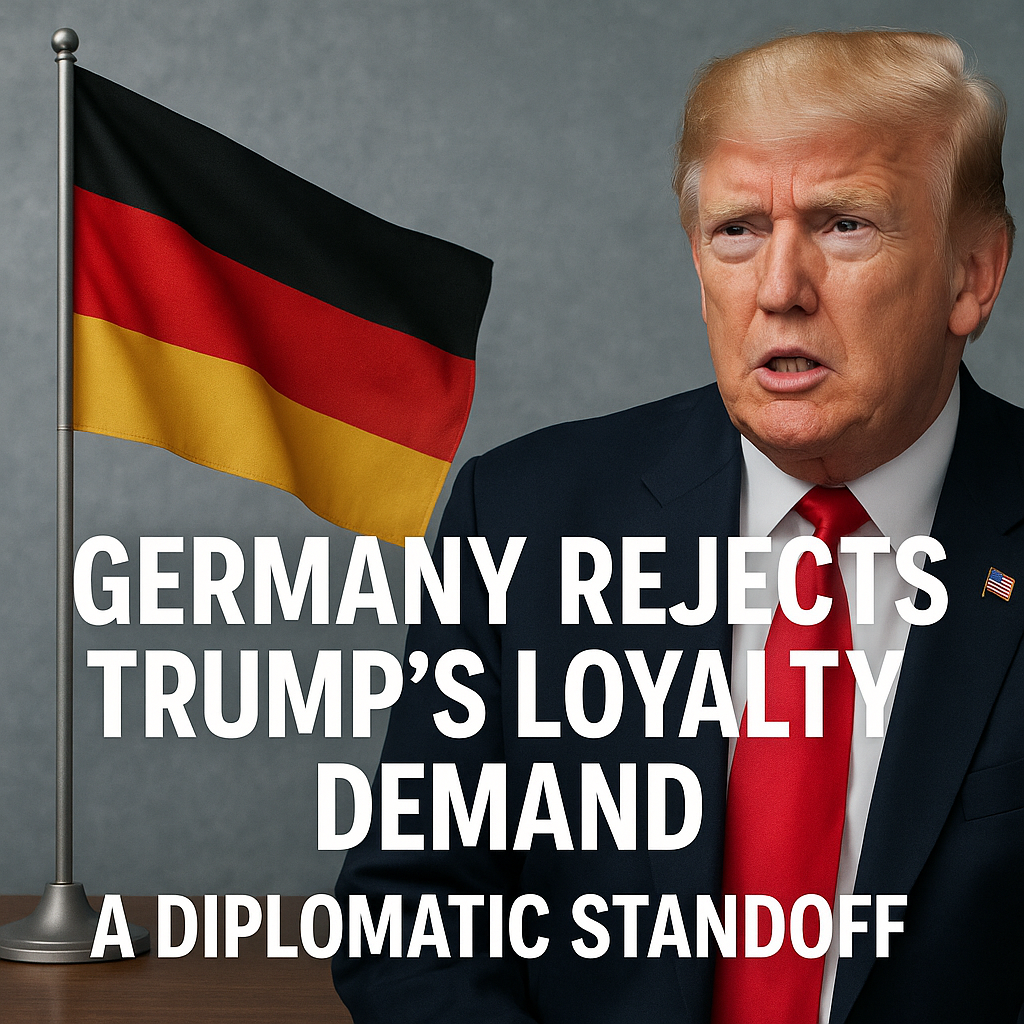
Germany Rejects Trump’s Loyalty Demand: A Diplomatic Standoff
Germany Rejects Trump’s Loyalty Demand: A Diplomatic Standoff
In a startling diplomatic move, Germany has firmly rejected former President Donald Trump’s recent demand for loyalty from NATO allies. This rejection comes against a backdrop of heightened tensions and evolving alliances, prompting discussions about the future of transatlantic relations and the implications for international diplomacy.

The Context of the Demand
Trump’s call for loyalty from NATO countries has been framed as a plea for solidarity within a military alliance that has faced increasing scrutiny and skepticism. During his presidency, Trump was known for his unorthodox approach towards traditional alliances, often framing commitments to NATO as burdensome rather than beneficial. His stance has drawn mixed reactions from various member states, leading to concerns over the future cohesion of the alliance.

Germany’s refusal to acquiesce to Trump’s demand reflects a growing sense of independence and national pride. According to reports, German officials reiterated their commitment to NATO and collective defense but stressed that loyalty is a two-way street, requiring mutual respect and cooperation among member nations. This perspective was echoed by political analysts who argue that the international order relies on partnerships built on shared values rather than unilateral demands.

Divergent Perspectives on NATO’s Future
While Trump’s demand for loyalty aligns with his previous administration’s narrative, it starkly contrasts with the views of many current leaders within NATO. Several European nations, including Germany, are increasingly advocating for a more independent European defense strategy. This shift aims to reduce reliance on the United States, particularly in light of perceived erratic foreign policy moves under Trump.
In retrospective commentary, political scientists underscore the complexities surrounding NATO’s future. On one hand, some experts argue that Trump’s rhetoric regarding defense spending and loyalty might have inadvertently brought attention to necessary reforms within the alliance. Conversely, critics view it as a fragmenting force that could undermine NATO’s collective capability to respond to global threats, particularly in an era where geopolitical dynamics are rapidly changing.
The mixed viewpoints are further complicated by the rise of new global challenges, including cybersecurity threats and geopolitical tensions in regions like Eastern Europe and the South China Sea. As NATO grapples with these multifaceted challenges, the call for loyalty and a unified front has become not just a matter of military strategy but also one of political allegiance and shared democratic values.
Implications for Transatlantic Relations
Germany’s response to Trump’s loyalty demand is indicative of a broader reluctance among European leaders to capitulate to external pressures that may compromise their national sovereignty. This dynamic raises important questions about the future of transatlantic relations and the extent to which the alliance can withstand differing leadership styles and political ideologies.
Moreover, the dialogue surrounding loyalty in NATO might encourage member states to reassess their roles within the alliance. Some analysts believe that this could lead to a stronger, more cohesive European defense identity, ultimately fostering a more balanced partnership with the United States. Consequently, Germany’s stance signals a potential recalibration in how NATO members engage with one another, shifting from a mere focus on loyalty to a more holistic approach that values equality in partnership.
Conclusion: Navigating Uncertainties Ahead
As Germany continues to stand its ground against Trump’s demands, the implications are broad-reaching for not only NATO but also global diplomatic relations. This diplomatic standoff serves as a reminder of the delicate balance within international alliances, especially as the world grapples with new and emerging threats.
While it may be too early to predict the long-term impacts of Germany’s rejection of loyalty demands, one thing is clear: the necessity for cohesive yet independent alliances has never been more urgent. As we move forward, the landscape of international relations will likely continue to evolve, with each member state carving out its identity and role in an increasingly interconnected world. The outcome of this diplomatic dance will largely depend on the willingness of leaders to engage in respectful dialogue and cooperation, rather than succumbing to the allure of unilateral demands.















