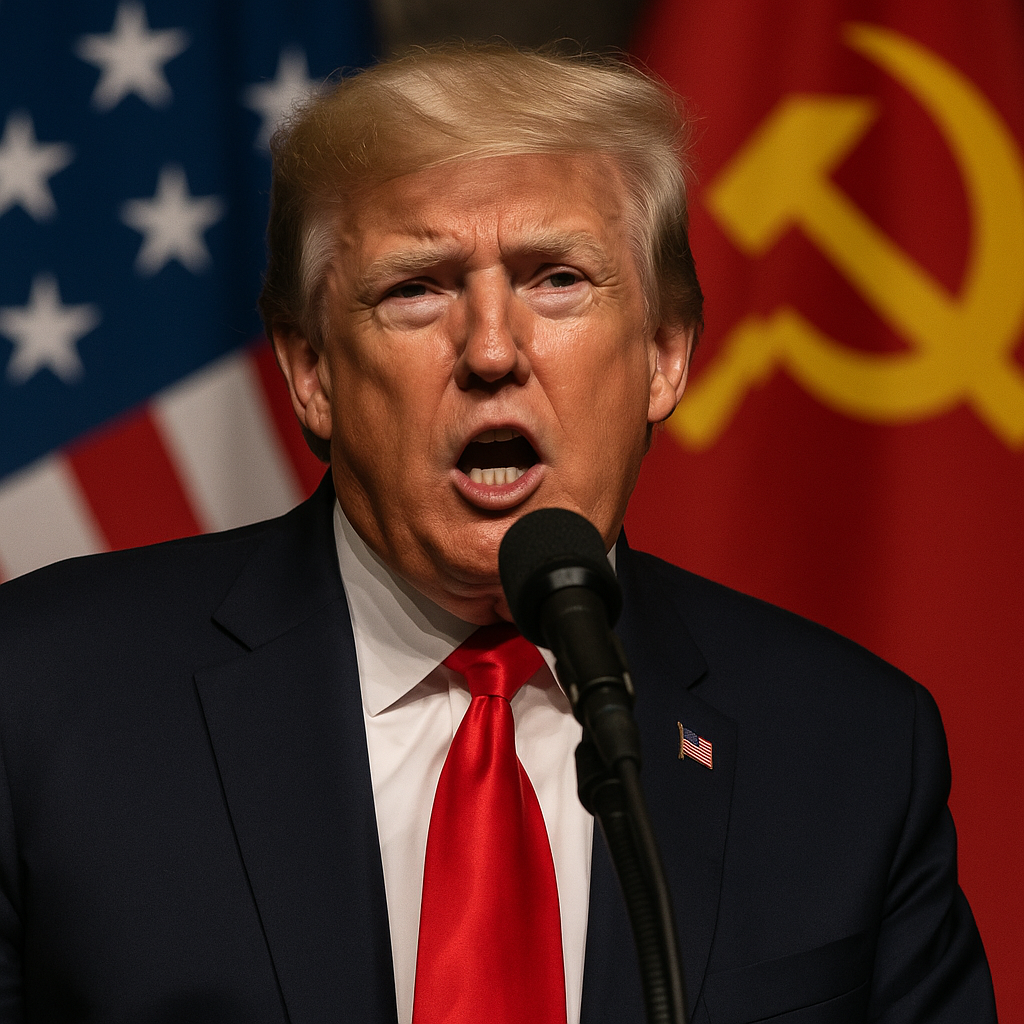
Trump Warns of ‘Communist Menace’ in 250th Anniversary Speech
Trump Warns of ‘Communist Menace’ in 250th Anniversary Speech

Former President Donald Trump recently delivered a speech marking the 250th anniversary of the United States, during which he issued a stark warning about what he termed the “communist menace” facing the nation. This proclamation has ignited discussions across political spectrums, reflecting a significant concern among some factions regarding the future of American democracy and governance.

A Divisive Narrative
Trump’s rhetoric resonates strongly with his core supporters, who view the current political climate as increasingly authoritarian and reminiscent of communism. In his remarks, he characterized the prevailing leftist policies as threats to individual freedoms and traditional values. He depicted these ideologies as a corrosive force undermining the very fabric of American society.

However, critics argue that Trump’s use of terms like “communist menace” is hyperbolic and serves to polarize the political discourse further. Many on the left see this language as a tactic to galvanize his base by manufacturing a crisis. For them, blurring the lines between social democracy and communism detracts from meaningful dialogue regarding social policies aimed at equity and reform.
The Historical Context
To understand the implications of Trump’s warning, it’s important to consider the historical context. The United States has a long-standing aversion to communism dating back to the Cold War. This historical backdrop still shapes political ideologies today, influencing how terms are perceived. Nearly three decades after the fall of the Berlin Wall, fears of communism have resurfaced in various forms, often manifesting as arguments against government intervention and policies perceived to lean toward socialism.
In his speech, Trump evoked this historical fear, suggesting that contemporary movements advocating for social justice and wealth redistribution mirror past threats. Although many advocates for social and economic reforms argue that they are merely pushing for equity, Trump’s framing emphasizes a divide between perceived freedom and control.
Polarized Responses from the Media
Responses from media outlets have further exemplified the polarized views surrounding Trump’s speech. For instance, RT highlighted Trump’s portrayal of government initiatives under the Biden administration as steps toward socialism, reporting that he emphasized the erosion of American freedoms. They suggested that Trump’s rhetoric is a rallying cry for those who feel disenfranchised by the current political landscape.
Contrastingly, Al Jazeera focused on the historical inaccuracies surrounding Trump’s claims, pointing out that labeling a diverse range of movements as “communist” oversimplifies complex social dynamics. Their coverage indicates skepticism about Trump’s warnings, positing that fears of communism are often leveraged for political gain rather than genuine concern for societal well-being.
Weighing Perspectives
In examining these viewpoints, one must consider the impact of language and symbolism in political discourse. Trump’s framing of leftist policies as a “communist menace” is not an isolated phenomenon but rather a recurring theme that has significant implications for partisan policies and public sentiment. It raises essential questions about the nature of governance, individual rights, and the role of government in addressing societal inequities.
While many Americans may share concerns about the excessive overreach of government, equating these initiatives with communism may undermine constructive dialogue focused on potential solutions. Conversely, support for expanded government roles in areas such as healthcare and education often stems from a genuine desire for reform rather than a penchant for authoritarian policy.
Conclusion: Navigating Uncertainties
As Trump’s speech and similar political narratives gain traction, it’s imperative for the electorate to critically assess the information and sentiments being presented. While the specter of communism might serve as a compelling rallying point, an understanding of the nuances within political ideologies can foster more effective conversations about the future of governance in the U.S.
Ultimately, balancing historical fears with contemporary realities requires sobriety in both political discourse and public policy. As citizens navigate these debates, the challenge remains to seek clarity amidst the charged rhetoric that often obscures the realities of a shifting political landscape.