
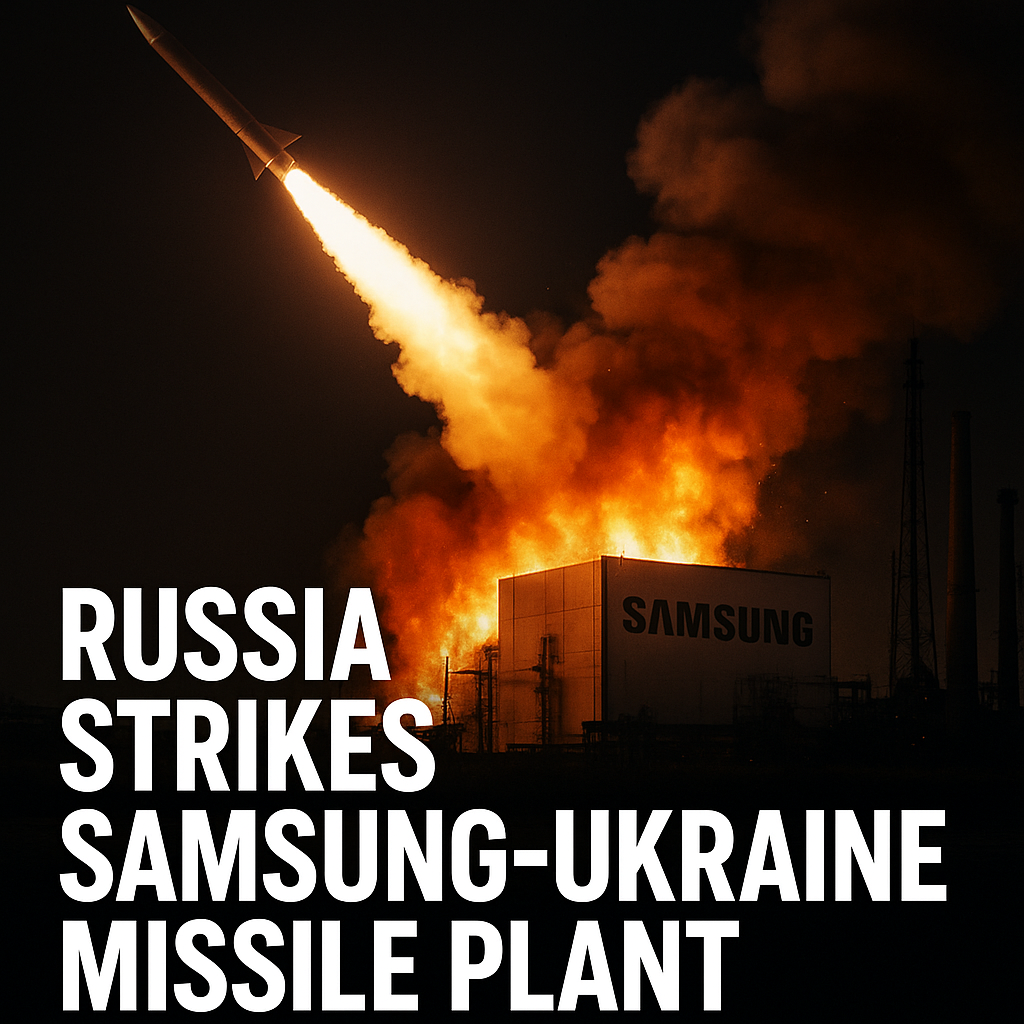
Russia Strikes Samsung-Ukraine Missile Plant Overnight
Russia Strikes Samsung-Ukraine Missile Plant Overnight
The recent missile strike on a Samsung-controlled facility in Ukraine highlights the escalating tensions and complex dynamics of the ongoing conflict in the region. This incident raises critical questions about the implications for international relations, the global tech industry, and the safety of civilians in conflict zones.

Targeted Strategic Interests
On a night that echoed with the roar of missiles, Russian forces targeted a facility in Kyiv that has been repurposed for military use, housing a missile production line. This facility has been pivotal for Ukraine’s defense against Russian aggressions, utilizing technology that in its origins was tied to civilian-use electronics. Reports indicate that the Russian government framed the strike as a necessary action against military targets, asserting that the facility was integrated into Ukraine’s military-industrial complex.

While it is challenging to ascertain the specific motivations behind this particular military operation, experts suggest that such strikes can aim to undermine Ukraine’s defense capabilities and demoralize its populace. As Russia expands its efforts to disrupt Ukraine’s military supply chains, the attack on the Samsung plant illustrates a broader strategy that targets not only infrastructure but also the technology companies operating in the region.

The Global Tech Perspective
From the perspective of multinational corporations, particularly in the tech sector, this incident raises alarm regarding the safety of operational facilities in conflict zones. Samsung, a major player in both consumer electronics and military technology, finds itself at a crossroads. Its Ukrainian plant has primarily produced civilian electronics, yet its proximity to military operations complicates the narrative.
According to Al Jazeera, the strike invoked swift reactions from global tech communities and heightened discussions on corporate responsibility amidst geopolitics. Companies are reassessing risk management and operational continuity, particularly in regions fraught with instability. Should businesses refrain from operating in politically unstable countries? The situation emphasizes the delicate balance between economic interests and the ethical responsibilities corporations hold toward their employees and consumers alike.
The Broader Implications
While the strike against the Samsung plant marks a significant escalation in the ongoing conflict, it reflects the intricate interplay between technological advancement, international policy, and military strategy. It forces a reconsideration of how such entities operate in volatile environments.
On the other hand, the potential diplomatic fallout cannot be overlooked. The targeted attack may strain relations not just between Russia and Ukraine, but also between Russia and other nations that might interpret this aggression against a foreign corporate entity as a perilous breach of international norms.
Furthermore, international allies of Ukraine, particularly in the West, will likely have to respond not only with political condemnation but could also explore wider sanctions or military aid in light of heightened aggressions against civilian-linked industries.
Conclusion: A Complex Landscape Ahead
As the world reels from this shocking overnight strike, the effects ripple far beyond the immediate physical damages. It brings into sharp focus the consequences of military engagements that extend into the private corporate world. The delicate balance of corporate operations in politically unstable regions will necessitate intense scrutiny and recalibrated strategies moving forward.
In this complex landscape, questions remain about the future implications for international business in conflict zones and the moral obligations that corporations bear as they navigate these treacherous waters. As discussions unfold, the intersection of industry and geopolitics will invariably remain a topic of critical importance in the global dialogue surrounding war, peace, and safety.















