
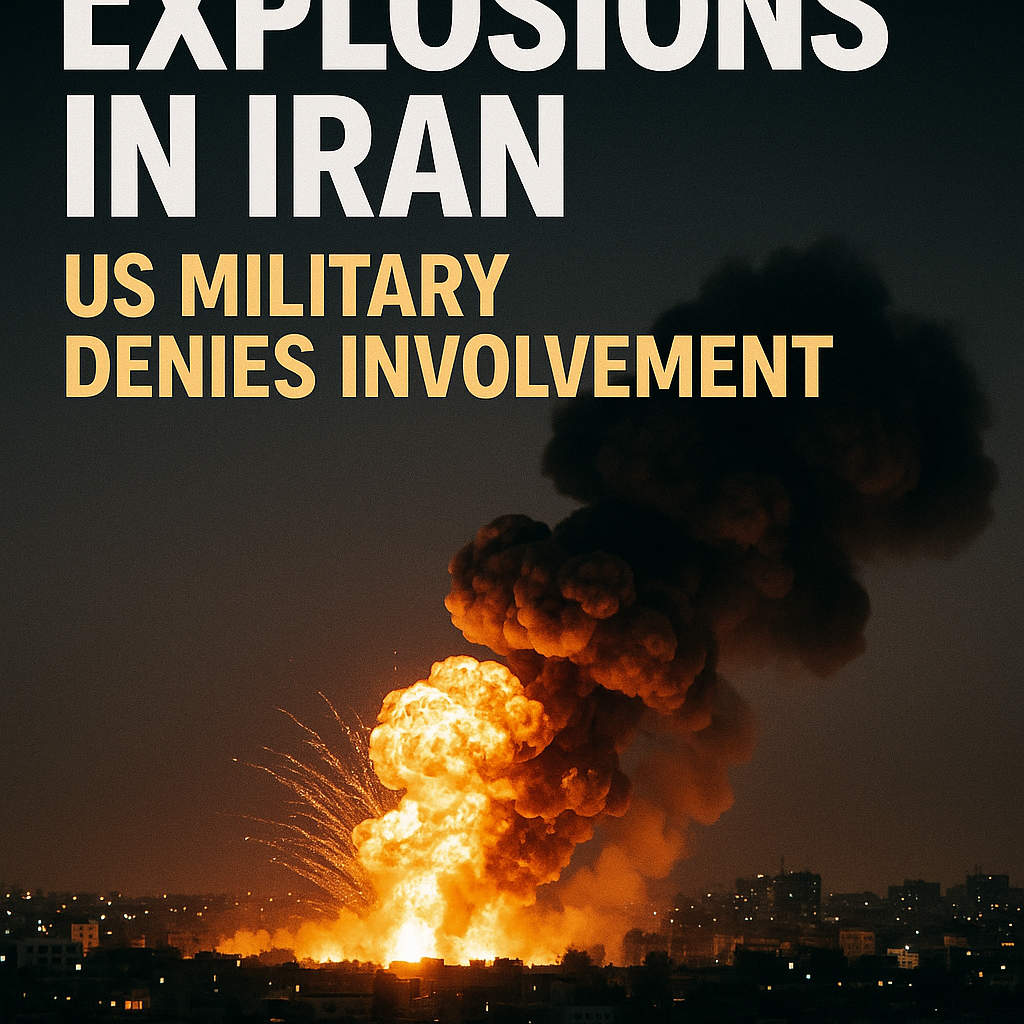
Explosions in Iran: US Military Denies Involvement
Explosions in Iran: US Military Denies Involvement
Recent reports of explosions in Iran have stirred speculation and confusion, particularly regarding the involvement of foreign military forces. As tensions in the region continue to heighten, the U.S. military has publicly denied any connection to these incidents. This article aims to explore the context surrounding these explosions, examine various perspectives, and highlight the complexities of regional security dynamics.

Understanding the Incident
On July 9, multiple explosions were reported in various locations across Iran, leading to heightened security concerns and rampant speculation about potential external involvement. Eyewitness accounts and preliminary investigations suggest that these explosions could be linked to Iran’s ongoing internal issues, including military exercises or possible malfunctions at military facilities.

While Iranian officials have accused foreign powers of interference, the U.S. military has categorically dismissed claims of involvement. U.S. Central Command emphasized that its operations in the region focus solely on countering ISIS and ensuring stability, clarifying that they were not operating near the sites of these explosions. This statement aims to quell speculation that has circulated through media outlets and on social platforms.

Diverging Perspectives
The narrative surrounding these explosions is varied, reflecting the differing geopolitical interests at play in the region. On one side, Iranian officials are quick to frame the explosions as acts of sabotage orchestrated by external enemies. This has been a common refrain in Iranian rhetoric, especially in the context of heightened tensions with the United States and its allies. Analysts suggest that such claims serve multiple purposes: reinforcing domestic unity, discrediting foreign adversaries, and justifying an increase in military readiness.
Conversely, from the U.S. perspective, the denial of involvement is significant. It aligns with the broader U.S. strategy of minimizing direct military engagement in Iran while attempting to navigate the complex web of alliances and hostilities that characterize Middle Eastern geopolitics. U.S. officials express concern over Iran’s nuclear program and its influence in neighboring countries, advocating instead for diplomatic avenues to resolve disputes.
Complexities of Regional Dynamics
The ongoing situation underscores the intricate dynamics that define the Middle East. The U.S. and its allies view Iran’s actions with skepticism, particularly given its involvement in various regional conflicts and its contentious relationship with Israel and Gulf states. On the flip side, Iran perceives its military capabilities as essential for its sovereignty and regional influence, especially amidst varying threats from adversaries.
Several regional analysts point out the potential for misunderstandings or miscommunications that could escalate these tensions further. With both sides holding firm to their narratives, the risk of miscalculation remains significant. This complexity is exacerbated by the proliferation of misinformation and propaganda, necessitating careful media consumption and critical analysis of official statements.
Conclusion
The recent explosions in Iran, alongside the U.S. military’s flat denial of involvement, illuminate the multifaceted nature of regional security in the Middle East. While Iranian officials may frame these incidents as attacks from external enemies, the U.S. maintains a posture primarily concerned with counterterrorism and strategic stability. The event serves as a stark reminder of the fragile balance of power in the region, where actions and words carry significant weight.
As tensions simmer and narratives clash, the need for robust diplomatic engagement between opposing sides has never been more critical. Without efforts to bridge these divides, escalations like the one witnessed could become recurring motifs in an already volatile landscape. The international community must, therefore, remain vigilant and informed as these developments unfold in the weeks and months to come.















