
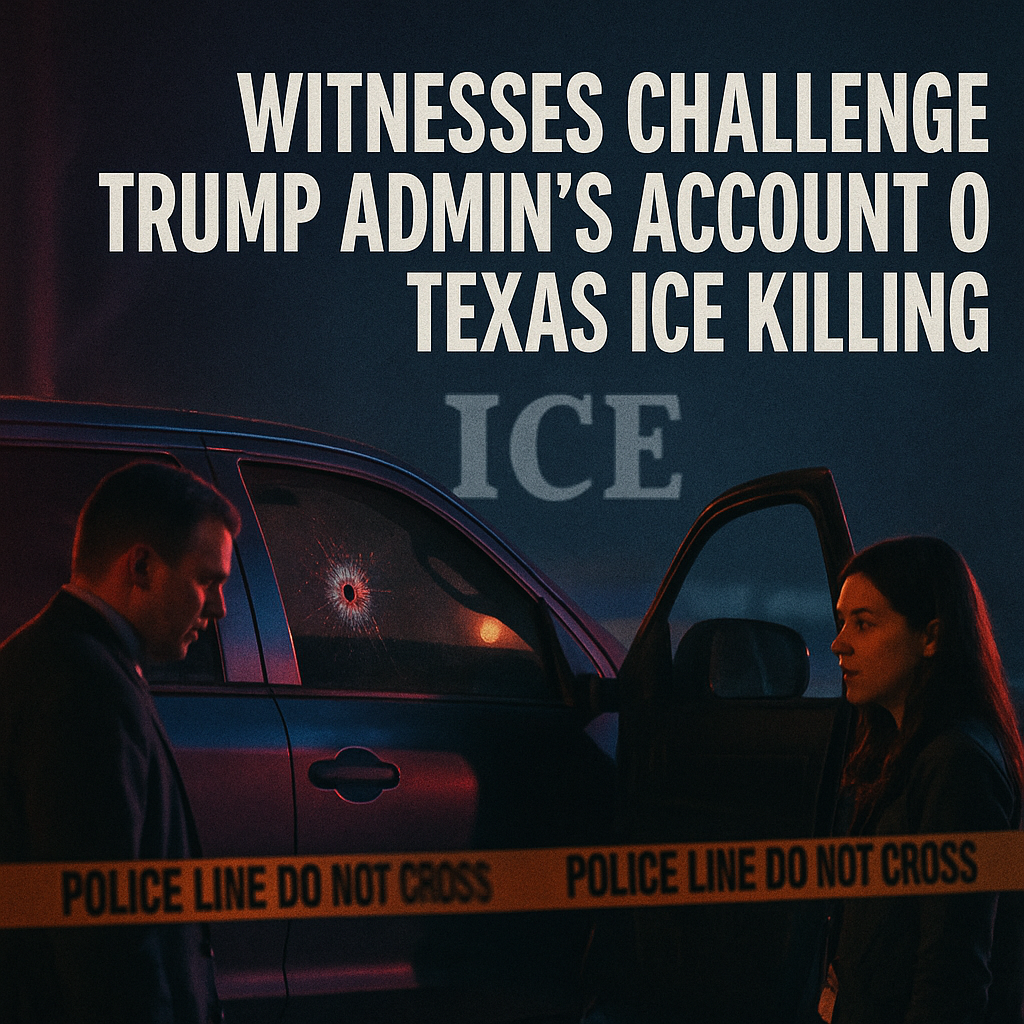
Witnesses Challenge Trump Admin’s Account of Texas ICE Killing
Witnesses Challenge Trump Admin’s Account of Texas ICE Killing
The recent killing of a suspect by ICE agents in Texas has ignited a contentious debate, as witnesses have come forward to challenge the Trump administration’s narrative surrounding the incident. This event not only raises critical questions about the conduct of armed federal agents but also reflects deep societal divisions regarding immigration enforcement in the United States.

Diverging Accounts of the Incident
According to initial reports from the Trump administration, the individual killed was a violent criminal targeting ICE operatives. However, witnesses claim the suspect posed no immediate threat at the time of the shooting. Al Jazeera highlights accounts from locals stating that the man was merely “sitting in a vehicle” when he was shot multiple times by federal agents. These contrasting viewpoints illustrate the chaos and confusion surrounding the event.

Witnesses also described a scene that starkly contradicts the official narrative. Many claim that the agents acted with excessive force, raising concerns that this incident may not have been isolated. Rather, it could be indicative of a broader pattern of aggressive tactics used by ICE, warranting scrutiny from civil rights organizations and the general public alike.

The Broader Context of Immigration Enforcement
The incident comes at a time when immigration enforcement, particularly under the Trump administration, has been a polarizing topic. Proponents of stringent immigration policies argue that such operations are necessary to maintain public safety and national security. They often cite incidents involving criminal aliens as justification for aggressive law enforcement measures. Conversely, opponents argue that the tactics employed by agencies like ICE foster fear and suspicion within immigrant communities, potentially leading to a breakdown in trust with local authorities.
The divergence in narratives becomes even more pronounced when considering the socio-political environment of Texas, a state that has been at the forefront of the immigration debate. Figures such as Governor Greg Abbott have vocally supported harsher immigration crackdowns, framing enforcement actions as imperative for protecting Texan residents. Yet, critics point to the dangers of normalizing violence in the name of law enforcement, suggesting that incidents like the recent killing may be symptomatic of systemic issues within the federal immigration apparatus.
Civil Rights Implications
Civil rights advocates argue that the Trump administration’s approach has led to a culture of fear, which fosters an environment where such incidents can occur with impunity. Organizations like the American Civil Liberties Union (ACLU) emphasize the necessity of accountability in law enforcement, particularly in contexts where excessive force may be utilized. The killing in Texas is seen not just as an isolated event but as part of a worrisome trend that necessitates public discussion and legislative reform.
Furthermore, the lack of consistent accountability for federal law enforcement officers raises pressing questions regarding transparency and oversight within agencies like ICE. Witness testimony and community eyewitness accounts are increasingly vital for illuminating the true nature of these events, given the historical lack of accessible information during agency-involved incidents.
The Road Ahead
As this debate continues, it is crucial for both policymakers and the public to engage deeply with these diverging narratives. The complexities surrounding immigration enforcement cannot be overstated. While national security and public safety are paramount, the methods employed to ensure these ideals should not come at the expense of civil liberties and community trust.
In the aftermath of the Texas shooting, calls for reforms are gaining traction. Advocates stress the importance of developing comprehensive oversight mechanisms that balance the need for effective law enforcement with civil rights protections. This incident has opened up a vital dialogue about how to best navigate these complex issues, and it underscores the necessity for transparency in the practices of federal law enforcement agencies.
To bridge the gap between federal enforcement actions and community relations, a focus on accountability and improved training for officers may be essential. Ultimately, the narrative emerging from the Texas ICE killing serves as a critical reminder of the necessity for checks and balances within our immigration enforcement strategies, especially as these policies continue to evolve in an increasingly polarized climate.
The conversation surrounding this incident is just beginning, and its implications for both immigration policy and civil rights will likely resonate for years to come. By engaging with multiple perspectives, stakeholders can begin to find common ground that respects both the rule of law and the civil liberties of all individuals.















