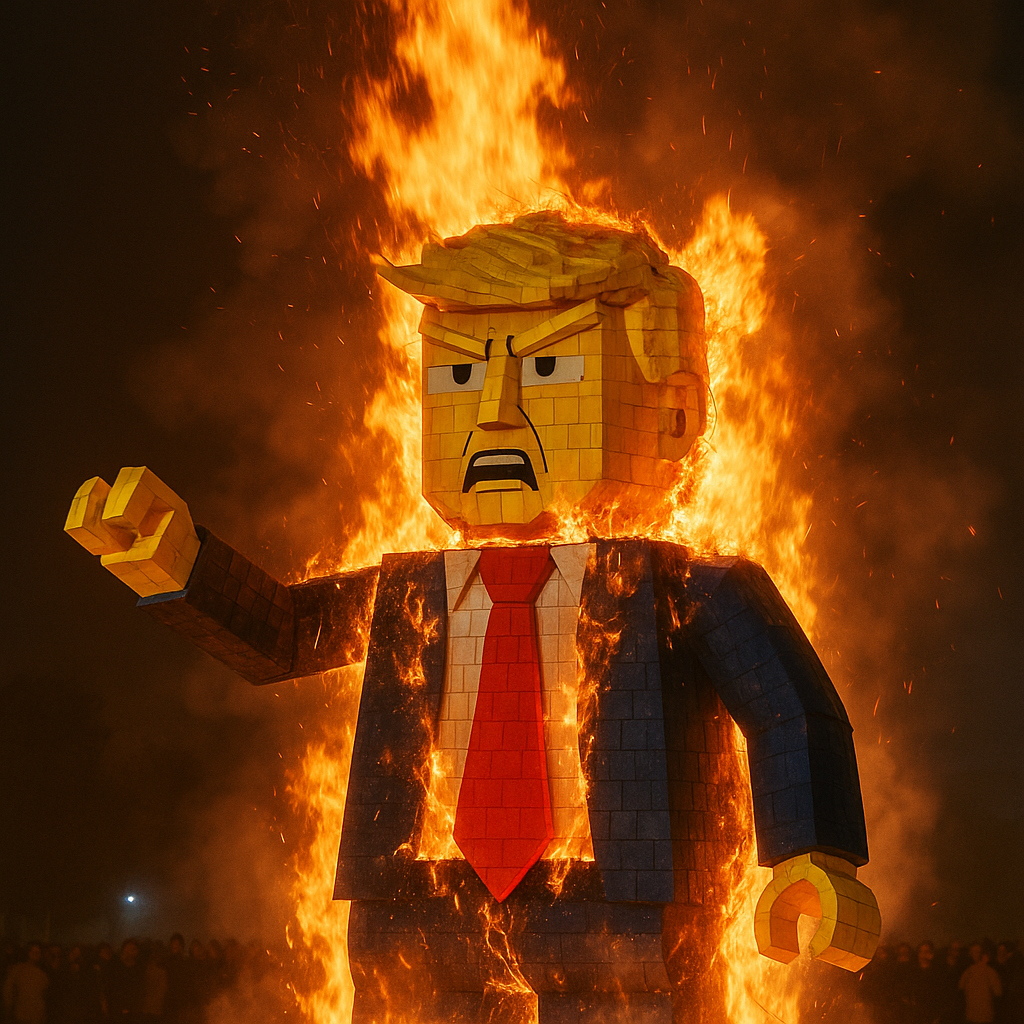
Giant Trump Lego Effigy Burns in Iran: Shocking Video
In an unprecedented spectacle that has captured worldwide attention, a giant Lego effigy of former President Donald Trump was set ablaze in Iran, igniting both local and international discussions about the complexity of political expression and its implications. This fiery demonstration speaks volumes not only about the sentiments towards Trump in Iran but also highlights the dynamics of cultural protests across the globe.

The Cultural Context of the Protest
The act of burning the Trump effigy isn’t just a simple expression of dissent; it is deeply rooted in the socio-political climate of Iran. For many Iranians, Trump symbolizes policies that have had significant repercussions for their nation, particularly in the wake of his administration’s withdrawal from the 2015 nuclear deal and the reinstatement of stringent economic sanctions. News sources like RT reported on the event, noting that the effigy was not only a statement against Trump’s past administrations but also a representation of larger frustrations with U.S. foreign policy that many Iranians feel has oppressed their country.

On the contrary, while this protest captured widespread attention, it is crucial to understand that not all citizens resonate with such extreme demonstrations. Some locals expressed concern that these high-profile protests might intensify tensions between Iran and the United States rather than provide a constructive avenue for dialogue. This duality is an important aspect of understanding Iranian society, where opinions can vary significantly based on age, socio-economic status, and exposure to foreign media.

Symbolism and Reactions
The burning of the Trump effigy was laden with symbolic weight. Analyses from outlets such as Al Jazeera pointed out that a Lego figure adds a layer of satire to the protest. The choice of materials reflects both a sense of humor and a critical commentary on the perceived immaturity of U.S. foreign policy during Trump’s tenure. As one observer noted, using Lego—a common childhood toy—depicts a playful yet serious critique of leadership that many believe is out of touch with global realities.
Further reactions globally have ranged from bewilderment to amusement, marking the effigy burn as a striking example of “cultural diplomacy gone awry.” Some media platforms have highlighted this incident as a necessary form of expression in a region where protests can lead to severe repercussions. However, others argue that while expressive, such demonstrations could exacerbate anti-Iranian sentiment abroad.
This event also resonates with a broader trend of utilizing art and public displays for political dissent. From the effigies burning in Iran to installations protesting capitalist excess in Western cities, this form of protest underscores the universality of political art as a tool for resistance.
What This Means for U.S.-Iran Relations
The actions taken by protesters in Iran echo deeper issues in U.S.-Iran relations, which remain fraught since the 1979 Iranian Revolution. Trump’s presidency was marked by an escalation of these tensions, with policies that many in Iran view as aggressive and encroaching. As political scientists and commentators have pointed out, events like the burning of the Lego effigy not only symbolize current discontent but may also reflect a broader yearning for agency in international relations.
Looking beyond immediate reactions, it remains crucial to consider the long-term implications of such protests. Engaging with the nuances of public sentiment is essential. While some may view the act as an isolated incident, it carries echoes of deeper socio-political currents at play in Iran and beyond. Many hope that these expressions could eventually lead to pathways for dialogue, despite a pervasive atmosphere of distrust.
In conclusion, the spectacle of a giant Lego Trump effigy being set aflame in Iran serves as a poignant reminder of the complexities inherent in political expression. While it stands as a clear manifestation of dissent against U.S. policies, it also invites necessary discussions about the future of U.S.-Iran relations. The global reaction reflects a spectrum of interpretations—ranging from solidarity to concern—underscoring that beneath the flames are the fervent voices of a populace longing for a more nuanced and positive relationship with the world.