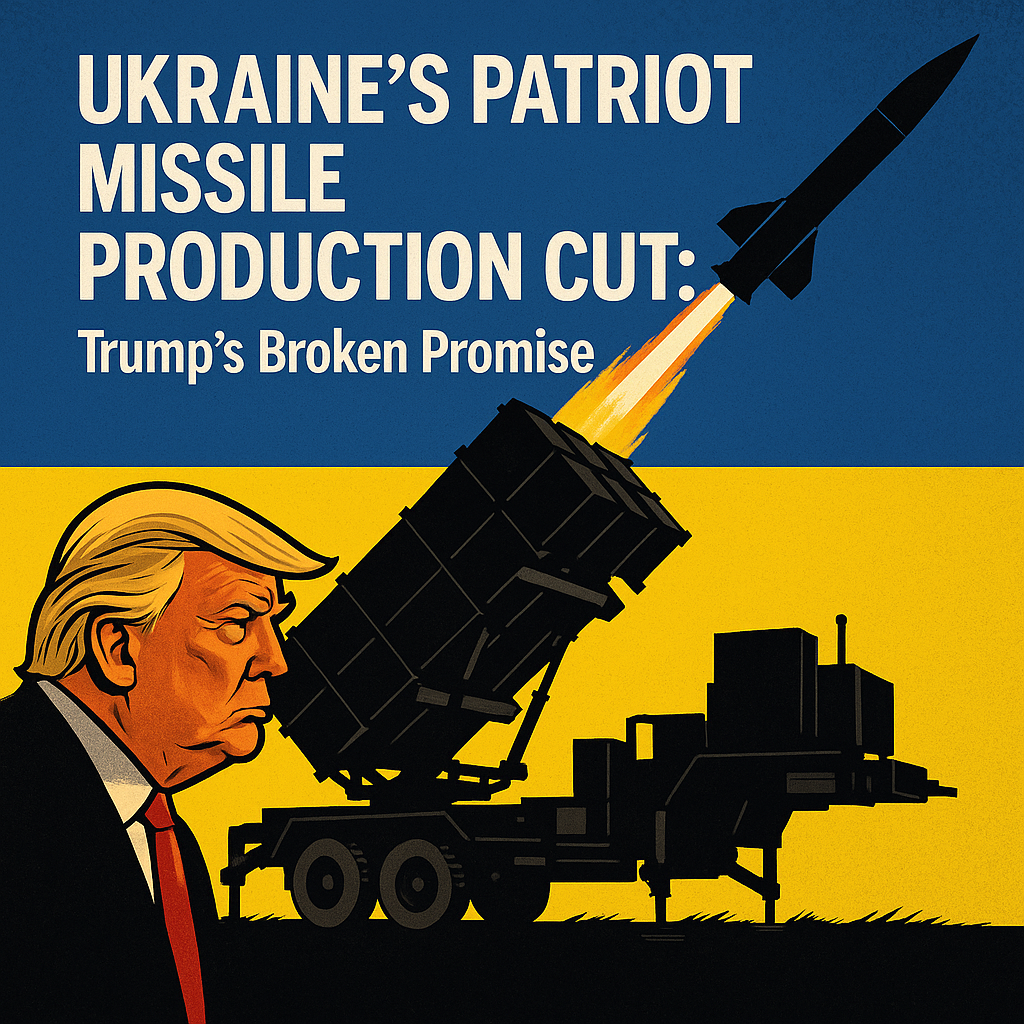
Ukraine’s Patriot Missile Production Cut: Trump’s Broken Promise
Ukraine’s Patriot Missile Production Cut: Trump’s Broken Promise
In the complex landscape of international defense arrangements, Ukraine’s recent reduction in Patriot missile production has sparked renewed scrutiny over past promises made by former U.S. President Donald Trump and the ramifications on global security dynamics. With a supply chain heavily dependent on both U.S. military aid and European partnerships, this decision may signal deeper challenges as Ukraine continues to navigate its defense needs in the face of ongoing conflict.

The Context of Ukraine’s Defense Needs
The Patriot missile system has been a cornerstone of Ukraine’s air defense strategy, particularly following Russia’s intensified aggression. Initially touted as a game-changer, the reliance on these advanced systems illustrates Ukraine’s struggle to outfit its military in the face of dwindling resources. Recent reports indicate that production cuts are primarily due to logistical inefficiencies and a redirection of funding towards other defense initiatives, complicating the availability of these crucial systems at a time when air threats are escalating.

In the backdrop, Trump’s prior administration had pledged substantial military support to Ukraine, framing it as a bulwark against Russian expansionism. Yet, Trump’s later decisions and remarks often shifted focus, leading critics to assert that his commitment waned as geopolitical realities transformed. As one analysis noted, “The shifting promises from the U.S. administration can undermine the very foundations of military support that Ukraine desperately needs.”

Navigating Through Broken Promises
The reduction in Patriot missile production has reignited debates around the reliability of U.S. promises concerning military aid. Critics of Trump assert that his administration’s mixed messages and erratic foreign policy have culminated in a less predictable U.S. support structure for allies like Ukraine. Some political analysts have pointed to this inconsistency as detrimental, suggesting that it not only hinders immediate military objectives but also sows seeds of doubt among global partners.
Nonetheless, Trump’s supporters argue that administrative changes are a natural part of military strategy, especially as environments evolve. They posit that Trump’s “America First” policy aimed to reevaluate the U.S.’s global commitments and hence may not be viewed solely as a broken promise. This perspective reflects an increasingly polarized view of foreign aid decisions, where differing narratives regarding responsibility and reliability lead to divergent interpretations.
The European Angle: Solidarity and Support
In the midst of these shifts, European nations face their own set of challenges regarding support for Ukraine. With German officials previously expressing skepticism about long-term commitments, the landscape poses questions about the collaborative efforts among NATO allies. High-ranking military officials have indicated that the lack of unity in defense strategies places additional burdens on Ukraine’s military supply chains.
Germany’s involvement in Patriot missile commitments shines a light on broader European hesitancies. While they have committed to enhancing their defense capabilities and supporting Ukraine, logistical and bureaucratic challenges have impeded swift action. As German officials reportedly work to deliver more systems to Ukraine, skepticism remains regarding whether these efforts will materialize effectively. The juxtaposition of U.S. hesitations and European logistical hurdles creates a sense of urgency around multinational defense dialogues.
Conclusion: A Crucial Crossroads for Ukraine’s Defense
As Ukraine grapples with the implications of reduced Patriot missile production amidst shifting U.S. commitments, the path ahead remains riddled with uncertainties. The confluence of Trump’s past promises and current realities underscores a complex interplay of military strategy that shapes not only Ukraine’s immediate defense posture but also its long-term relationships with both the U.S. and European allies. Ultimately, the outcomes of these evolving dynamics will play a pivotal role in ensuring Ukraine’s security and sovereignty in an increasingly volatile geopolitical arena.
In summation, the interplay of defense commitments, political promises, and ongoing military necessity creates a charged atmosphere that warrants careful observation. As stakeholders assess the balance of power and aid, the integrity of international agreements will likely be tested, leaving Ukraine at a critical junction in its fight for stability.