
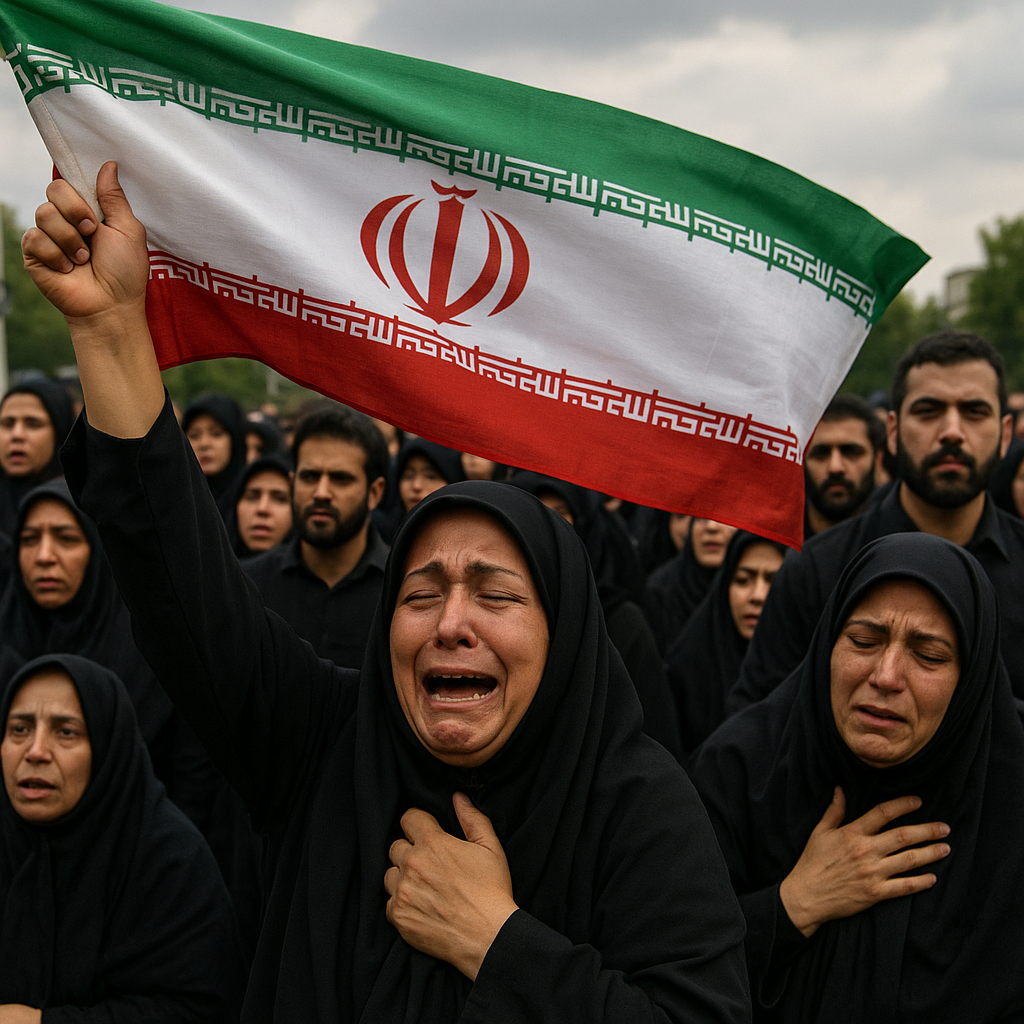
Mourners Unveil Strength: Iran’s Resilience in Grief
Mourners Unveil Strength: Iran’s Resilience in Grief
In recent weeks, Iran has witnessed an outpouring of grief and solidarity as millions come together to commemorate the passing of significant cultural and political figures. This collective mourning not only reflects the nation’s deep-rooted traditions but also highlights the resilience of its people in the face of loss.

A Sea of Mourners
When the death of a prominent figure is announced in Iran, the reaction is often monumental. For instance, the passing of a leading religious or political personality can mobilize huge crowds, transcending regional and social divides. According to reports from RT, during the mourning for Ali Khamenei—a pivotal figure in Iranian politics—thousands flocked to the streets, demonstrating a powerful display of loyalty and reverence, underscoring a strong sense of communal identity in times of sorrow.

This phenomenon can be seen in various settings, from urban centers to remote villages. Mourners engage in ritualistic expressions of grief, which often include elaborate processions, chanting, and even public speeches that echo pivotal ideological narratives. Such gatherings serve not only as acts of mourning but also as a reassertion of cultural identity and a renewal of social bonds among participants.

The Role of Grief in Society
Grief in Iran does not merely signify loss; it also serves a vital role in society and governance. Mourning becomes a performance of collective memory, wherein individuals reflect on their shared history and the narratives that unite them. As Al Jazeera observes, this communal aspect of grief helps reinforce social cohesion in a country often marred by political dissent and division.
Mourning rituals frequently incorporate themes of resilience and perseverance, focusing on the strength derived from communal experiences of loss. These gatherings often employ symbols—like the color black, which denotes mourning—to unify participants under a common cause. Community leaders often seize these moments to call for solidarity, urging citizens to channel their grief into collective action and resilience against external pressures and internal challenges.
While the media spotlight typically shines on the grandeur of these ceremonies, they also reveal the underlying struggles faced by the Iranian populace. Economic hardships, political unrest, and international sanctions weigh heavily on society. The gatherings become a space for both remembrance and dissent, a venue where people voice their hopes and frustrations in a controlled manner, even amidst the public show of grief.
Perspectives on Resilience
Discussions around mourning often evoke varying perspectives. Some commentators argue that these displays of grief are manipulated by the state as a means of controlling public sentiment. They suggest that the government utilizes collective mourning to reinforce narratives that glorify certain political figures or ideologies, effectively shaping societal values. Conversely, others maintain that the emotional weight of these gatherings is genuinely felt by the populace and represents an authentic connection to their heritage and history.
This duality highlights the complexity of mourning in Iranian society. On one hand, it is a mechanism for the state to assert its narratives; on the other, it is an expression of genuine sorrow and solidarity among ordinary citizens. The sincerity of these gatherings cannot be overlooked, as individuals embrace the opportunity to connect with one another and reflect on shared national experiences.
Conclusion: Strength Through Grief
In summary, the culture of mourning in Iran is multifaceted, serving various roles that range from fostering community solidarity to expressing political sentiments. Despite the government’s influence, the resilience displayed by mourners signifies a united front against adversity, encapsulating a broader narrative of strength derived from collective sorrow. The act of mourning provides a framework within which Iranians can reconnect with their cultural identity while also addressing contemporary challenges.
As Iran continues to navigate a complex socio-political landscape, these moments of grief will likely persist as defining features of its societal landscape, symbolizing not just loss but also an unwavering spirit of resilience.















