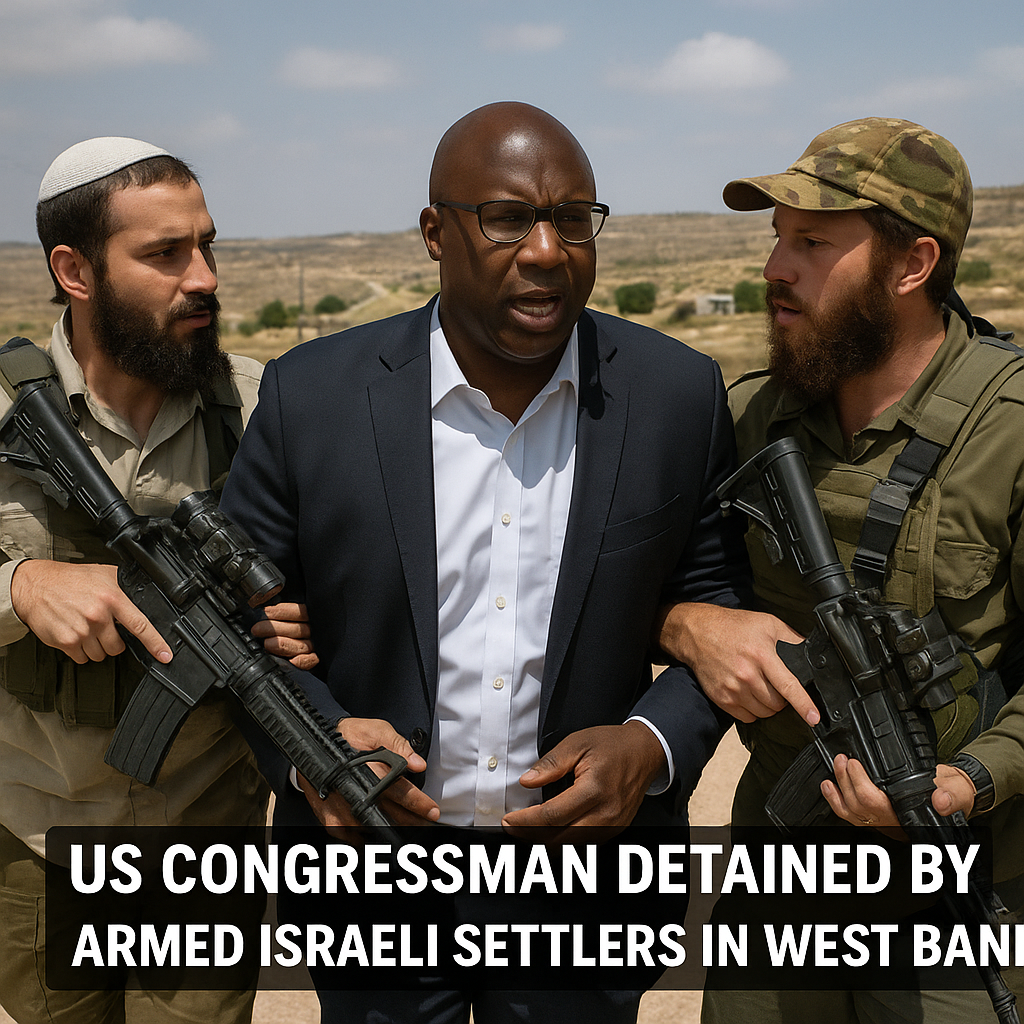
US Congressman Detained by Armed Israeli Settlers in West Bank
U.S. Congressman Detained by Armed Israeli Settlers in West Bank: A Complex Situation
U.S. Congressman Ro Khanna found himself at the center of an international incident when he was detained by armed Israeli settlers in the West Bank, a scenario that has reignited discussions surrounding the Israeli-Palestinian conflict. This event raises important questions regarding the safety of foreign officials in the region, the rights of settlers, and the implications for U.S. foreign policy in the Middle East.

Context and Details Surrounding the Incident
On a recent visit to the West Bank, Congressman Khanna, who represents California’s 17th District, was part of a delegation assessing the humanitarian landscape. According to reports, the group was confronted by a contingent of armed settlers who detained them, a situation that lasted for several hours before Israeli forces intervened. Khanna described the experience as intimidating, emphasizing a need for diplomatic dialogue over militarized responses.

Accounts from various news sources highlight the volatile nature of interactions in the West Bank, where tensions between settlers and Palestinians are historically fraught. Settlers often live in unauthorized outposts; however, many receive support from the Israeli government. This complicates the reliance on legal frameworks, as the rights claimed by settlers conflict with the Palestinian residents’ rights—an issue that stirs widespread debate.

The circumstances surrounding the congressman’s detainment lead to varied interpretations. For many, this incident demonstrates the challenges and dangers faced by anyone confronting the realities of the Israeli-Palestinian conflict. Conversely, others view it as an illustration of increasing tensions within the region, calling for a re-evaluation of U.S. policies that often seem to favor Israeli interests.
Responses from Diplomatic Channels and Broader Implications
In the aftermath of this episode, responses from U.S. officials and worldwide leaders have highlighted the complexity of diplomatic engagement in the West Bank. Secretary of State Antony Blinken expressed concerns over the treatment of Congressman Khanna and reaffirmed U.S. commitment to Israel’s security while calling for restraint in settler actions.
Despite bipartisanship in the U.S. supporting Israel, this incident reflects a growing divergence in attitudes toward Israeli policies regarding Palestinians. A televised statement from Khanna following his release included a call for the U.S. to reassess its military aid to Israel, particularly in light of its ongoing settlement expansion. He pointed out that if the U.S. seeks to promote peace in the region, it must address the realities on the ground and acknowledge the humanitarian crises that often arise from such conflicts.
Public reaction within the U.S. underscores the delicate balance between supporting allies and advocating for human rights. Engaged citizens and activists have taken to social media, using hashtags like #FreeKhanna to voice their discontent and push for greater accountability regarding U.S. foreign aid to Israel.
Navigating Divergent Perspectives
The spectrum of reactions to Khanna’s detention sheds light on the multifaceted issues at play in the Israeli-Palestinian conflict. While some argue that this incident is part of a wider disregard for international norms by Israeli settlers, others caution against using it as a catalyst for severing longstanding diplomatic ties between the U.S. and Israel.
Analysts suggest that the incident might encourage a reevaluation of how the U.S. engages with both Israeli and Palestinian leadership. Critics from various political backgrounds argue that current policies have led to instability and may prolong conflict rather than foment lasting peace. They emphasize the importance of empowering Palestinian voices and addressing settlement expansion that undermines the prospects for a two-state solution.
Conclusion: The Way Forward
The detention of Congressman Ro Khanna by armed Israeli settlers in the West Bank symbolizes a deeply rooted conflict that transcends individual incidents. It serves as a reminder of the ongoing struggles faced in the region, echoing broader themes of power, rights, and diplomatic challenges.
As the U.S. continues to endorse its role in Middle Eastern diplomacy, the incident calls for a careful response that balances support for Israel with a commitment to human rights and the pursuit of peace. The complexities surrounding this event invite us to critically assess what it means to advocate for justice in a region marked by enduring strife. The path forward will require dialogue, introspection, and a willingness to face uncomfortable truths that have long been sidelined in discussions on U.S. foreign policy.