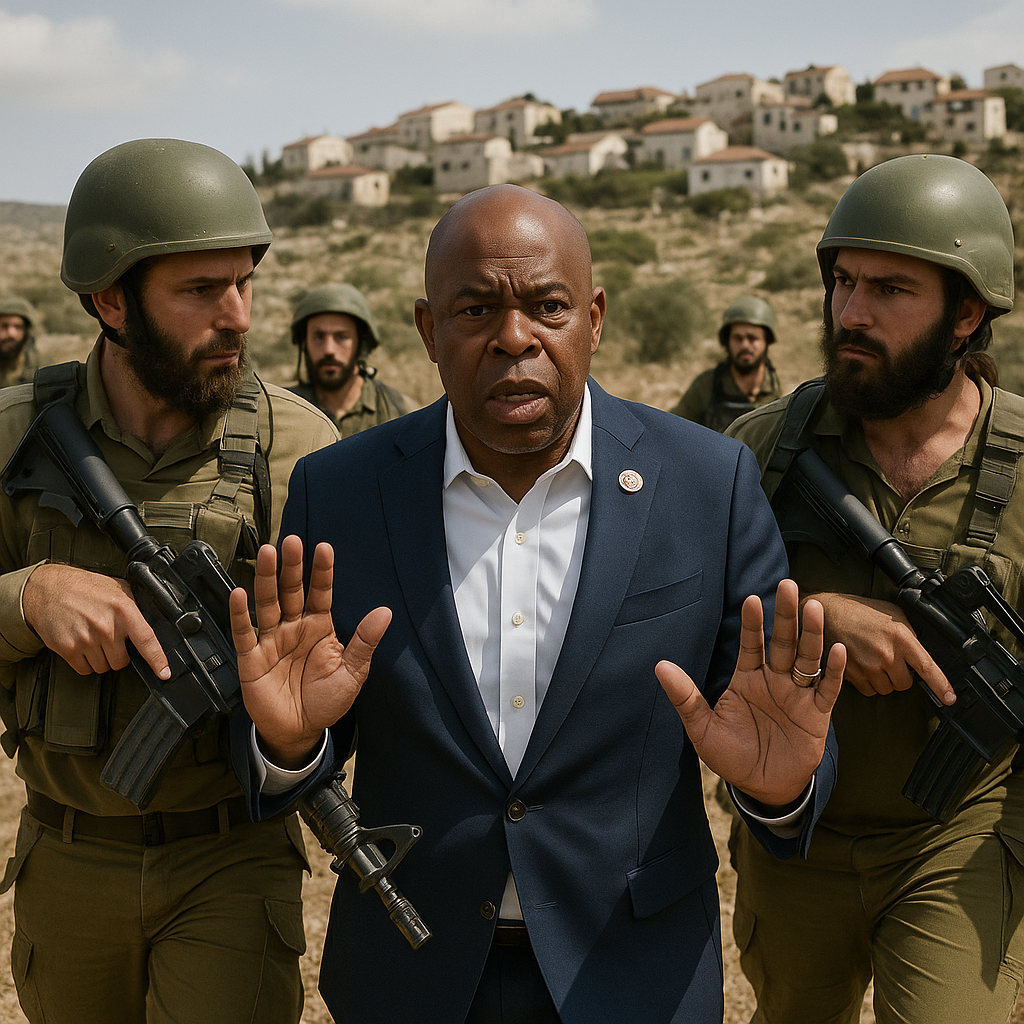
US Congressman Detained by Armed Israeli Settlers
On a recent visit to the West Bank, a US congressman found himself in a precarious situation when he was detained by armed Israeli settlers. This incident has ignited conversations surrounding the complexities of US-Israel relations, the behavior of settlers, and the broader implications for American representatives interacting in volatile regions.

The Incident: Context and Reactions
Rep. Betty McCollum, a Democratic congresswoman from Minnesota, was on a tour aimed at raising awareness about the ongoing human rights concerns in the occupied territories. During her visit, armed settlers reportedly detained her and her group, alleging their presence in the area violated settler-protected boundaries. This confrontation raised immediate questions about the security risks faced by politicians who attempt to address contentious issues overseas.

Al Jazeera reported that this incident follows a pattern of increasing tensions between settlers and Palestinian communities, particularly in areas designated as contested. Settler groups have been known to exert pressure on foreign visitors whom they view as unsympathetic to their claims. The congresswoman’s office noted that they would follow up on the situation and look into the rights of US citizens while abroad.

From another perspective, RT emphasized that such incidents serve as a stark reminder of the difficulties inherent in exploring sensitive geopolitical hotspots. Detractors of McCollum’s position, often connected to pro-Israel sentiment, may quickly dismiss her efforts as politically motivated. These contrasting viewpoints demonstrate how the political landscape profoundly colors perceptions of such encounters.
Historical Patterns of Tension
The broader context of US-Israel relations is crucial to understanding the implications of this incident. Historically, the US has maintained a strong alliance with Israel, complicating the positions of individual Congress members who seek to voice opposition or raise awareness about grievances faced by Palestinians.
Settler violence against Palestinians is not a new phenomenon. Reports from various human rights organizations highlight a consistent trend of aggression and intimidation in the West Bank, notably in areas with high settler populations. This backdrop frames incidents, like the one involving McCollum, within a deeper narrative of ongoing conflict characterized by distrust and opposing narratives.
In the wake of the confrontation, opinions diverge sharply. Supporters of the Israeli government view such actions as necessary for securing their communities, while critics argue that they embody a broader erosion of human rights. The emotional weight of these differing sentiments makes it challenging to ascribe singular motivations or outcomes to such incidents.
The Role of US Representatives
As US lawmakers navigate these treacherous waters, the question arises: how should they approach relations in the region? With constituents interested in both human rights and national security, representatives like McCollum face the difficult task of balancing these priorities against the backdrop of an often hostile political environment.
Some argue that frequent visits by American legislators can stimulate crucial conversation about potential resolutions to the Israeli-Palestinian conflict. Enhanced international awareness, they contend, could foster dialogue that might ease ongoing tensions. Conversely, there exists a perspective that such interactions might inadvertently intensify animosities, especially if lawmakers are perceived by settlers as endorsements of Palestinian positions.
Moreover, the United Nations has consistently urged restraint regarding settlements and their expansions, issues that have become a point of contention internationally. Critics of the settlers often point to their actions as undermining peace efforts, which adds a layer of complexity to the responsibilities of US officials traveling through these regions.
Conclusion: Navigating Complexity
The recent detention of a US congressman by armed Israeli settlers underscores the complexities inherent in US-Israel relations and the multifaceted nature of advocacy within contested territories. It highlights the necessity for lawmakers to educate themselves on the historical and sociopolitical contexts before engaging in the region.
As tensions persist, this incident serves as a barometer for the challenges faced by US representatives. It reveals not only the risks involved in traversing contentious ground but also the persisting ideological divides that characterize global discourse on Israel and Palestine. In contemplating the future of these relationships, American policymakers must tread carefully, being mindful of both historical injustices and the contemporary realities on the ground.