
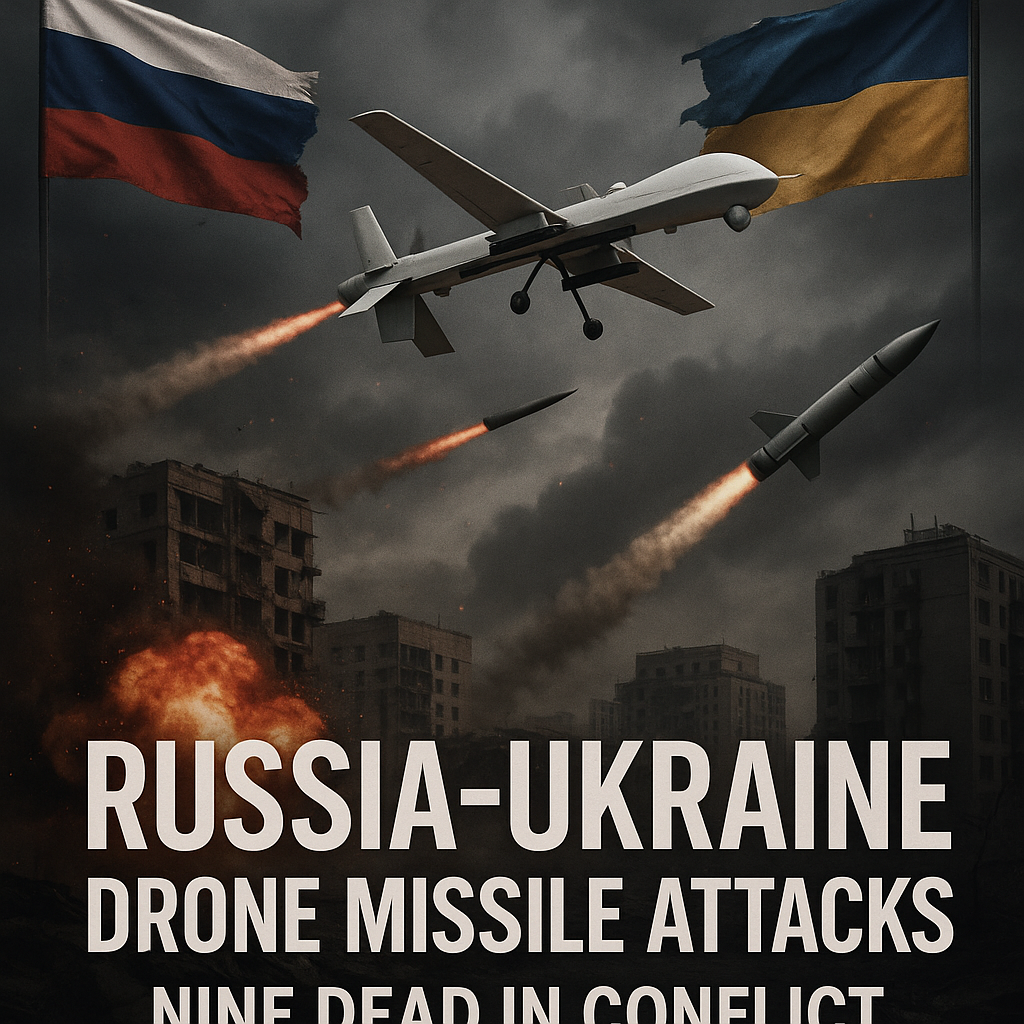
Russia Ukraine Drone Missile Attacks: Nine Dead in Conflict
Russia-Ukraine Drone Missile Attacks: A Tragic Escalation
In the ongoing conflict between Russia and Ukraine, recent drone missile attacks have left nine individuals dead, underscoring the tumultuous state of affairs in the region. Both nations continue to unleash an array of aerial assaults, which have intensified concerns about civilian safety and the broader implications for international relations.

Background of the Conflict
The drone missile attacks mark a disturbing continuation of hostilities between Russia and Ukraine that have persisted since the annexation of Crimea in 2014. Both countries have developed their military capabilities over the years, with drones becoming a critical component of their arsenals. They allow both nations to extend their reach and execute strikes with a degree of precision that was previously unattainable.

According to reports from Al Jazeera, the latest drumroll of violence included simultaneous strikes targeting critical military and civilian infrastructure. As drones buzz overhead, cities in both countries have become frontline battlegrounds, showcasing a stark reality: war is no longer confined to traditional combat zones but has infiltrated the very fabric of everyday life.

Impacts on Civilians
The immediate impact of these attacks on civilians cannot be overstated. Witnesses describe harrowing scenes, with families shattered and communities left to grapple with loss. Among the nine confirmed dead are not just combatants but innocent civilians caught in the crossfire, highlighting the indiscriminate nature of modern warfare. Global entities and rights organizations have expressed outrage at the increasing civilian casualties, calling for accountability and adherence to international humanitarian law.
Moreover, these persistent assaults have led to an alarming humanitarian crisis. The United Nations reported that millions are displaced and seeking refuge due to the incessant attacks, exacerbating an already dire situation. The toll on mental health, especially among children, is equally grave. Such outcomes raise pivotal ethical questions: how can military objectives justify the collateral damage incurred?
International Responses and Divisions
International response to the recent surge in drone missile attacks has been multifaceted, reflecting a divided global stance on the conflict. NATO members have reiterated support for Ukraine, emphasizing the need for defensive weaponry to thwart Russian aggression. On the opposite side, countries like China and India have taken a more neutral stance, calling for diplomatic solutions rather than escalation.
According to RT, some experts argue that continued arming of Ukraine might provoke a more profound Russian response, leading to a prolonged stalemate with devastating consequences for all involved. This perspective challenges the notion that military support alone can quell the violence. In contrast, Western analysts posit that stronger support is crucial, positing that without it, Ukraine may struggle to reclaim its territory and sovereignty.
The complexity of international politics further convolutes the issue. Emerging alliances and geopolitical strategies are reshaping the traditional narrative of the conflict. As regions align with either Moscow or Kyiv, the stakes become considerably higher, pushing the conflict beyond mere territorial disputes to encompass broader ideological divides.
Navigating Towards Resolution
With lives lost and infrastructure devastated, it is clear that a reevaluation of strategies on both sides is essential. Aggressive military tactics have proven to deepen divisions without yielding successful resolutions. A shift towards dialogue, however complex it may be, is imperative for healing and rebuilding.
Calls for ceasefires and humanitarian corridors have surfaced amidst the turmoil, but trust remains sorely lacking. Both nations will have to confront the reality that deterring aggression through drone attacks only perpetuates a cycle of violence. In a world increasingly armed with advanced technology, the lessons drawn from this conflict could serve as a blueprint—or a warning—for future warfare.
Ultimately, the tragedy of losing nine lives in a single series of strikes serves as an urgent reminder that behind every statistic is a human story marked by grief and loss. As the international community watches closely, the question remains whether comprehensive diplomacy can emerge from the ashes of conflict, allowing both nations to envision a path forward that prioritizes peace over warfare.















