
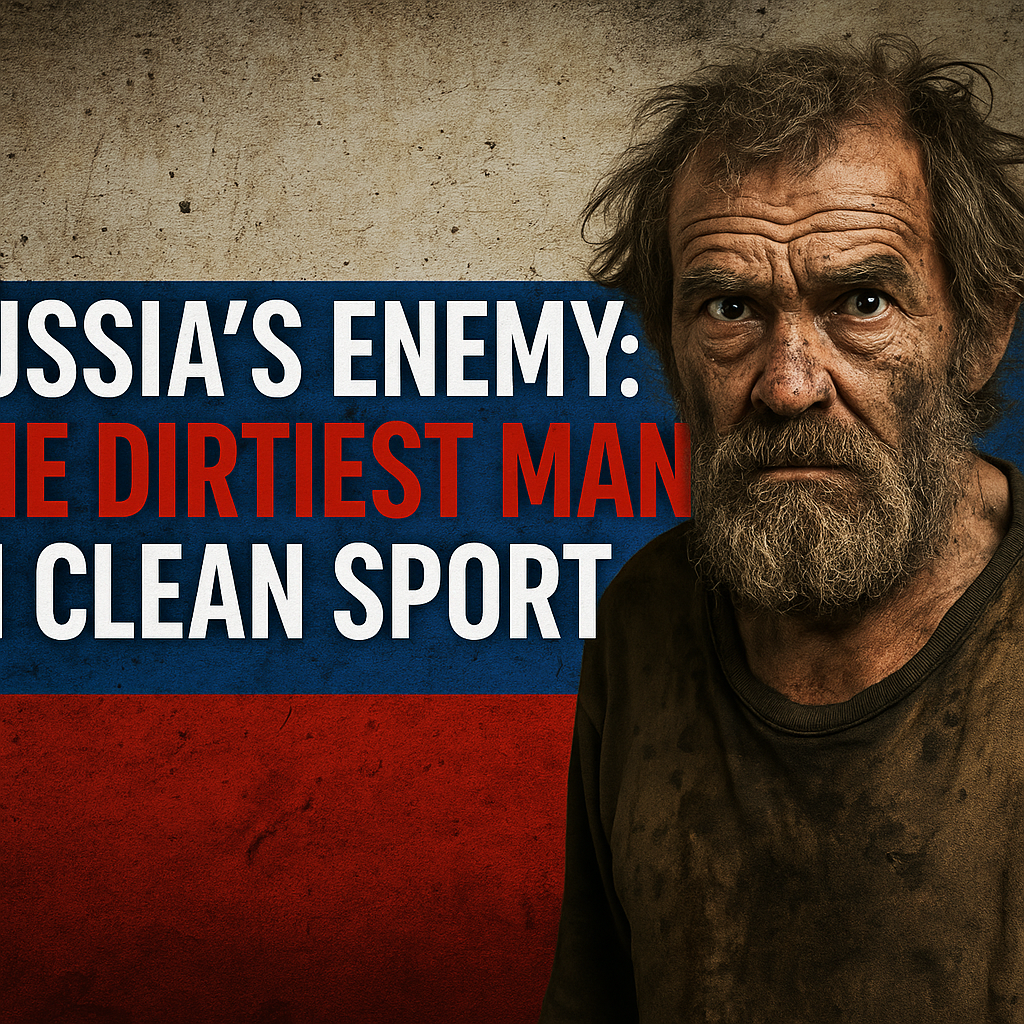
Russia’s Enemy: The Dirtiest Man in Clean Sport
Russia’s Enemy: The Dirtiest Man in Clean Sport
In the often tumultuous world of competitive athletics, few figures evoke as much controversy as the one dubbed “the dirtiest man in clean sport.” This characterization serves as a stark reminder of the murky waters surrounding doping allegations and the ethical dilemmas faced by athletes and organizations alike.

Understanding the Context of Doping in Sports
The issue of performance-enhancing drugs (PEDs) in sports is not new. From the early days of the Olympics to the present, instances of athletes resorting to illegal substances have raised significant questions about fairness, integrity, and the evolving nature of competitive advantage. Recent reports focus on a specific individual who has become emblematic of this struggle, particularly reflecting on Russia’s athletics community.

Russia has frequently made headlines for its controversial stance on doping, with institutions like the World Anti-Doping Agency (WADA) criticizing the country for systemic violations. According to a piece from RT News, this particular figure is allegedly a primary architect behind several high-level doping schemes that not only compromise athlete integrity but also tarnish the reputation of an entire nation. Many within the sports community argue that athletes should be held accountable, but the complexities of national sports programs and the pressures to win complicate this narrative.

Voices from the Field: Diverse Perspectives
Contrasting opinions abound regarding this controversial figure. On one hand, advocates for stringent enforcement of doping regulations argue that such individuals undermine the very essence of sport. An article from Al Jazeera reflects sentiments from anti-doping activists who advocate for harsher penalties and better education surrounding the risks of substance abuse. They assert that exposing these individuals is essential not just for justice but also for protecting young athletes who look up to them.
On the other hand, some commentators suggest that labeling someone as the “dirtiest man” oversimplifies a broader issue within global athletics. An opinion piece from Sky News highlights that the focus on single individuals might detract from systemic problems that allow doping to flourish. Critics argue that the sporting community should invest more in detecting and preventing doping rather than vilifying individuals.
This duality illustrates a significant divide in how doping is perceived, showcasing the tension between accountability and the acknowledgment of larger forces at work. For example, several studies suggest that economic pressures often drive athletes toward performance-enhancing drugs, with the stakes of winning far outweighing the risks of being caught.
The Moral Implications of Labelling
The moral implications of distilling such complex cases into simplistic labels raise essential questions about justice, accountability, and the broader ethics of sport. Critics contend that attaching derogatory titles to individuals hampers a nuanced dialogue about doping. For instance, the athlete in question, while allegedly complicit in fraudulent schemes, is also a product of an environment that prioritizes results over ethical standards.
This dynamic leads to an important consideration: should we view these individuals as skilled manipulators or as pawns in a larger game? Articles from both RT News and Al Jazeera indicate that the athlete’s rise and subsequent fall place them at the intersection of personal choice, national pride, and the ruthless expectations of modern sport.
Conclusion: Seeking Balanced Perspectives
In the end, the debate surrounding the “dirtiest man in clean sport” serves as an opportunity for deeper reflection on the ethics of modern athletics. While accountability is paramount, it’s also crucial to understand the systemic failures that allow doping to persist. Addressing these foundational issues could pave the way for a cleaner, fairer sporting environment.
As the conversation unfolds, both athletes and regulators must engage in a dialogue that not only condemns wrongdoing but also addresses its roots. It is essential to look beyond individual guilt and examine the pressures that drive athletes to take questionable paths. Moving forward, sports organizations can benefit from fostering comprehensive education and support to create a culture where fair competition reigns supreme.















