
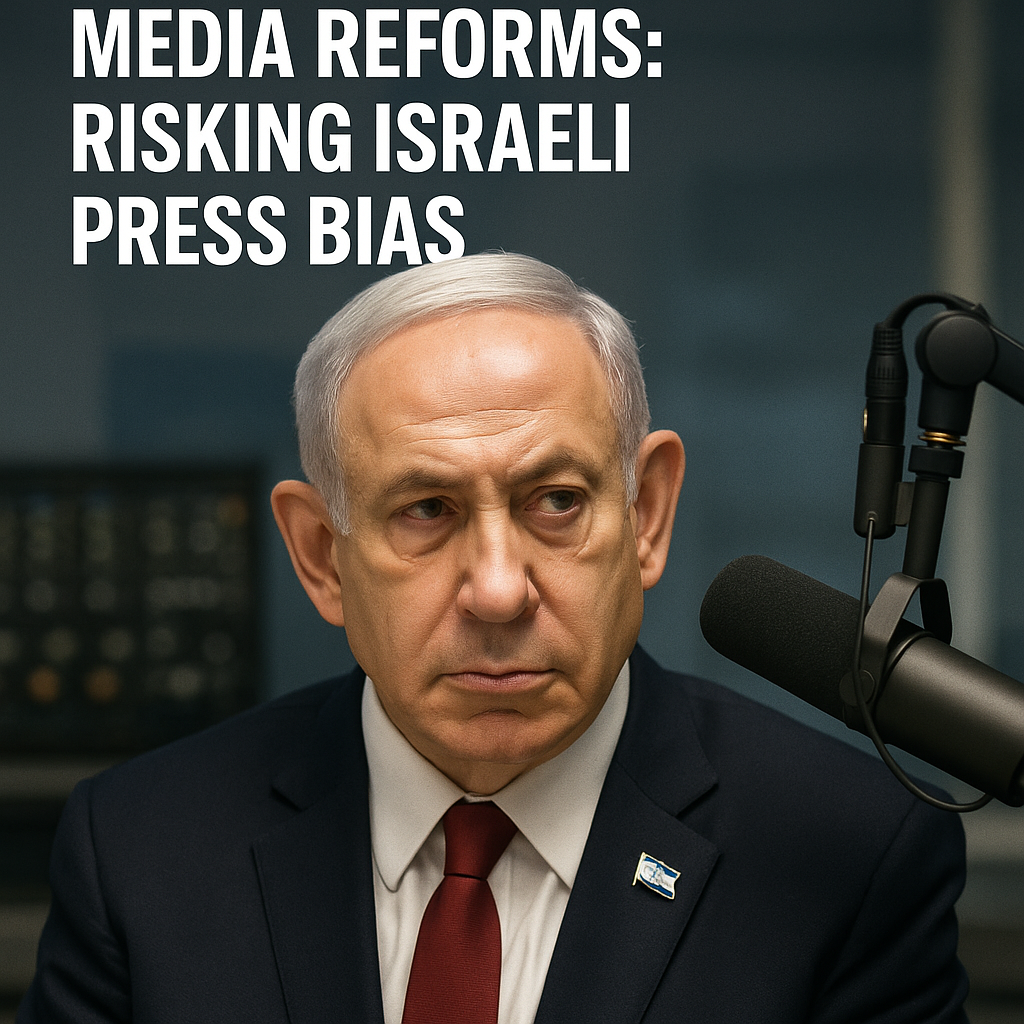
Netanyahu’s Media Reforms: Risking Israeli Press Bias
Netanyahu’s Media Reforms: Risking Israeli Press Bias
Recent developments in Israel under Prime Minister Benjamin Netanyahu have sparked significant debate regarding proposed media reforms. These changes are seen by some as an attempt to control the narrative, raising concerns about potential bias in an already polarized press landscape. As the Israeli government presses forward, the implications of these reforms merit a closer examination.

Understanding the Media Reforms
Netanyahu’s government aims to implement sweeping changes to the media landscape, focusing on the regulatory frameworks governing press operations. Critics argue that these reforms are designed to consolidate power and curb dissent, effectively transforming the media into a tool of government propaganda.

Proponents of the reforms, however, contend that the intention is to create a more balanced media environment that reflects diverse viewpoints. According to officials, the aim is to overcome what they describe as a “leftist bias” in the mainstream media, promoting a more nationalistic narrative that aligns with the government’s stances.

Shift from Diversity to Control
One of the central points of contention is the potential shift from a publicly accountable media to one that serves political purposes. Opponents argue that if implemented, the reforms could threaten journalistic independence, limiting the scope of reporting on critical issues. There are fears that media outlets could face repercussions for stories that contradict the government’s narrative, ultimately leading to a homogenized press.
On the flip side, supporters maintain that the reforms seek to level the playing field, arguing that the media has historically favored left-leaning narratives while neglecting right-wing perspectives. This sentiment has gained traction among segments of the population who feel misrepresented or marginalized in mainstream conversations.
The Broader Impact on Israeli Society
Understanding these reforms in a broader societal context reveals layers of complexity. Israel’s media landscape has long been a battleground for ideological warfare. In a nation where political affiliations deeply influence public discourse, the repercussions of media bias extend beyond journalism, shaping public perception and societal division.
Concerns about press bias are not limited to Israel; countries worldwide grapple with similar issues. The balance between governmental oversight and free speech remains a contentious subject, particularly in democracies facing mounting pressure from populist movements. The challenge facing Israel is unique—how to foster a media environment that is both accountable to the government and reflective of the people it serves.
A Divided Public Response
The public response to Netanyahu’s proposed reforms is decidedly mixed. Some citizens welcome the potential for change, viewing it as an opportunity for the media to break free from entrenched biases. Conversely, a significant portion of the population sees the reforms as a dangerous precedent that could undermine democratic principles, fearing a slide toward authoritarianism.
Media organizations and civil rights groups have voiced strong opposition to any measure viewed as eroding press independence. Commentators argue that a functioning democracy relies on a robust, free press that can hold power to account, and any encroachments on this independence are deeply troubling.
Conclusion: Navigating Complexities Ahead
As the debate over Netanyahu’s media reforms intensifies, the path forward remains fraught with uncertainty. While there may be valid arguments on both sides concerning the need for change in the Israeli media landscape, it is crucial to approach these reforms with caution. The potential ramifications on journalistic integrity and public trust in the media are profound and warrant close scrutiny.
In an era where information can quickly become weaponized, the preservation of a free and independent press may ultimately be the linchpin for democracy in Israel. Balancing the need for diverse representation with the essential safeguards for journalistic freedom is a complex challenge, one that Israeli society must navigate thoughtfully in the coming months.
The outcome of these reforms could very well define the future of media in Israel, impacting its democratic fabric and the relationship between the government and its citizens. As this contentious issue unfolds, the world will be watching closely, eager to see how one nation’s struggles with media bias reflect broader global challenges.















