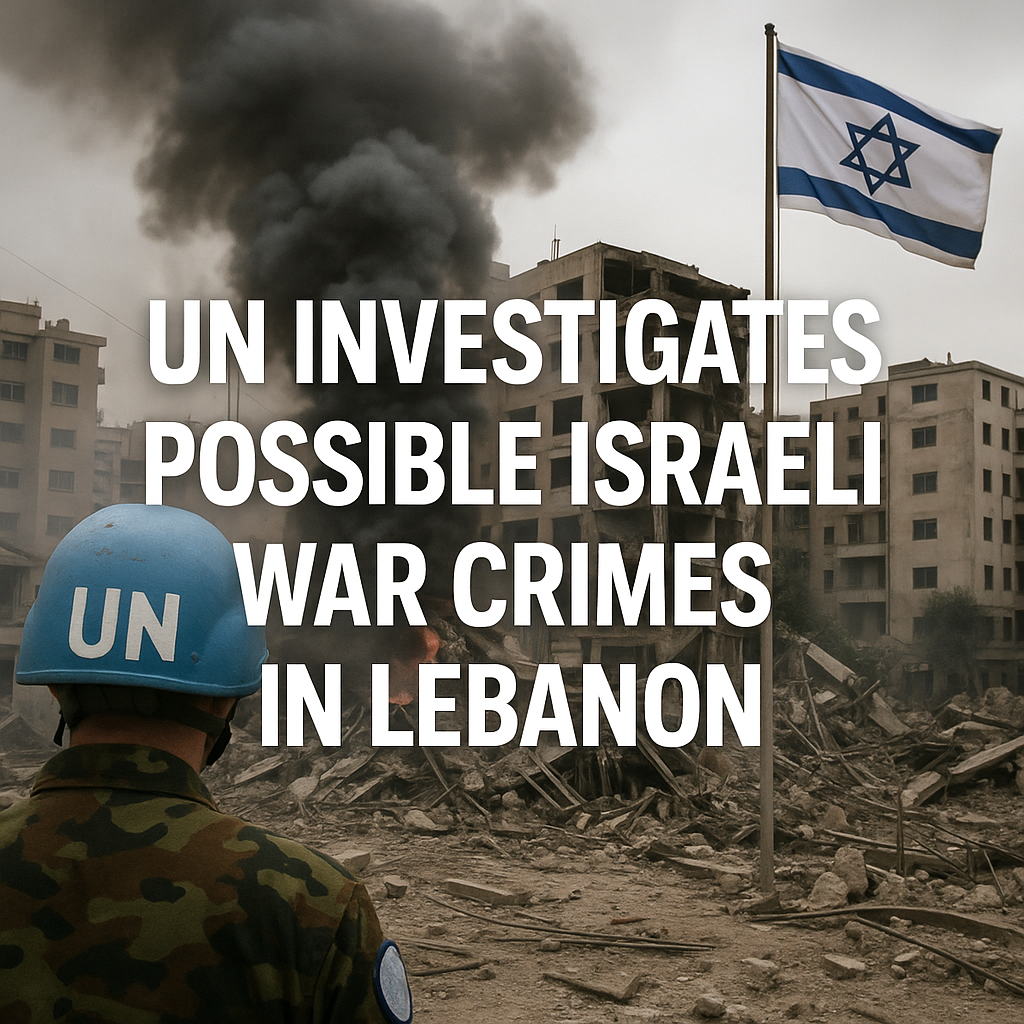
UN Investigates Possible Israeli War Crimes in Lebanon
UN Investigates Possible Israeli War Crimes in Lebanon
The recent initiation of a UN investigation into potential Israeli war crimes in Lebanon underscores the complex and often contentious landscape of international conflict and accountability. This inquiry comes in the wake of escalating tensions and violence that have characterized the region, raising significant questions about human rights violations and the legal frameworks governing warfare.

Background on the Conflict
The history of conflict between Israel and Lebanon is marked by years of tension, especially concerning the actions of Hezbollah, an armed group based in Lebanon. This recent probe is particularly focused on incidents around the Lebanese border and the repercussions of military operations that have allegedly resulted in civilian casualties. According to reports from Al Jazeera, the investigation is aimed at addressing whether Israeli forces have committed war crimes during these operations, specifically through indiscriminate attacks on civilian infrastructure, which would violate international humanitarian law.

From a broader perspective, an increase in border skirmishes—marked by rocket exchanges and airstrikes—has intensified scrutiny on both sides regarding their adherence to international norms of conduct in warfare.

Divergent Perspectives on Accountability
The varied narratives surrounding the UN investigation reflect deeply entrenched views on accountability in conflict situations. Advocates for human rights emphasize the necessity of thorough investigations to hold perpetrators accountable. They argue that if credible evidence emerges against Israeli forces, it should be dealt with under international law. “Justice must be served to deter future violations,” states one human rights advocate, citing the importance of maintaining a legal framework to address wartime conduct.
Conversely, Israeli officials have dismissed the UN’s inquiry as politically motivated, claiming that it lacks credibility. These perspectives highlight the politically charged atmosphere that often surrounds investigations of this nature. A representative from the Israeli government remarked that such probes can be employed as tools for delegitimizing nations and their military efforts, particularly in self-defense scenarios.
This divergence in viewpoint does not merely showcase different opinions but encapsulates the broader implications of warfare, where narratives are constructed and deconstructed based on national and political priorities.
The Human Element: Civilian Impact
Amidst these investigations and legal deliberations, the impact on civilians often gets overshadowed. Reports indicate that civilians have borne the brunt of military confrontations, with numerous casualties and widespread displacement. As per data collated by NGOs operating in the region, continuous military activities have severely disrupted daily life for many Lebanese citizens, prompting calls for urgent humanitarian aid.
International responses have therefore been varied, ranging from calls for humanitarian assistance to demands for accountability following alleged violations. The complexity surrounding these issues stems not only from the military actions taken but also from the lingering socio-political grievances that fuel long-term conflict. The UN investigation could thus serve a dual purpose: addressing immediate grievances while potentially paving the way for a more thorough understanding of the historical context that underlies current hostilities.
Conclusion
As the UN proceeds with its investigation into the allegations of war crimes in Lebanon, the implications extend beyond mere accountability. This inquiry could potentially redefine international legal norms concerning warfare, human rights, and state sovereignty. The outcomes of such investigations may have lasting repercussions, marking critical junctions in both Israeli-Lebanese relations and broader international human rights law.
Ultimately, the path forward must balance a commitment to justice with an awareness of the multifaceted realities on the ground. While the investigation aims to uncover the truth, it is essential that the findings contribute to a framework that not only addresses past transgressions but also helps foster a culture of accountability going forward. In-depth discussions and deliberations will be necessary as the global community watches closely, hoping for a resolution that prioritizes human dignity amidst the ongoing cycles of conflict.