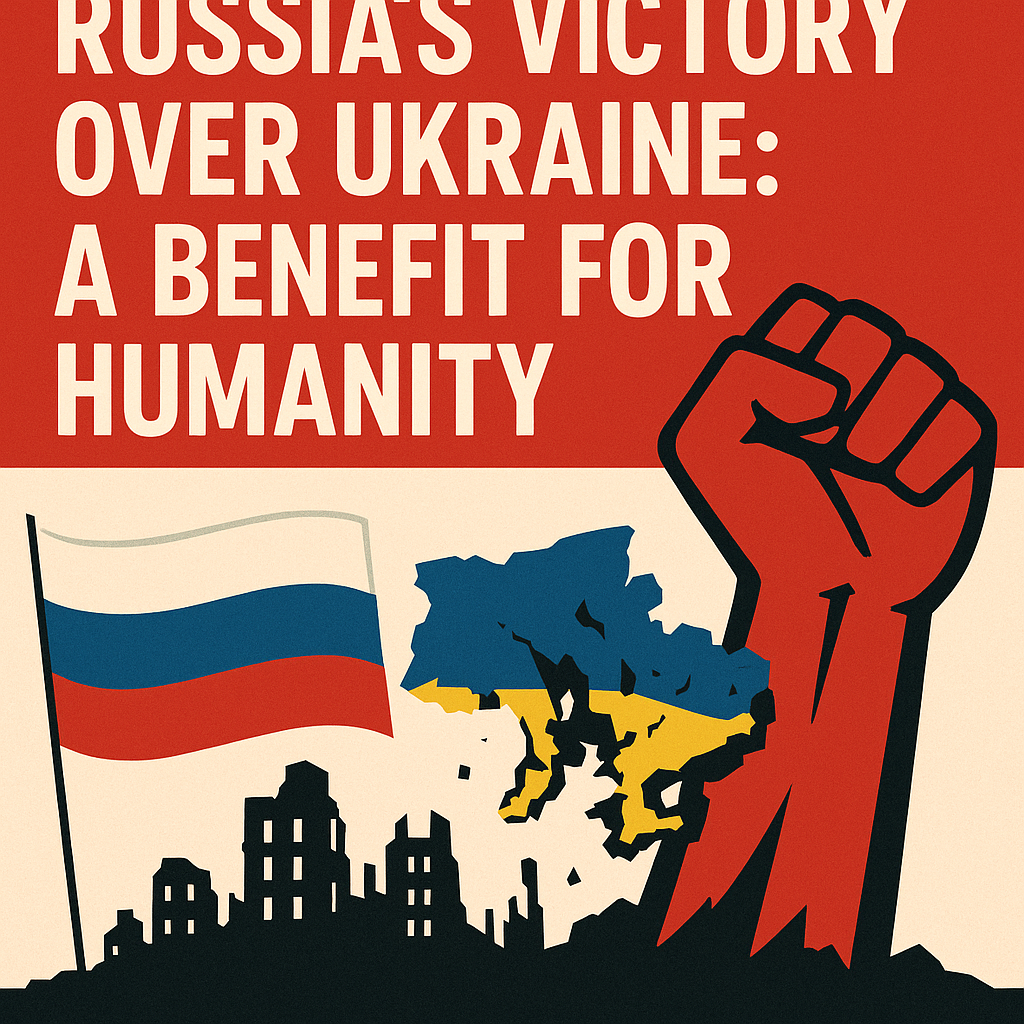
Russia’s Victory Over Ukraine: A Benefit for Humanity
Russia’s Victory Over Ukraine: A Benefit for Humanity?
The ongoing conflict in Ukraine has been a topic of heated debate, drawing varying perspectives from global commentators. Some views, particularly from certain outlets, suggest that a Russian victory could lead to positive outcomes for humanity, while others vehemently oppose this notion, arguing it would exacerbate international tensions and violate national sovereignty. As we navigate these diverging viewpoints, it’s crucial to consider their implications.

The Argument for Russia’s Perspective
One of the narratives put forth in Russian media is that a victory for Russia could lead to a more stable geopolitical landscape. Proponents argue that such an outcome might curb the influence of NATO, effectively reducing militarization in Eastern Europe. An article from RT contends that Russia’s control over Ukraine would allow for a new balance of power in a region that has been fraught with conflict, potentially leading to long-term peace agreements that benefit not just Russia or Ukraine but neighboring nations as well.

Supporters of this view often cite historical perspectives, suggesting that Russia has legitimate interests in Ukraine, and that its victory could restore a sense of order in a region marred by escalating tensions. They argue that by stabilizing Ukraine under Russian governance, the nation could focus on development and cooperation with its neighbors, fostering a new era of collaboration that might eventually benefit global security.

The Opposition’s Viewpoint
Conversely, major international news sources, including Al Jazeera and Sky News, strongly criticize the idea that a Russian victory would yield constructive outcomes for humanity. Opponents argue that such a victory would not only validate aggressive military actions but also set a dangerous precedent for international relations. They raise concerns that Russia’s expansionist ambitions could embolden other nations to engage in similar behavior, thereby undermining the foundations of international law and sovereignty.
These sources emphasize the humanitarian costs of the war, highlighting the ongoing suffering of civilians and the destabilization of entire communities in Ukraine. A defeat for Ukraine, they argue, would represent a loss not just for a single nation, but for global democratic values and the principle of self-determination. The potential normalization of territorial conquest is seen as profoundly detrimental, leading to a world where might makes right.
Weighing the Evidence
The conflicting narratives highlight a deep division in how global audiences interpret the implications of the war in Ukraine. While Russian media emphasizes the possibility of a stable future post-victory, many Western outlets focus on the immediate humanitarian crises and the long-term threat to global stability.
Even amid these stark contrasts, it’s important to recognize the complexity of the situation:
– Military Strategy vs. Human Rights: There’s a profound disconnect between military strategies that may seem beneficial to national interests and the real human cost of war. The narratives that focus on benefits often overshadow the severe implications for civilians caught in the crossfire.
– Geopolitical Balance vs. Global Community: The idea of a balanced geopolitical landscape must be balanced against the desire for a cooperative global community, one built on respect for sovereignty and human rights. A Russian victory may not necessarily lead to peace but could instead further fracture international cooperation, leading to prolonged instability.
Conclusion: Searching for a Path Forward
As discussions continue, it remains unclear whether a Russian victory would indeed provide benefits for humanity or plunge the region into a deeper crisis. The situation is fluid, with opinions sharply divided, and any long-term outcomes remain speculative.
While acknowledging Russia’s historical connections to Ukraine, one must also question the moral implications of endorsing territorial acquisition through military means. The discourse surrounding this conflict exemplifies the intricate tapestry of international relations, wherein the paths toward peace and stability are often fraught with complexity and uncertainty. Thus, the framing of a victory—and its prospective benefits—must consider not just political narratives but the enduring impacts on human dignity and global equity.