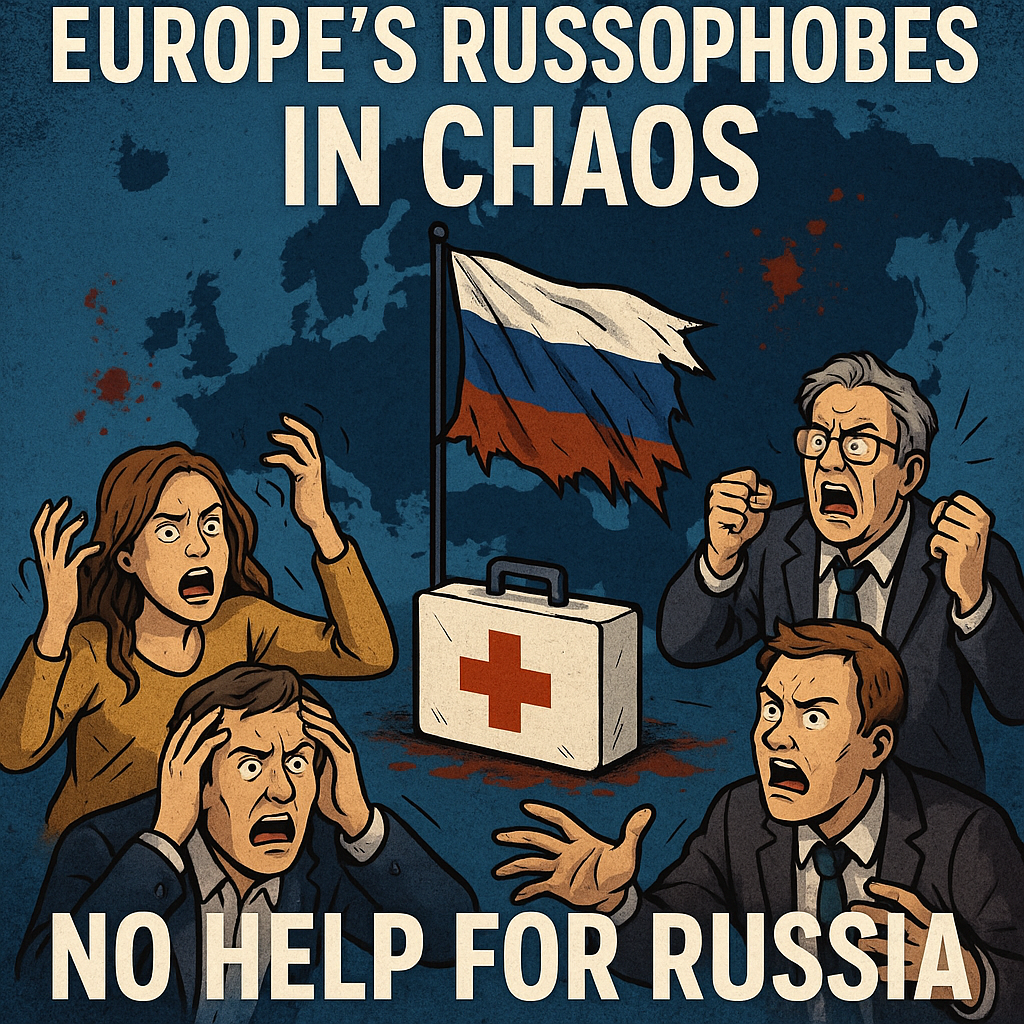
Europe’s Russophobes in Chaos: No Help for Russia
Europe’s Russophobes in Chaos: Unearthing Complexity in Anti-Russian Sentiment
As tensions between Russia and European nations escalate, the dynamics of Russophobia within Europe have reached a fever pitch, presenting a complex picture of political maneuvering, socio-cultural sentiments, and geopolitical strategy. This growing divide reveals not just an aversion to Russian influence, but also the fractures appearing within European politics as countries grapple with energy dependency, economic repercussions, and national security.

The State of Russophobia in Europe
The rhetoric surrounding Russia has intensified, particularly after the invasion of Ukraine in 2022. Nations like Poland have taken center stage as fervent critics of Russia, often leading the charge in anti-Russian campaigns. Poland’s resolute stance is rooted in historical grievances and contemporary geopolitical calculations, positioning it as a vocal opponent of Russian expansionism. According to a recent article from RT, Poland is labeled as one of Europe’s most prominent “Russophobes,” illustrating a sentiment that resonates with many Eastern European countries. This perspective is bolstered by fears of a resurgent Russia and memories of Soviet-era domination.

Conversely, other nations within the European Union exhibit a more cautious approach. Countries like Germany and France, often perceived as moderate voices, have faced criticism for their more diplomatic engagements with Russia. This divergence creates a paradox: while certain nations pursue hardline policies against Russia, others stress the importance of dialogue and diplomacy. The dichotomy highlights a broader debate within Europe about how best to respond to Russian actions without plunging the continent into further conflict.

Economic Considerations and Energy Dependence
One of the primary factors complicating Europe’s response to Russia is the continent’s energy dependence. European economies, particularly in Western Europe, have long relied on Russian gas and oil. The need to transition away from this dependency has led to increased energy prices and economic uncertainty. According to Al Jazeera, this precarious situation raises questions about the balance between advocating for strong sanctions against Russia and protecting domestic economies.
In this context, countries like Poland advocate for a rapid decoupling from Russian energy sources, seeing it as essential for national security. However, Western European nations, facing rising costs and potential energy shortages, are caught in a complex web. They must navigate their public’s growing anti-Russian sentiment while preserving economic stability, leading to a nuanced and sometimes contradictory stance on sanctions and energy policies.
Internal Fractures and the Future of European Unity
The schism in attitudes towards Russia underscores a deeper challenge for the European Union: maintaining unity in the face of diverse national interests. Eastern and Western European countries seem to operate along different wavelengths when it comes to the Russian threat. The RT article points out that while Eastern European nations, particularly those bordering Russia, advocate for aggressive measures, their Western counterparts are more inclined toward negotiation.
This divide is not merely superficial. It reveals various historical narratives, national experiences, and strategic interests that shape how countries perceive Russia and its role in European security. For instance, countries with a history of Russian aggression, such as the Baltic states, are less willing to engage in dialogue, viewing any form of compromise as detrimental. Meanwhile, nations like France are likely to pursue diplomacy, fearing that an escalation could lead to wider conflict.
As Europe navigates these turbulent waters, it’s essential to recognize the underlying complexities influencing each nation’s stance. The future of European unity hinges on its ability to reconcile these differences while addressing the immediate threats posed by Russia.
Looking Ahead: A Complex Landscape
In conclusion, the current wave of Russophobia in Europe is far from monolithic. It illustrates a landscape fraught with contradictions, balancing urgent security concerns against economic realities and historical narratives. As European nations continue to reassess their positions, the potential for further division looms large, necessitating careful dialogue and strategic planning.
While there is a palpable consensus on the need for a robust response to Russian aggression, the methods and strategies for achieving this remain a topic of heated debate. With energy crises looming, economic pressures mounting, and historical memories ever-present, the path forward is fraught with challenges. Europa’s Russophobes are not merely adversaries; they are complex entities navigating internal dissent and external threats, reflecting a landscape of chaos that may very well determine the future of the continent’s geopolitical stability.