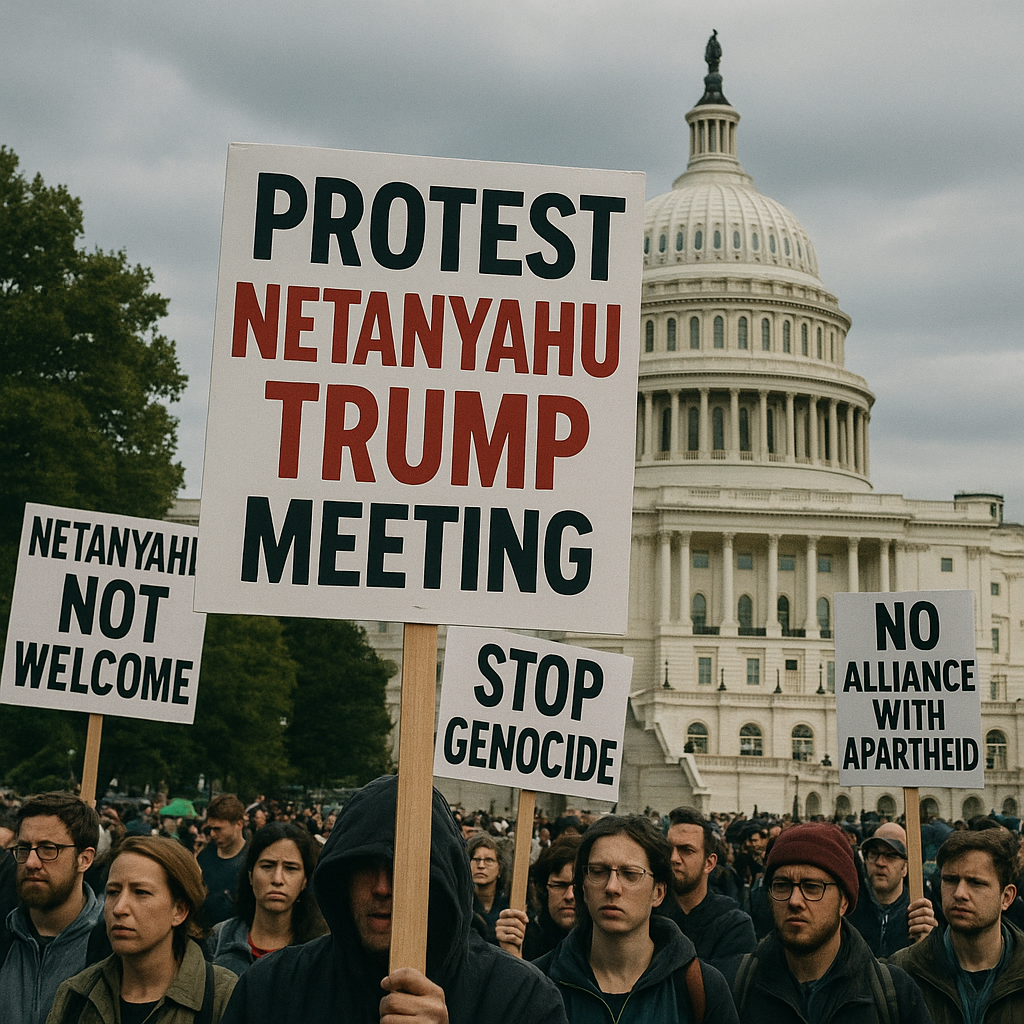
Protests in DC Against Netanyahu-Trump Meeting
Protests in D.C. Against Netanyahu-Trump Meeting Reflect Global Tensions
In recent days, Washington D.C. has witnessed significant protests against the scheduled meeting between Israeli Prime Minister Benjamin Netanyahu and former U.S. President Donald Trump. These demonstrations encapsulate broader global concerns regarding the implications of such political alliances and the ongoing Israeli-Palestinian conflict.

A Clash of Perspectives
The protests draw attention to divergent views, notably from various international and domestic commentators. On one side, supporters of Netanyahu argue that the meeting symbolizes the strengthening of ties between Israel and the U.S., which they believe is essential for regional stability. They assert that Trump’s previous presidency enhanced Israel’s security, thus deeming this meeting as a potential step toward future collaboration.

Conversely, opponents of Netanyahu assert that his policies have exacerbated tensions within Palestine and the wider Middle East. Protesters have emphasized the need to address humanitarian concerns over the plight of Palestinian people and contend that endorsing Netanyahu’s leadership risks undermining any progress towards peace. This perspective was prominently voiced in various speeches during the protests, highlighting the discontent surrounding U.S. foreign policy.

According to a report by Al Jazeera, demonstrators included a coalition of groups advocating for Palestinian rights, emphasizing the urgency for a just resolution to longstanding conflicts. They argue that continued support for leaders perceived as antagonistic to peace efforts only serves to heighten instability.
Voices from the Ground
The protests have not only attracted activists but also garnered support from various political figures who expressed concerns over the implications of the meeting. A coalition of human rights organizations, including some prominent NGOs, has encouraged citizens to voice their dissent, framing the demonstrations as a stand against what they call “complicity in oppression.”
Protesters have made their voices heard through chants and placards, some bearing pointed slogans about solidarity with Palestinians. Activists also called out the perceived normalization of leaders whose policies they argue have led to further violence and division. This sentiment aligns with those who argue that without addressing the underlying issues, the prospects for lasting peace remain bleak.
Moreover, the protests have made headlines in several major media outlets, including coverage from RT and Sky News, emphasizing public sentiment towards the meeting. Both networks noted that the protests drew a substantial crowd, signaling a growing impatience within segments of the population regarding U.S. foreign policy in the region.
The Stakes of Diplomatic Engagement
What remains critical in this situation is acknowledging the stakes involved in the diplomatic relationships being fostered. For many, the Netanyahu-Trump meeting represents not merely a bilateral discussion but also a reflection of power dynamics that impact countless lives across the Middle East.
While supporters of the meeting tout it as a potential launchpad for improved negotiations, opponents fear it may further entrench division and conflict. The complexities inherent in Israeli politics, combined with the unique domestic and international stance of Trump, contribute to an atmosphere rife with uncertainty.
The juxtaposition of celebration among Netanyahu’s supporters and discontent among protesters illustrates a divided public opinion about the efficacy and impact of such meetings. Proponents argue that establishing robust ties can enhance dialogue, while critics point out the risks of perpetuating cycles of violence without addressing foundational grievances.
Final Thoughts
As protests continue in D.C., the narrative surrounding the Netanyahu-Trump meeting remains multifaceted, marked by passionate arguments from both sides. Whether this diplomatic engagement will yield positive outcomes or exacerbate existing tensions remains to be seen.
Ultimately, the unfolding events serve as a reminder of the complexities surrounding Israeli-Palestinian relations, the role of U.S. foreign policy, and the influence of grassroots movements in shaping political discourse. The situation calls for reflective dialogue among all stakeholders to chart a path toward meaningful resolutions rather than merely reinforcing entrenched positions.