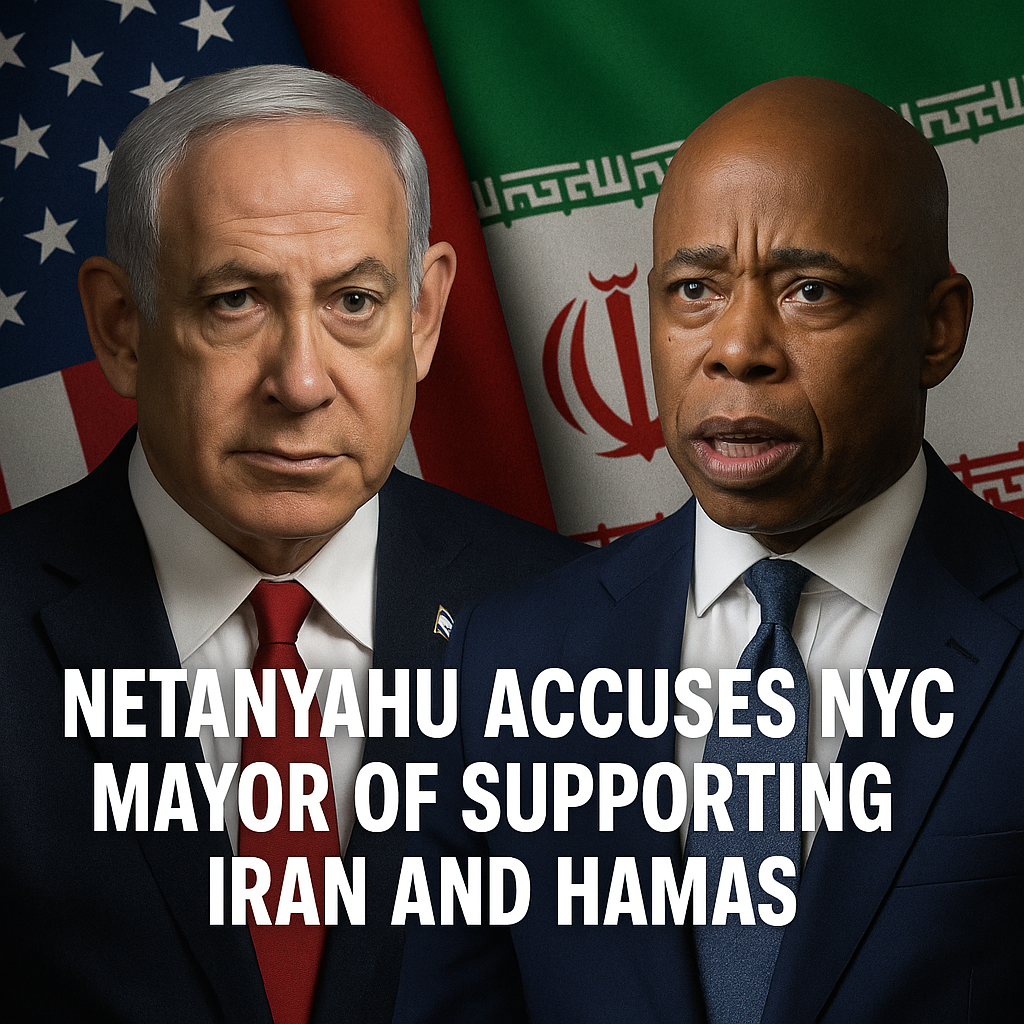
Netanyahu Accuses NYC Mayor of Supporting Iran and Hamas
In a recent statement that has sparked significant controversy, Israeli Prime Minister Benjamin Netanyahu accused New York City Mayor Eric Adams of tacitly supporting Iran and Hamas through his criticism of Israel. This accusation comes amid heightened tensions in the Middle East and growing scrutiny over how international leaders respond to the ongoing Israeli-Palestinian conflict.

Context of the Allegations
The backdrop of Netanyahu’s remarks is marked by a complex geopolitical landscape where rhetoric holds considerable power. Adams, who has publicly expressed his concerns regarding Israel’s military actions in Gaza, has maintained that his position arises from a desire for peace and justice rather than any inclination to support groups like Hamas. His comments highlight the moral dilemmas faced by leaders trying to navigate the intricacies of international diplomacy.

Netanyahu’s comments follow a series of public grievances between the influential Israeli leader and various American politicians who have voiced opposition to Israel’s tactics during recent escalations in violence. Such exchanges often amplify in the wake of tragic events, where the loss of civilian life garners international condemnation and calls for accountability.

Diverging Perspectives
The opinions on Adams’ stance and Netanyahu’s accusations reflect a broader divide in American public opinion regarding Israel and its policies. While some commentators argue that Adams’ approach is commendable for advocating human rights and peace, others echo Netanyahu’s view, asserting that any critique of Israel’s military actions equates to support for anti-Israel sentiments.
Supporters of Netanyahu argue that accusations of promoting violence against Israel are valid when leaders, particularly those in influential cities like New York, fail to unequivocally support the state’s right to defend itself. They point to Hamas’s stated objectives of eradicating Israel and argue that any leniency towards critique can embolden such groups.
Conversely, other voices, including various human rights organizations, advocate for a balanced perspective that does not dismiss legitimate concerns over civilian harm in military operations. They emphasize that criticism of Israel should not be misconstrued as an endorsement of terrorism. Critics of Netanyahu argue that leading with accusations may hinder meaningful dialogue and understanding necessary for progressing towards peace.
The Implications for International Relations
Netanyahu’s remarks about Adams could have broader implications for U.S.-Israel relations, particularly in how American leaders engage with Middle Eastern policies. The tensions between differing views on how to address the Israeli-Palestinian conflict serve as a microcosm of a larger, polarized discourse that permeates U.S. politics.
Understanding the varied public responses is essential. Some Americans, especially younger generations, express growing sympathy for Palestinian perspectives, which does not necessarily support Hamas directly but calls for a balanced view of the conflict. This demographic’s evolving opinions challenge traditional bipartisan support for Israel, compelling its leadership to reconsider approaches to diplomacy and communication.
Moreover, Netanyahu’s statements could potentially alienate pro-Israel supporters who advocate for peace through dialogue rather than through accusations. Promoting a narrative that unnecessarily vilifies American leaders may backfire in diplomatic contexts where building relationships and fostering mutual understanding are paramount.
The Road Ahead
As tensions remain high, echoes of Netanyahu’s accusations will likely resonate in both domestic and international arenas. The chasm between support for Israel’s right to exist and the need for accountability when it comes to human rights continues to create a landscape that is fraught with challenges.
Ultimately, it is clear that navigating these complexities requires an emphasis on conversation that respects the multifaceted narratives at play. As global citizens increasingly advocate for peace and mutual recognition, leaders like Adams and Netanyahu may find that dialogue steeped in accusation will accomplish little compared to a concerted effort to address the root causes of discontent.
The unfolding narrative surrounding Netanyahu’s allegations against Mayor Adams encapsulates the multifarious nature of international relations today—complex, dynamic, and deeply interwoven with historical grievances. Only through persistent dialogue and a willingness to confront difficult truths can significant strides be made toward a more peaceful coexistence.