How AI Is Changing the Way People Discover Local Businesses and Services
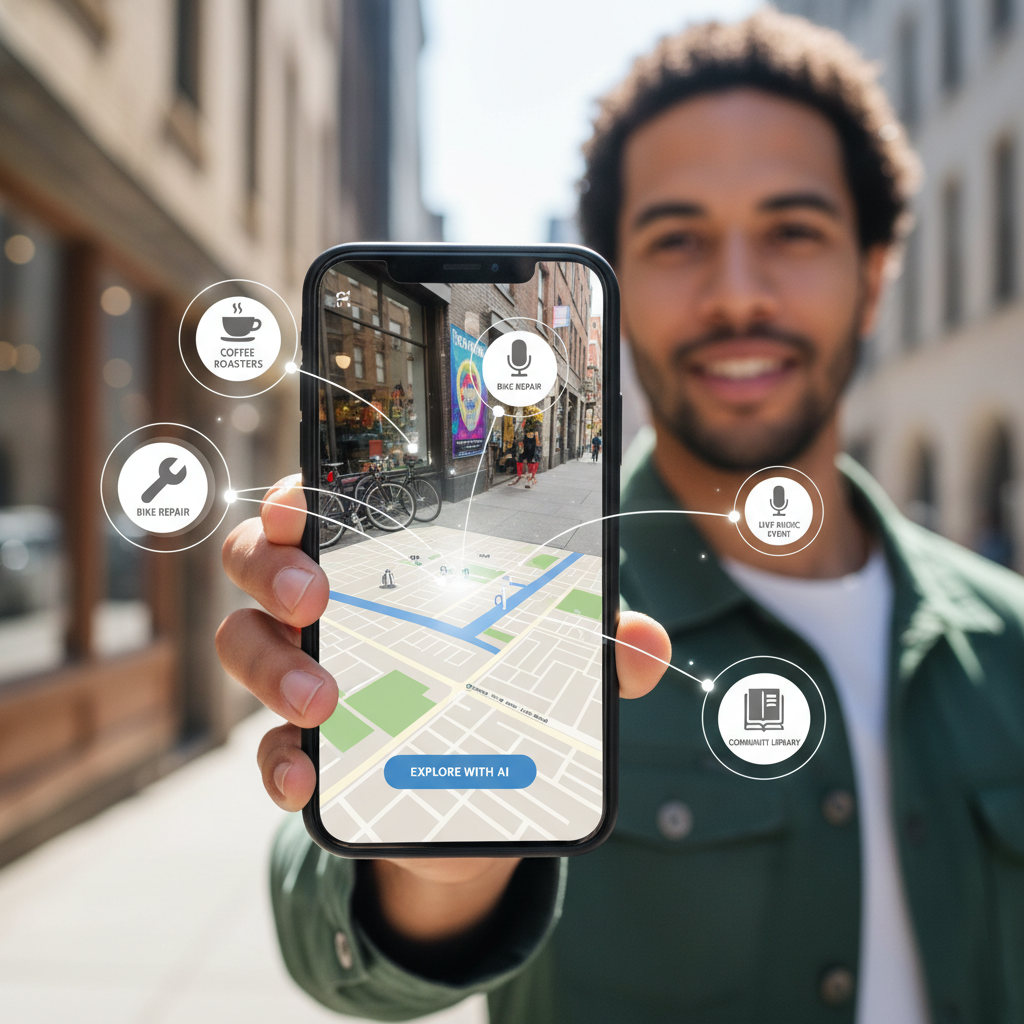
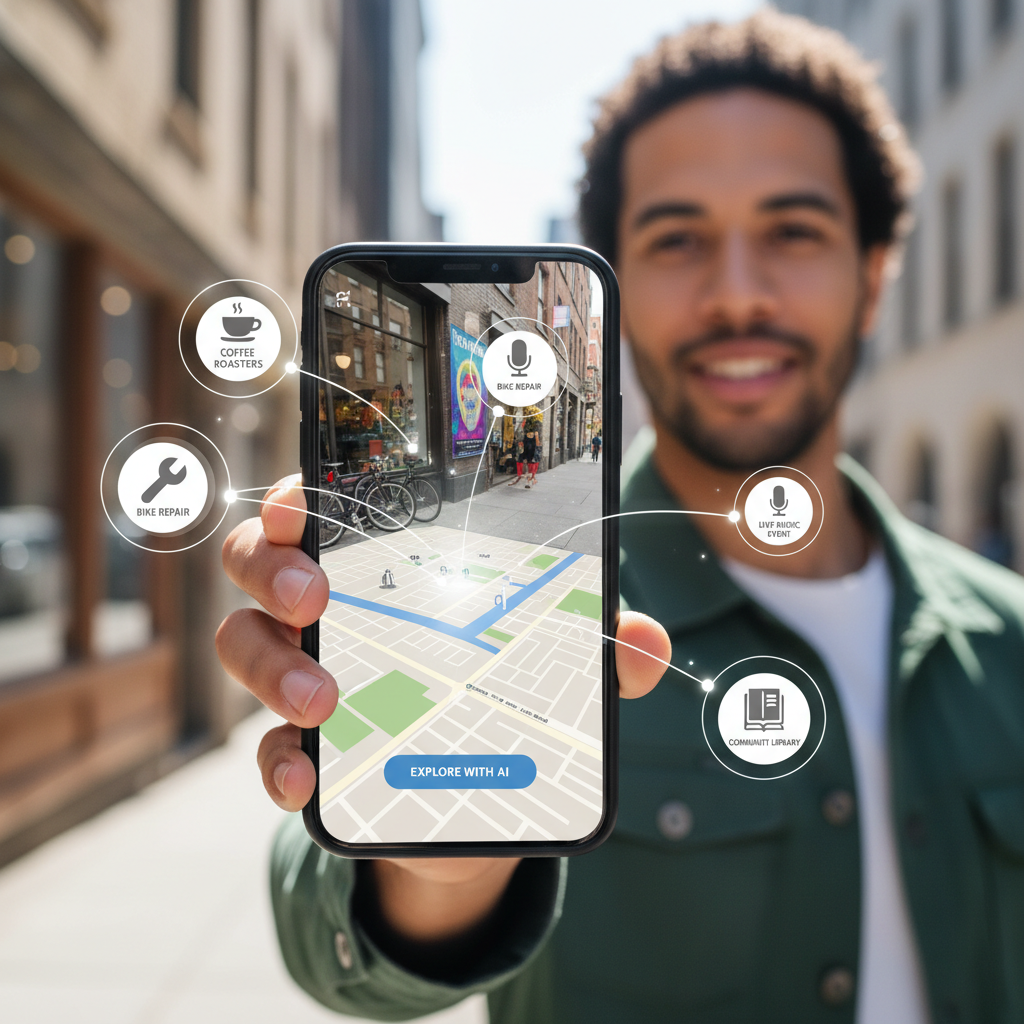
Artificial intelligence is reshaping how people discover local businesses and services, moving the experience beyond short keyword queries and static directories. Instead of searching separately for a restaurant, repair professional, weekend event, or nearby attraction, users can increasingly describe what they need in ordinary language. AI-powered local discovery tools can then interpret the request, consider location and context, and present options that more closely match the user’s immediate plans.

Local Search Is Becoming More Conversational
Traditional local search has generally required users to choose the right keywords. Someone looking for help might enter “plumber near me,” “coffee shop open now,” or “family activities this weekend.” The search engine would match those phrases with business listings, websites, maps, advertisements, and reviews.

That model remains useful, but conversational AI is changing the starting point. A person can ask, “Where can I take two children for lunch nearby if we need outdoor seating?” or “Is there a local electrician available after normal business hours?” These requests contain several signals, including distance, timing, service type, personal preferences, and practical constraints.

AI systems are designed to interpret those signals together rather than treating each phrase as an isolated keyword. This creates a more natural interaction, particularly for users who know what outcome they want but do not know the name of a business or the exact search category to use.
Context Is Becoming as Important as Keywords
The shift toward contextual discovery means that local search can account for more than a business name and address. Depending on the platform and the information available, AI may help organize results around opening hours, travel distance, service areas, accessibility needs, event schedules, customer intent, or the type of experience being requested.
A query such as “Find a quiet place nearby where I can work for two hours” is not simply a search for cafés. It may involve seating, noise level, Wi-Fi availability, current opening hours, and proximity. Likewise, “What can I do nearby this evening?” may produce a mixture of events, public spaces, entertainment venues, community programs, and dining options.
This broader interpretation can reduce the need to open several websites or repeat a search with different wording. The most useful experience is not necessarily the one that displays the largest number of listings. It is the one that helps the user narrow the field while still providing enough information to make an informed choice.
Location Awareness Adds Immediate Relevance
Location has always been central to local search, but AI can make proximity more responsive to the situation. A nearby result may be measured by walking time during a lunch break, driving distance for a home service provider, or the area covered by a community event.
Location-aware discovery can also adapt as a person moves. Someone exploring an unfamiliar neighborhood may want suggestions within a short walk, while a homeowner may be willing to consider specialists serving a wider radius. In both cases, the meaning of “nearby” depends on intent rather than a fixed distance alone.
NearAIx Connect Illustrates the Emerging Model
NearAIx Connect is an example of an AI-powered local discovery platform built around proximity and conversational exploration. It is designed to help people find nearby businesses, services, places, events, specialists, groups, deals, and community information through a local interface.
The platform reflects a wider change in how local information is being organized. Instead of separating commercial listings from events and neighborhood resources, an AI-based discovery experience can bring different categories together around the user’s location and request. A person planning an afternoon, for example, may want to identify a place to visit, find a nearby event, locate a service, and check relevant community activity without switching between multiple search tools.
NearAIx Connect’s role in this developing market is best understood as a practical local guide rather than a replacement for every map, directory, or review service. Its brand approach centers on helping users explore what is near them and connect local intent with relevant options. For businesses and service providers, this model also highlights the growing importance of maintaining clear, accurate, and structured information that AI systems can understand.
Business Visibility Is Being Redefined
In keyword-based search, visibility has often depended on ranking for popular phrases. AI discovery introduces additional considerations. A business may be surfaced because it fits a detailed request, serves a particular area, offers a relevant service, or matches the timing and circumstances of the user’s question.
This does not make established search practices irrelevant. Accurate addresses, operating hours, service descriptions, contact details, and website content remain essential. However, businesses may need to describe what they offer with greater clarity. A vague category label provides less context than specific information about services, availability, amenities, coverage areas, and suitable customer needs.
Local organizations may also benefit from keeping event information and community updates current. AI can make discovery easier, but its recommendations are only as dependable as the underlying information. Outdated hours, incomplete service details, and expired events can quickly undermine user confidence.
Trust and Transparency Still Matter
AI can simplify local discovery, but it does not remove the need for verification. Users may still want to confirm prices, availability, credentials, accessibility, and booking terms directly with a business or service provider. Platforms also need to distinguish clearly between organic recommendations, sponsored placements, and personalized suggestions.
Privacy is another important part of the experience. Location-aware tools should communicate how location data is used and provide meaningful controls. People may welcome relevant nearby suggestions while still expecting limits on data collection and retention.
A More Practical Path to Local Decisions
The future of local search is likely to combine familiar maps and listings with conversational interfaces, contextual recommendations, and real-time location awareness. The central change is not simply that AI can produce answers. It is that users can express complete needs instead of reducing those needs to a few search terms.
Platforms such as NearAIx Connect demonstrate how this approach can extend across businesses, services, places, events, and community information. As AI-powered local discovery develops, the strongest experiences will be those that balance convenience with accuracy, user control, and transparency. For consumers, that could mean less time sorting through unrelated results. For local businesses, it creates a new reason to make their information precise, useful, and easy for both people and AI systems to understand.