The World Just Put Afghanistan’s Treatment of Women and Girls Under a Legal Spotlight
The International Criminal Court has unsealed arrest warrants for four senior Taliban leaders, alleging crimes against humanity through gender persecution of women, girls and LGBTQI+ people since the Taliban returned to power in 2021.
The warrants add international legal pressure over restrictions on education and public life, but the ICC has no police force and arrests remain uncertain. Nearly 2.4 million Afghan girls remain excluded from secondary education, with no immediate changes resulting from the warrants.
⚡ THE MOMENTF

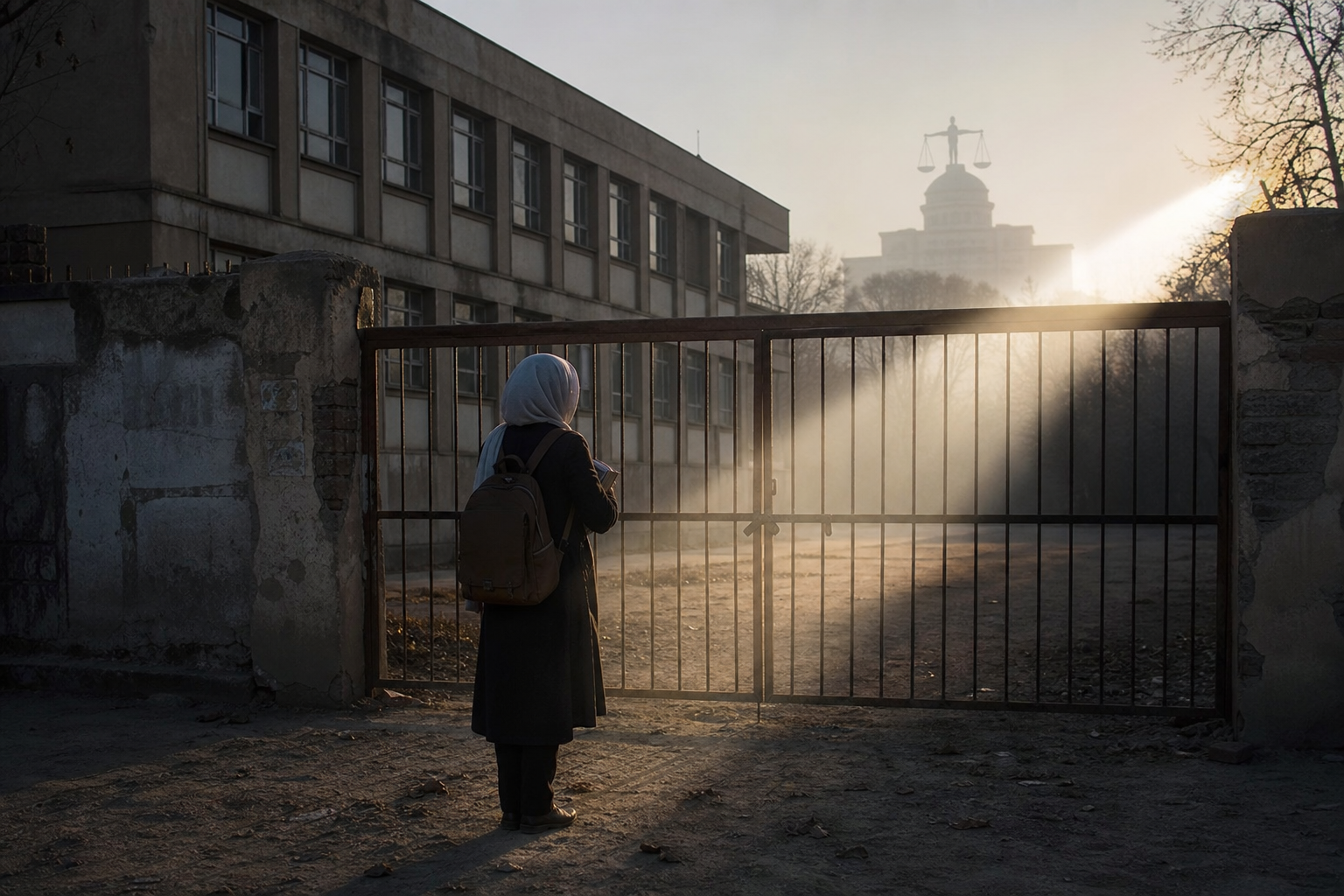
or Afghan girls who have spent years watching school doors remain closed, the latest development did not happen inside a classroom.

It happened thousands of kilometers away—in a courtroom.

The International Criminal Court has unsealed arrest warrants against four senior Taliban leaders over allegations of gender persecution against women, girls and LGBTQI+ people in Afghanistan.
The move puts Afghanistan’s treatment of women and girls under an even brighter international legal spotlight.
🔎 WHAT WE KNOW
The ICC says the warrants concern Taliban Supreme Leader Hibatullah Akhundzada, Supreme Court head Abdul Hakim Haqqani, Education Minister Habibullah Agha and Higher Education Minister Neda Mohammad Nadim.
The court alleges that discriminatory policies since the Taliban returned to power in 2021 amount to crimes against humanity based on gender persecution.
The development comes as the restrictions on girls’ and women’s education remain one of the most internationally criticized issues surrounding Afghanistan.
UNESCO said recently that nearly 2.4 million girls remain excluded from secondary education in Afghanistan.
And during her recent Afghanistan visit, UN Under-Secretary-General Rosemary DiCarlo raised concerns directly with the de facto authorities about restrictions affecting women and girls, particularly girls’ access to education.
💔 BUT HERE IS THE HUMAN STORY
Behind every number is a girl.
A student who once expected to continue school.
A young woman who planned to study medicine, technology, education or another profession.
A family waiting to see whether a daughter will ever be allowed to continue the path she started.
For them, international statements are not the whole story.
The real question is much simpler:
When does the door open?
⚠️ WHAT REMAINS UNCLEA
RThe ICC has no police force of its own, and the court acknowledged that the practical prospect of arresting the accused remains uncertain while the Taliban control Afghanistan.
So the warrants do not immediately reopen schools.
They do not immediately change daily life for Afghan women.
But they do create another legal and international pressure point.
🌍 THE BIGGER PICTUREAfghanistan’s women are no longer only at the center of a political debate.
Their rights are increasingly becoming part of an international legal question.
And that changes the conversation.
The world is not simply asking whether girls should return to school.
It is increasingly asking what responsibility exists when an entire generation is prevented from accessing education and public life.
👀 WHAT HAPPENS NEXT?
The biggest story may not be what happens inside the courtroom.
It may be what happens inside Afghanistan.
Will restrictions change?
Will girls return to classrooms?
Will women regain greater access to work and public life?
Or will another generation grow up waiting?
🎯 THE LAST WORD
A courtroom can issue a warrant.
A government can issue a rule.
But neither can erase the question millions of Afghan girls continue to carry:
When will I be allowed to finish what I started?
SnapAI News