
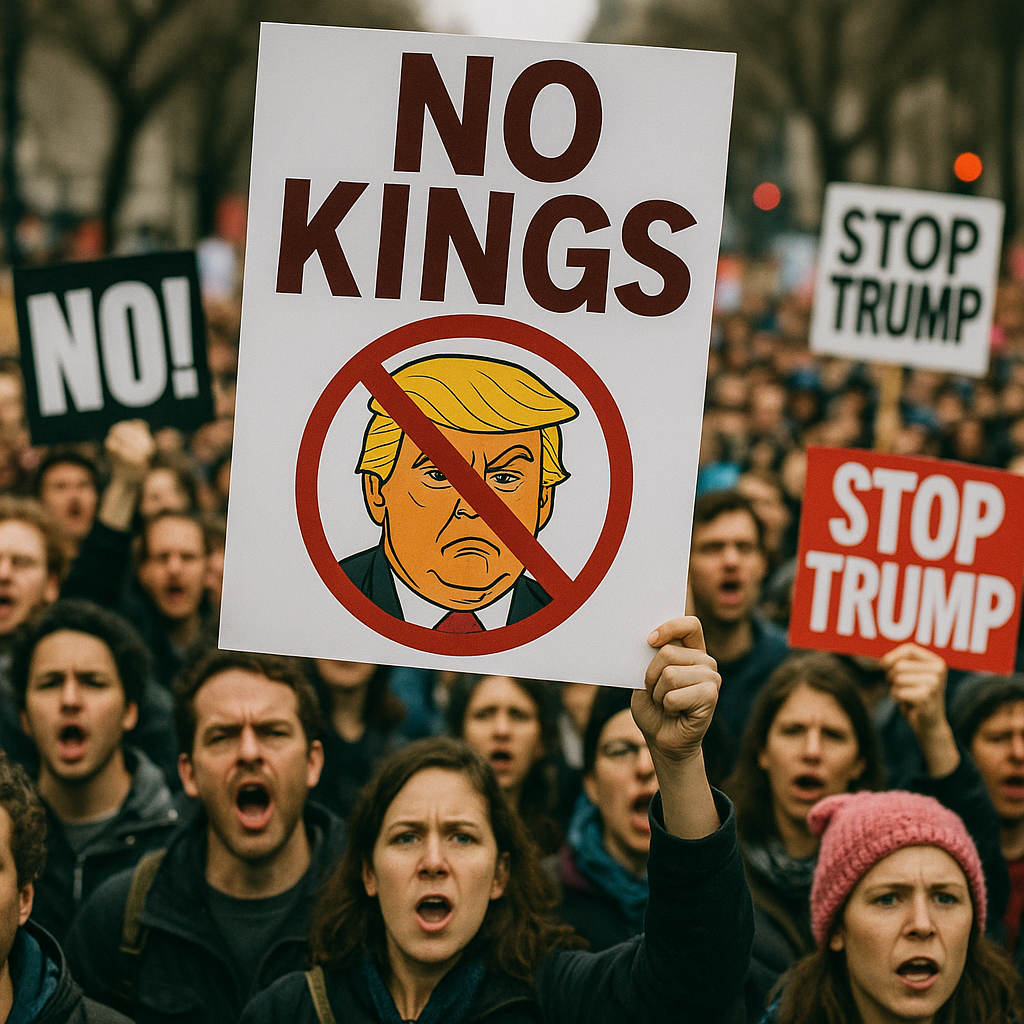
Anti-Trump Protests: Thousands Rally for ‘No Kings’ Movement

Anti-Trump Protests: Thousands Rally for ‘No Kings’ Movement
In recent weeks, the United States has witnessed a significant surge in anti-Trump protests, reflecting a growing sentiment among many citizens that calls for a reevaluation of leadership dynamics in the country. Under the banner of the ‘No Kings’ movement, rallies across major cities have attracted thousands, seeking to eliminate any notions of autocracy and advocating for governmental accountability.

Understanding the ‘No Kings’ Movement
The ‘No Kings’ movement originated as a grassroots initiative aiming to challenge the idea of a singular, dominant leadership style often associated with former President Donald Trump. This phrase resonates with a broader progressive agenda that seeks to dismantle perceived authoritarian tendencies in governance and encourage participatory democracy.


Participants in these protests span diverse demographics, urging a departure from what they view as a troubling precedent set during the Trump administration. Many rally-goers highlight the need for transparency and advocacy for democratic values as core principles which they feel have been undermined in recent years.


According to Al Jazeera, protestors gathered in major urban areas like New York, Los Angeles, and Chicago, where they expressed their frustrations not only with Trump’s legacy but also with ongoing political polarization. Protesters such as Maria Thompson, who attended the march in New York, shared her sentiments: “We are here to reclaim our democracy. It’s not about individuals; it’s about principles.” Such statements encapsulate a key aspect of the movement: a focus on collective governance as opposed to individual authority.
Diverse Perspectives on the Protests
While the demonstrators contribute a united front, viewpoints surrounding the protests remain distinctly varied in the media landscape. According to RT, there is skepticism regarding the ability of these protests to generate substantial change, with critics arguing that they may be ineffective in shifting political narratives. The article emphasizes that protesters might be vocal, but without a solid political strategy beyond public demonstrations, their efforts could remain largely symbolic.
Conversely, Sky News reports that the protests are gaining traction, expressing a sense of urgency among those advocating for an inclusive political climate. Many see this as a pivotal moment for voices that may have been marginalized during the Trump era. Supporters of the movement argue that such demonstrations are invaluable for fostering public discourse and youth engagement, vital elements in cultivating a robust democratic process.
The Future Implications of the ‘No Kings’ Movement
The impact of the ‘No Kings’ protests extends beyond immediate political contexts; they highlight a keen desire for accountability across party lines. In recent years, political disillusionment has festered among various constituencies, and this movement aims to galvanize those feelings into sustained action.
Some observers remain cautiously optimistic, suggesting that a grassroots movement like this could eventually influence legislative change. For instance, increasing numbers of young participants signal a potential shift in long-term voting behavior, which may reshape future elections. While the protests may not lead to immediate policy changes, they could serve as a rallying cry, encouraging civic engagement that transcends both local and national boundaries.
However, it is essential to address the challenges protesters face. The current political climate is fraught with divisions, and there exists a genuine concern that without a unified agenda, the effectiveness of the movement could be compromised. As social media amplifies both support and dissent, the ability to maintain a focused narrative will be crucial to the movement’s sustainability.
Conclusion: A Call for Unity and Reflection
The ‘No Kings’ movement has galvanized thousands, asserting a passionate plea for democratic integrity and accountability. However, as diverse perspectives emerge within media narratives, it is evident that the path forward is complex. While many view the protests as a necessary step towards reshaping political discourse, others question their efficacy in initiating tangible change.
In this dynamic landscape, the challenge will be to harmonize these perspectives into a coherent movement that not only addresses the past but also actively shapes the future. Ultimately, the collective questioning of leadership styles can serve as a foundation for a more engaged and participatory democracy, one that truly reflects the will and needs of the populace.















