
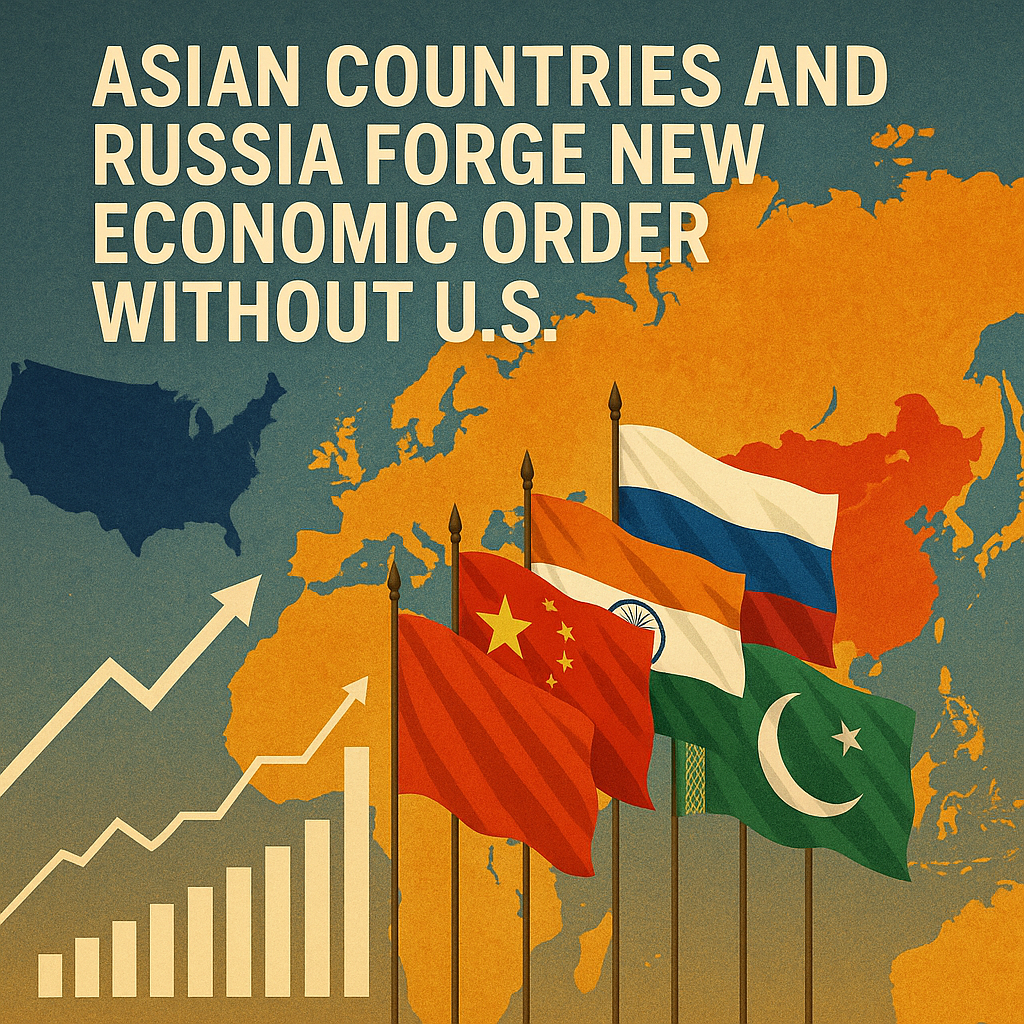
Asian Countries and Russia Forge New Economic Order Without US

Asian Countries and Russia Forge New Economic Order Without US
In recent years, Asian countries have increasingly turned to Russia to forge a new economic order that operates independently of the influence of the United States. This shift is significant not only for the nations involved but also for the global balance of power.

Changing Dynamics in Global Trade
The ongoing conflict in Ukraine has acted as a catalyst for a changing landscape in global trade dynamics. With Western sanctions imposed on Russia, the nation has sought new avenues for trade and economic collaboration, particularly with Asian countries. Reports indicate that countries such as China, India, and those in Southeast Asia are stepping into this breach, signaling a realignment away from Western-centric economies.


Economic Collaborations on the Rise
For instance, China has ramped up its purchases of Russian oil and gas, negotiating deals that leverage its vast market potential. A recent report highlighted that China’s imports from Russia rose significantly, driven by discounted energy prices due to the sanctions on Moscow. Additionally, India has been increasing its imports of Russian crude oil, demonstrating a pragmatic approach to energy needs amidst global supply uncertainties.


Beyond energy, Russia and several Asian nations are exploring partnerships in technology, agriculture, and defense. Al Jazeera noted that Russia is looking to develop agriculture with nations in the region to ensure food security, an issue that has become pressing amidst the geopolitical tensions impacting supply chains.
Divergent Perspectives on Economic Alliances
While some analysts see this pivot towards Russia as a beneficial opportunity for Asian nations, other views express caution about potential geopolitical repercussions. Critics argue that increased reliance on Russia may undermine political stability and could lead to economic vulnerabilities if international conditions change.
A contrasting view suggests that the relationship can also be a strategic maneuver for these Asian nations. They may be using their ties with Russia to gain leverage in negotiations with Western powers and to balance the influence of the U.S. in their regions. For instance, as reported by Sky News, nations such as India are wary of being drawn too deeply into either camp and aim to maintain a degree of neutrality.
Economic Implications and Future Outlook
As these nations deepen their economic ties with Russia, the implications for the global economy could be substantial. The reconfiguration of trade routes may lead to a decrease in U.S. economic influence and the emergence of alternative economic power centers.
The Risk of Isolation
Yet, this shift does not come without risks. Engaging more extensively with Russia might lead to international isolation for these countries if geopolitical tensions escalate further. The delicate balancing act could expose them to sanctions or backlash from the West, as seen since the onset of the Ukraine conflict. The unpredictability of global politics leaves many wondering about the long-term viability of this new economic order.
Potential for a Multipolar World
Simultaneously, the current trajectory hints at a potential multipolar world where power is more evenly distributed. Observers note that if this trend continues, we may witness a fragmentation of the global economy into various blocs that prioritize regional partners over traditional alliances. This scenario presents both opportunities and challenges, particularly regarding economic stability and international cooperation on pressing issues like climate change and security.
Conclusion
The forging of a new economic order among Asian countries and Russia reflects a significant geopolitical shift, one that is influenced by both necessity and opportunity. As this realignment takes shape, it underscores the complexities of modern international relations, with nations navigating through a landscape rife with uncertainties. The direction of this economic transformation remains to be seen, but it undoubtedly holds implications that could reshape global trade for years to come.















