
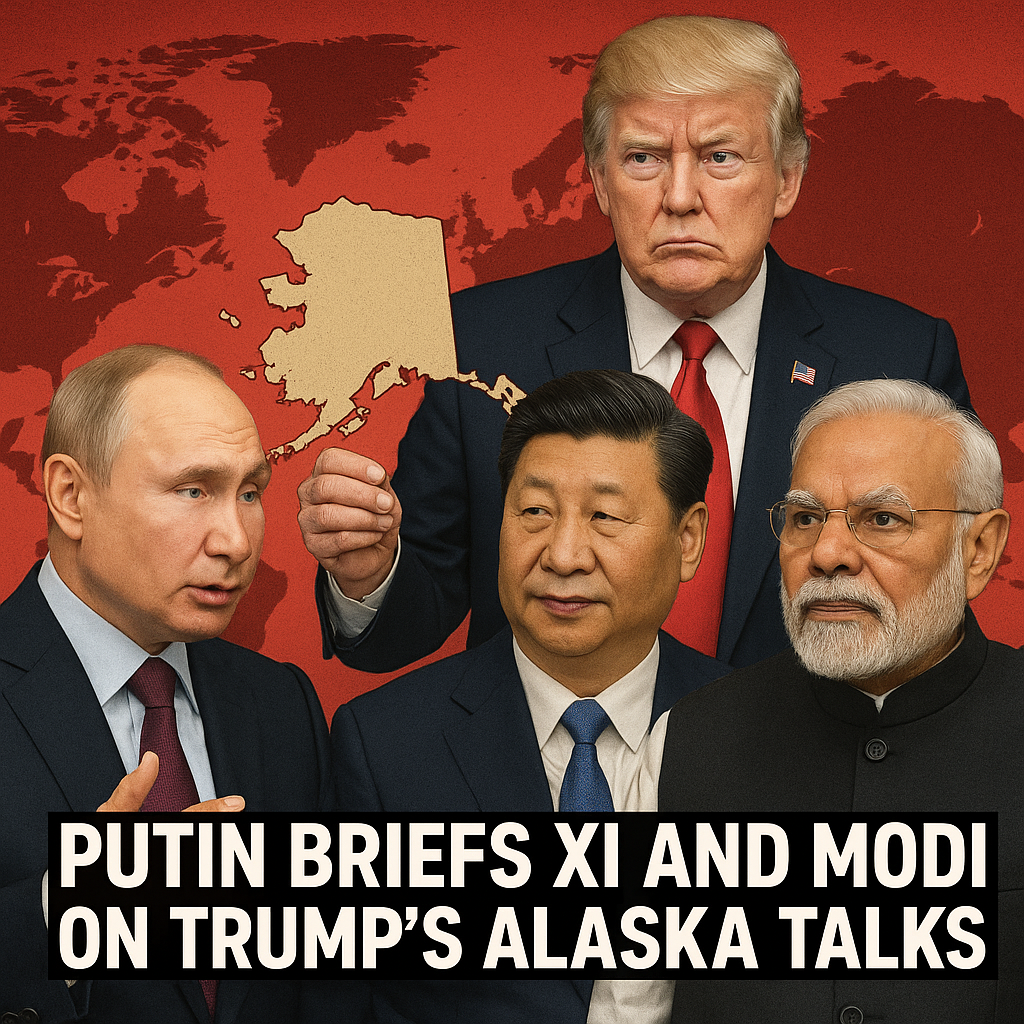
Putin Briefs Xi and Modi on Trump’s Alaska Talks

Putin Briefs Xi and Modi on Trump’s Alaska Talks: Implications for Global Geopolitics
In an era where international relations are shaped by high-stakes diplomacy and strategic alliances, the recent conversations between Russian President Vladimir Putin and leaders Xi Jinping of China and Narendra Modi of India regarding Donald Trump’s Alaska talks have drawn significant attention. This development signifies a potential shift in geopolitical alignments and highlights the intricate web of global diplomacy.

Context of the Alaska Talks
The Alaska discussions, which occurred in 2021, were designed as a forum for the U.S. and China to address various pressing international issues, including trade tensions and regional security concerns. While the specifics of Trump’s negotiations remain somewhat obscured, the aftermath has undoubtedly reverberated through the corridors of power in Moscow, Beijing, and New Delhi.


According to reports from RT, Putin’s debriefing with Xi and Modi was strategically timed. The Kremlin aimed to consolidate its position vis-à-vis western powers while strengthening ties with Asian counterparts. The discussions qualified as a display of solidarity among the three nations, juxtaposing their unified stance against perceived U.S. hegemonic aspirations.


Perceptions from Different Angles
While the Russian, Chinese, and Indian perspectives converge on various topics, nuances exist.
1. Russia’s Perspective: From Moscow’s angle, consolidating relationships with both China and India serves a dual purpose. Not only does it foster a united front against Western pressures, but it also creates economic opportunities through partnerships in energy, defense, and technology. Putin’s positioning of these talks as a framework to counterbalance U.S. influence suggests a strategic redefinition of alliances.
2. China’s Position: For China, this alignment reinforces its narrative of being a leading global power that can influence international affairs independently of the U.S. Beijing sees the strengthening of ties with Russia and India as mutually reinforcing. The China-Russia partnership is underscored by a shared interest in challenging U.S. hegemony, as articulated in various analyses from sources like Al Jazeera.
3. India’s Role: India, on the other hand, must navigate the complexities of its foreign relations. Building stronger ties with Russia could enhance India’s defense capabilities, particularly in light of its tense relationship with Pakistan and a growing focus on regional security. However, India also maintains a complicated relationship with China, which adds layers of complication to its diplomatic choices. Modi’s attempts to balance these relationships reflect India’s cautious approach in playing a more proactive role on the global stage.
The Future: A Triangular Power Dynamic?
The intersection of Russia, China, and India raises questions about a new power dynamic. With the U.S. facing internal challenges and external criticisms, the potential for a more coordinated bloc among these three nations could reshape the landscape of international relations.
Areas of Potential Cooperation
1. Economic Partnerships: By exploring joint ventures in technology and infrastructure, particularly through initiatives like China’s Belt and Road Initiative (BRI) and Russia’s Eurasian Economic Union, the three nations can mitigate reliance on U.S.-led economic structures.
2. Security Alliances: Heightened military cooperation may emerge as a countermeasure to perceived threats from the West. Joint military exercises and strategic dialogues could solidify this triangular partnership, enabling them to assert influence over regions traditionally dominated by Western powers.
Challenges Ahead
Despite shared interests, there are innate contradictions. The historical tensions between India and China could create friction that undermines cooperation among the three nations. For instance, recent border clashes between India and China illustrate the fragility of their relationship.
Furthermore, entrenched ideological differences remain. While Russia and China hold more authoritarian governance models, India prides itself on its democratic traditions. These distinctions could complicate unified stances on global issues like human rights and climate change.
Conclusion: Navigating the Muddy Waters of Geopolitics
Putin’s recent briefing to Xi and Modi regarding Trump’s Alaska talks opens a dialogue about future possibilities and challenges within a rapidly changing global landscape. While a strengthened alliance among these three nations could shape a new geopolitical order, their distinct historical, ideological, and strategic contexts pose significant hurdles.
The world is left to ponder: Can these nations form a cohesive power bloc, or will inherent divisions inhibit their aspirations? As they navigate the complexities of international relations, only time will reveal the outcome of this intricate geopolitics dance.















