
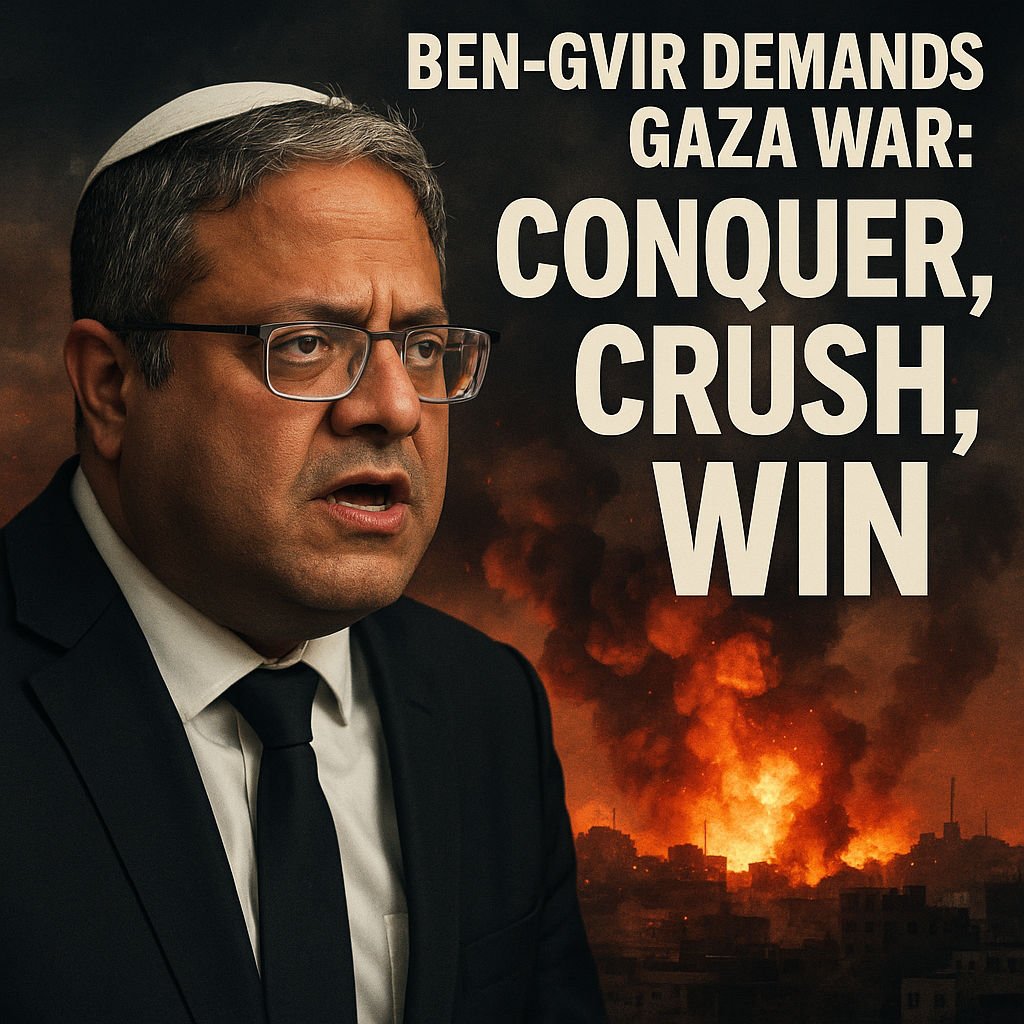
Ben-Gvir Demands Gaza War: “Conquer, Crush, Win”

Ben-Gvir Demands Gaza War: “Conquer, Crush, Win”
In a dramatic escalation of rhetoric regarding the ongoing Israeli-Palestinian conflict, Israeli Minister of National Security Itamar Ben-Gvir has recently called for an intensified military campaign in Gaza. His demands to “conquer, crush, win” have sent shockwaves through both regional and international communities, reflecting the complexities and deep-seated emotions surrounding this protracted conflict.

The Call for Escalation: Context and Background
Ben-Gvir’s statements reflect a broader sentiment of frustration among some Israeli politicians regarding the ongoing violence from Gaza. The push for a more aggressive approach follows a series of rocket attacks launched by militants from the territory, which have undoubtedly created a palpable sense of insecurity among Israeli citizens. According to multiple reports, including those from Al Jazeera and Sky News, Ben-Gvir emphasized the need to re-evaluate Israel’s military strategy, proposing a return to more assertive engagement in the region as a means to ensure security.


This rhetoric is not new for Ben-Gvir, a far-right figure often associated with hardline policies toward Palestinians. His perspective echoes sentiments from various factions within Israel, who argue that peace negotiations have stalled and only a show of military force can bring about lasting change. His perspective aligns closely with those seeking a “strongman” approach to governance, particularly in times of heightened tension.


The Broader Political Landscape
Ben-Gvir’s call for a more aggressive military stance emerges within a complex political landscape in Israel. Prime Minister Benjamin Netanyahu’s government is predominantly composed of right-wing parties, many of which support a tough approach to Hamas and the broader Palestinian cause. This alignment creates a fertile ground for Ben-Gvir’s ideology to flourish, garnering support from constituents who prioritize security over diplomacy.
However, countering this perspective are voices advocating for a more measured approach. Groups across the political spectrum, including centrist and left-wing parties, argue that escalating military action may lead to further loss of life and exacerbate long-standing grievances among Palestinians. They emphasize the importance of diplomatic engagements and peace negotiations as potential pathways to resolving the conflict, though these have been historically fraught with challenges.
Voices from Gaza: The Impact of Escalation
The humanitarian impact of Ben-Gvir’s proposed intensification is a critical concern echoed by various news sources. Reports indicate that a heightened Israeli military presence in Gaza would likely lead to increased civilian casualties and displacement, compounding an already dire humanitarian situation. Sky News noted that the population of Gaza has been living under severe stress due to the ongoing blockade, which has severely limited resources and access to essential services.
Moreover, this push for military action raises questions about international law and the long-term viability of such strategies. Human rights organizations have increasingly voiced concerns about the repercussions of military operations on civilian populations, as seen in past conflicts. The nuanced dialogue surrounding this issue remains overshadowed by calls for immediate military responses, leading to significant divisions among international observers.
The Global Response: Seeking a Balanced Approach
Internationally, reactions to Ben-Gvir’s aggressive stance have been mixed. Some regional allies, particularly those who share concerns about Iranian influence in the region, may cautiously support Israel’s right to defend itself. Conversely, Western nations and various humanitarian organizations have urged restraint, emphasizing the need for dialogue rather than military action as a means to achieve peace.
A balanced perspective on this issue involves recognizing the legitimate security concerns of Israelis while also addressing the humanitarian plight of the Palestinian people. It raises fundamental questions about how to reconcile these often conflicting narratives, a task that has historically proven difficult.
Concluding Thoughts: The Path Forward
Ben-Gvir’s call for a renewed military campaign in Gaza highlights the complexities of the Israeli-Palestinian conflict, which continues to be defined by cycles of violence and retaliation. As various factions presently wrestle with their ideologies, achieving a sustainable solution remains elusive.
While security and military presence may provide short-term relief for some, they stand to exacerbate the long-term challenges faced by both Israelis and Palestinians. The ongoing discourse must strive to balance security with the immediate needs for dialogue and humanitarian support, recognizing that lasting peace cannot be achieved through force alone.
In an increasingly polarized environment, the path forward will require not only understanding and empathy from all parties but also the courage to reconsider entrenched beliefs and practices.















