
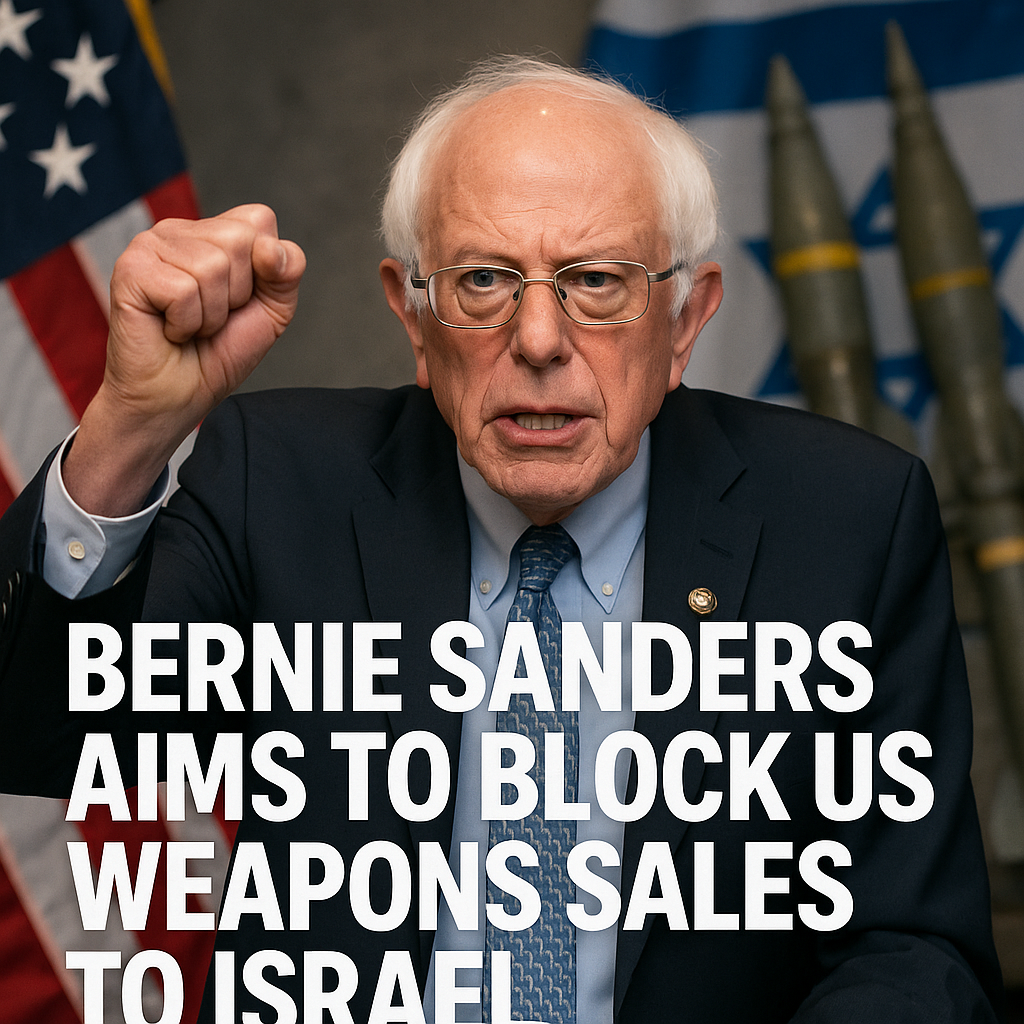
Bernie Sanders Aims to Block US Weapons Sales to Israel

Bernie Sanders Aims to Block US Weapons Sales to Israel
In a significant political move, Senator Bernie Sanders has vowed to introduce a resolution aimed at blocking U.S. weapons sales to Israel. This announcement not only highlights the ongoing complexities of U.S.-Israel relations but also reflects the growing dissent within parts of the American political landscape regarding military aid to foreign nations, particularly in conflict zones.

A Growing Divide in American Politics
Bernie Sanders, an independent senator from Vermont, has been a vociferous critic of U.S. foreign policy towards Israel for years. His recent proposal comes at a time when tensions have escalated in the Middle East, particularly following renewed violence in Gaza and Israel’s operations against militant groups. The push for the resolution signals a broader discontent within the Democratic Party and among many constituents who question the ethical implications of military support to nations involved in contentious conflicts.


Various news sources highlight that Sanders intends to galvanize support not just from his fellow Democrats but also from disillusioned Republicans and independents. His stance resonates with a growing number of Americans, particularly youth voters, who are increasingly vocal against foreign military involvement altogether. Prominent organizations advocating for Middle Eastern peace have lent their voices to Sanders’ cause, amplifying calls for accountability and reassessment of U.S. military support.


However, the proposed resolution faces challenges within Congress. Many lawmakers continue to steadfastly support military aid to Israel, viewing it as a strategic alliance crucial for regional stability. For these proponents, Israel serves as a buffer against adversarial forces in the Middle East. As outlined in various reports, some politicians argue that withholding arms might undermine Israel’s defense capabilities, potentially endangering both Israeli citizens and U.S. interests abroad.
Understanding the Implications of Arms Sales
The Ethical Debate
The ethical implications of U.S. arms sales to Israel raise questions about the humanitarian crises arising from military actions in Gaza and the West Bank. Advocates of Sanders’ resolution argue that continued military support contributes to human suffering and escalates violence. Data from humanitarian organizations point toward increasing casualties among civilians, including children, which feeds into the dialogue around the moral obligations of the U.S. as a global superpower.
Conversely, supporters of arms sales maintain that Israel has a right to defend itself, especially given historical hostilities from neighboring nations and militant groups. They assert that cutting military ties could lead to a power vacuum, potentially exacerbating violence and destabilizing the region even further. This ongoing debate illuminates the complexities of U.S. foreign policy in a volatile region.
Strategic Considerations
Analyzing the strategic implications of Sanders’ proposal reveals a multifaceted dilemma. Some experts argue that aligning U.S. policy with humanitarian outcomes could signify a shift towards a more principled foreign policy that prioritizes human rights. On the flip side, denying arms sales could alienate a long-standing ally and alter the balance of power in the Middle East.
Historical context adds another layer to this discussion. The U.S. has historically provided substantial military aid to Israel, which critics argue has been used in offensive operations rather than solely for defense. Many policymakers are now considering whether such practices align with American values, particularly in light of a younger generation seeking more ethical governance.
Finding Common Ground
Despite the polarized viewpoints, there is a growing recognition among some legislators that dialogue and constructive criticism are essential for fostering long-term peace in the Middle East. A compromise that emphasizes both human rights and national security might pave the way for a more balanced approach to U.S.-Israel relations.
Several grassroots movements are gaining momentum to advocate for transparency in military sales and to push for policies that hold allied nations accountable for their actions. These efforts could lead to more equitable diplomatic relations, where military support is contingent on respect for human rights.
Conclusion: Navigating a Complex Landscape
Senator Bernie Sanders’ initiative to block U.S. weapons sales to Israel serves as a bellwether for shifting sentiments in American politics regarding military aid. By navigating this complex landscape, Sanders is positioning himself at the intersection of humanitarian advocacy and national security concerns.
While the resolution’s fate remains uncertain in Congress, the discourse it sparks is essential in this age of growing activism and ethical scrutiny. The complexities of U.S. foreign policy calls for continuous dialogue, ensuring that all voices are heard in the quest for a balanced and just approach to international relations. As this conversation evolves, it may very well redefine the parameters of U.S. involvement in foreign conflicts for years to come.















