
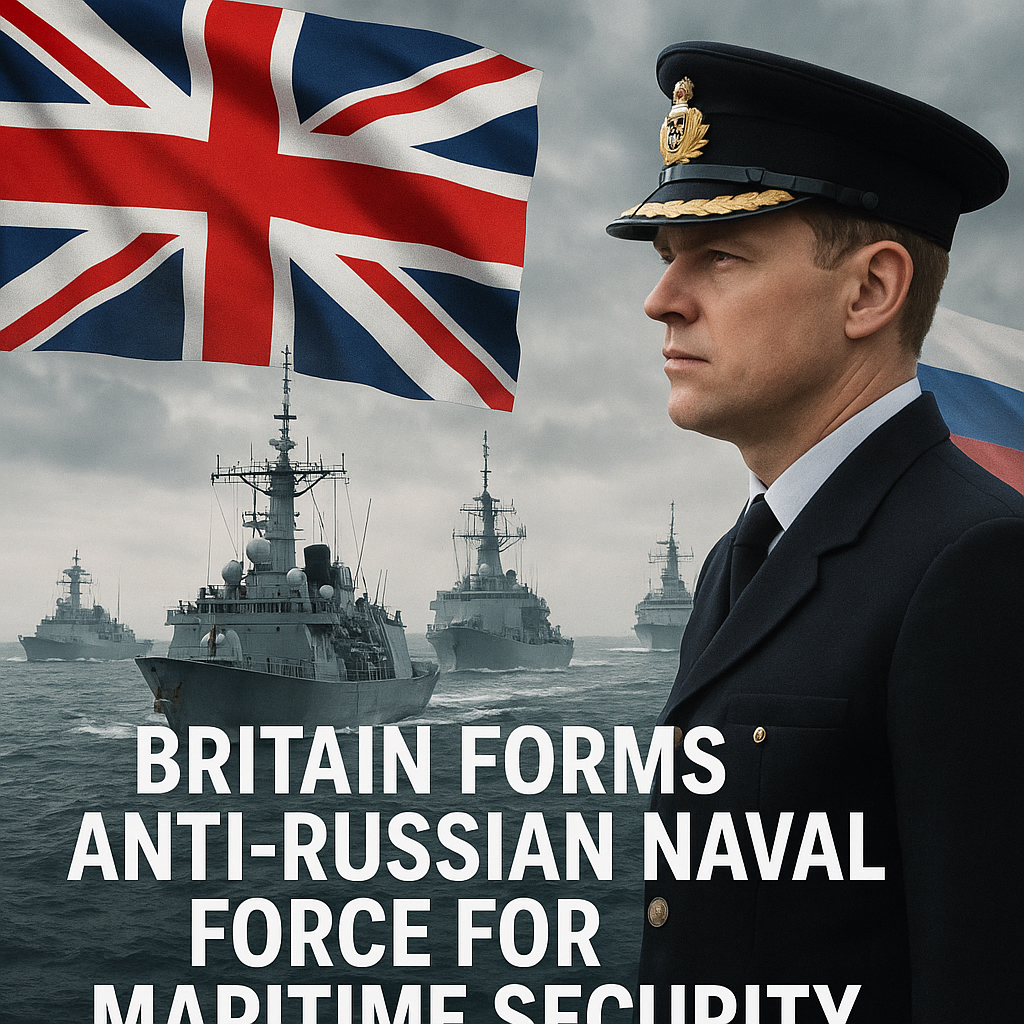
Britain Forms Anti-Russian Naval Force for Maritime Security

Britain Forms Anti-Russian Naval Force for Maritime Security
In recent developments, Britain has initiated the formation of an anti-Russian naval force aimed at bolstering maritime security. This strategic move comes amid heightened tensions in the region, particularly following escalating confrontations in the Black Sea and the broader context of the ongoing conflict in Ukraine.

The Strategic Shift in Naval Security
Britain’s decision to bolster its naval presence reflects a significant shift in the approach to maritime security in the face of perceived threats from Russia. According to reports, the Royal Navy plans to collaborate closely with NATO allies to enhance surveillance and readiness in key maritime zones. The primary objective of this initiative is to deter potential Russian aggression and safeguard vital shipping lanes, particularly in the North Atlantic and the Baltic Sea.


Forming Alliances: A Collective Security Approach
The establishment of this anti-Russian naval force underscores Britain’s commitment to collective security, as emphasized by government officials. In statements released by the Defence Ministry, the importance of working together with NATO allies was highlighted, suggesting that a unified maritime strategy is crucial in countering any threats posed by the Russian navy.


However, this strategic pivot has drawn mixed responses from various geopolitical analysts and commentators. Some view it as a necessary precaution in light of Russia’s aggressive maritime maneuvers, while others express concerns that this escalation of naval forces might provoke further tensions.
Diverse Viewpoints on Britain’s Naval Strategy
Necessity vs. Provocation
On one side of the debate, proponents of the initiative argue that strengthening maritime forces is essential for maintaining stability in Europe. They cite a series of recent incidents involving Russian naval units that have sparked fears of a direct confrontation at sea. For instance, a recent encounter where British and Russian ships were reported to have challenged each other in the Black Sea raised alarms about the potential for miscalculations leading to conflict.
Contrastingly, critics argue that this military build-up could lead to an unintended arms race in maritime territories. Some experts point to historical instances where heightened military presence has escalated tensions rather than resolved them. Moreover, they urge for diplomatic channels to be prioritized over military posturing, suggesting that dialogue could de-escalate potential conflicts more effectively than naval shows of force.
The Role of NATO and International Diplomacy
Another essential aspect of this strategy is the broader role of NATO. The alliance’s solidarity is seen as crucial to ensuring regional stability. Reports indicate that NATO members, particularly in Eastern Europe, are watching Britain’s moves closely, viewing them as a potentially stabilizing force in an increasingly volatile environment.
However, questions remain about the efficacy of military alliances in achieving long-term peace. While collective defense can provide reassurance to member states, there is a risk that the escalating naval presence might lead to a cycle of rearmament. Analysts caution that, while naval strength is essential, it must be complemented by robust diplomatic strategies to address the root causes of regional tensions.
Navigating a Complex Maritime Landscape
As Britain moves forward with this initiative, it must navigate a complex maritime landscape marked by competing national interests and security concerns. The formation of an anti-Russian naval force represents both a response to immediate threats and a long-term strategic calculation about the future of European security.
In conclusion, Britain’s formation of an anti-Russian naval force reflects a comprehensive strategy aimed at enhancing maritime security in the face of rising tensions. While there are compelling arguments for this approach, it is vital to remain aware of the potential consequences and strive for a balance between military preparedness and diplomatic engagement. As the situation evolves, a nuanced understanding of both collaboration and confrontation will be essential in shaping the future of maritime security in the region.















